Qantas A330 Cabin-Pressure Alert Diverts Singapore-Melbourne Flight to Adelaide
Qantas’ overnight run from Singapore Changi (SIN) to Melbourne (MEL) is usually a textbook “sleep-and-arrive” service—wheels up in Southeast Asia, touchdown in Australia before breakfast. But in the early hours of December 24, QF36 didn’t follow the usual script.

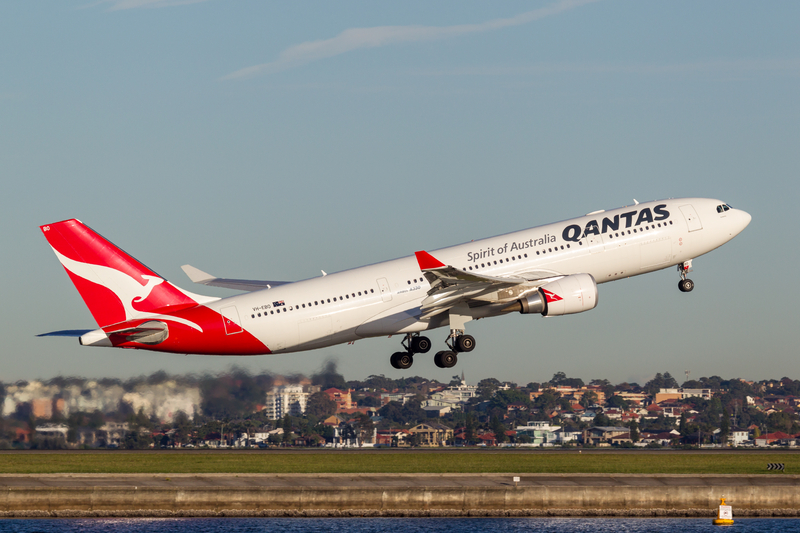
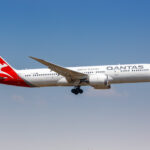
Instead of continuing into Melbourne, the Airbus A330-200 diverted south-west to Adelaide (ADL) after the crew reported a pressurization issue. The jet landed normally, and Qantas rebooked passengers onward to Melbourne, but the timing—Christmas Eve, with holiday plans and tight connections—made it one of those diversions travelers remember for years.
The diversion: what we know about QF36
QF36 departed SIN on the evening of December 23, scheduled to arrive into MEL the following morning. En route, the crew identified a pressurization problem and ultimately chose to divert to ADL.
Flight tracking indicates the aircraft spent time maneuvering off the coast near the St Vincent Gulf before committing to the diversion and landing in Adelaide in the pre-dawn hours. Importantly, the arrival was handled as a normal landing rather than an emergency arrival, which tells you the situation was controlled—but still serious enough to warrant caution and a maintenance inspection before carrying passengers further.
Roughly 240 passengers were impacted, and Qantas moved them to replacement flights to Melbourne.
Why airlines don’t “push on” with pressurization faults
Cabin pressurization is one of those systems that passengers rarely think about—until it becomes the headline.
On an Airbus A330-200, pressurization is managed by the Environmental Control System (ECS), which regulates how air enters the cabin and how it’s metered out through outflow valves. The goal is to keep the cabin at a comfortable “cabin altitude” while the aircraft cruises far higher. If that system throws a fault—whether it’s a sensor disagreement, a valve control issue, or a problem with air-conditioning “packs”—the crew’s options narrow quickly.
The conservative playbook generally looks like this:
-
Reduce risk by lowering altitude (more breathable ambient air, more margin if the issue worsens).
-
Choose a diversion field with strong support (maintenance capability, ground handling, and passenger reaccommodation).
-
Avoid compounding problems by arriving at a busy destination at peak time with a potentially limited aircraft.
That’s why a diversion can happen even when everything still feels “normal” in the cabin. It’s less about drama and more about keeping a manageable issue from becoming a time-critical one.
Why Adelaide (ADL) made sense—even with a curfew
Adelaide (ADL) is a practical alternate for traffic headed to Melbourne (MEL) from the northwest: long runway, full-service airport, and the ability to handle a widebody arrival, passengers, bags, and engineering follow-up.
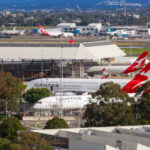
ADL does have a curfew—generally restricting operations between 11:00pm and 6:00am—but diversions driven by operational necessity can fall under exceptions. In other words: curfews matter, but safety and aircraft serviceability matter more, and the system has mechanisms to handle that reality.
The aircraft: VH-EBA “Cradle Mountain,” a well-known A330-200
The aircraft involved was a Qantas Airbus A330-200 (A332), registration VH-EBA, named “Cradle Mountain.” It’s a classic example of Qantas’ long-serving A330 fleet: a twin-engine widebody that has quietly done heavy lifting across Australia’s domestic trunk routes and medium-haul international sectors.
In Qantas’ 271-seat layout, VH-EBA is configured with:
-
28 Business Class seats
-
243 Economy Class seats
Power comes from two GE CF6-80E1A4 engines—one of the A330’s most common and proven engine options globally.
While the A330-200 is often overshadowed by newer-generation types, it remains a highly capable platform for missions like SIN–MEL: long-range performance, generous cargo volume, and a cabin that works well on overnight sectors.
Getting passengers moving again—and getting the jet inspected
After the ADL diversion, Qantas arranged replacement travel for passengers to MEL, where many were connecting onward for the holiday period and seasonal events.
Meanwhile, the aircraft itself required engineering attention before returning to normal service. VH-EBA ultimately repositioned from ADL to MEL the following day—an indication that the issue was addressed sufficiently for a non-revenue ferry, but not necessarily cleared instantly for a full passenger schedule without further checks.
Bottom Line
Qantas flight QF36 from Singapore (SIN) to Melbourne (MEL) diverted to Adelaide (ADL) after a pressurization issue, with the aircraft landing normally and passengers rebooked onward. It’s the kind of decision airlines make early and conservatively: pressurization faults aren’t something you “work around” on a long sector when a capable alternate is available. For travelers, it was an unwelcome detour on Christmas Eve—but from an operational perspective, it’s a reminder that the safest outcome is often the least dramatic one.