Southwest’s Latest Move: What Its New Condor Partnership Really Means
Southwest And Condor Sign Interline Deal
Southwest Airlines has been busy reinventing itself lately – adding assigned seating, extra-legroom options, and even starting to charge for checked bags. Alongside that, the airline is quietly building something totally new for its model: international partnerships.

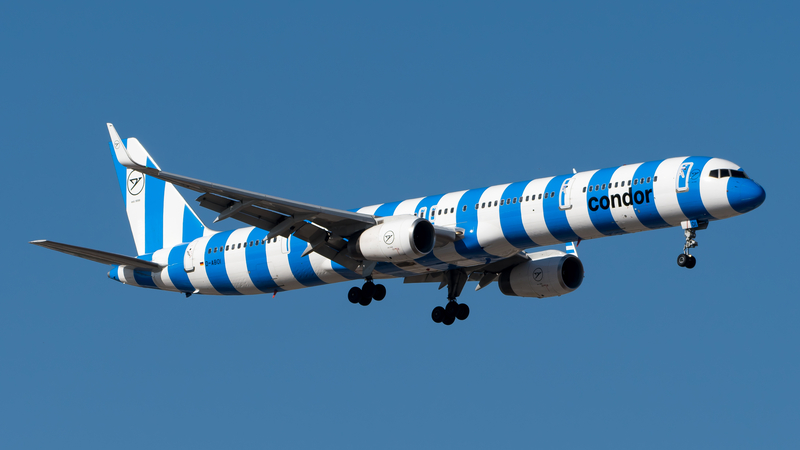
The latest step is a new interline agreement with German leisure carrier Condor. Starting for travel as of January 19, 2026, customers will be able to book itineraries that combine Southwest and Condor on a single ticket. The cooperation will initially focus on a handful of key transatlantic gateways in the United States:

Condor brings long-haul flights between these cities and Europe, while Southwest provides the US domestic feed on either side. Bookings will be possible via Condor and online travel agencies, with Southwest flights simply stitched onto Condor’s long-haul segments.

Condor is Germany’s second-largest long-haul airline and doesn’t belong to any of the big global alliances, so it has a lot of flexibility in who it partners with. For Southwest, this is its first European mainland partner and its fifth overall in this new strategy.
What An Interline Agreement Actually Gives You
It’s important to be clear about what this deal is and what it isn’t.
An interline agreement is the most basic form of cooperation between airlines. In practical terms, it means:
-
You can book one itinerary that includes both Southwest and Condor.
-
Your checked bags can be tagged through to your final destination.
-
If there are schedule disruptions, the airlines have a framework to rebook you across each other’s flights on that same ticket.

But for now, that’s it. This is not (yet):
-
A codeshare agreement (you won’t see Condor flights sold under a Southwest flight number or vice versa).
-
A loyalty partnership (no earning or redeeming Southwest points on Condor, no status benefits, no lounge access tie-ins).
So if you’re a Southwest loyalist hoping to rack up points on Europe trips, nothing changes today beyond ticketing and through-checked bags.
How Useful Is This For Travelers?
From a practical perspective, the partnership does solve a real problem for some travelers:
-
It makes it easier to book one itinerary from a smaller US city on Southwest to a Condor gateway, then connect onto a Condor flight to Europe.
-
Bags being checked through is a big win compared to juggling separate tickets, especially with tight connections or irregular operations.
-
Condor’s network includes a mix of German and leisure destinations that can be attractive price-wise compared to legacy carriers.
That said, without loyalty integration or codeshares, this isn’t exactly a game-changer for most passengers:
-
Price-sensitive travelers were often booking separate tickets anyway when the savings were big enough.
-
Premium or frequent travelers tend to care more about points, upgrades, and alliance benefits, none of which are on the table here (yet).
-
The complexity of irregular operations is still higher than when flying within a single full-service alliance ecosystem.
So this is a nice-to-have rather than a must-have for most people – useful in certain city pairs and dates, but not something that suddenly reshapes transatlantic travel.
How This Fits Into Southwest’s Partner Strategy
What’s interesting is how quickly Southwest is adding partners after decades of staying completely solo. In short order, Southwest has:
-
Announced a deeper partnership with Icelandair, with clear hints of a broader loyalty tie-up coming.
-
Added three Asian partners: China Airlines, EVA Air, and Philippine Airlines.
-
Now layered Condor on top as the first continental European partner.
There are a couple of quirks to this strategy:
-
Some of these partners directly compete with each other (for example, China Airlines and EVA Air in Taiwan).
-
Several already have more robust arrangements with other US carriers, like Alaska Airlines, which offers mileage earning and redemption on some of the same partners where Southwest only offers interline.
That’s what makes this feel a bit “lightweight” for now. From the outside, it looks like Southwest is:
-
Grabbing incremental interline revenue and connectivity with minimal IT or commercial complexity.
-
Keeping the door open to build deeper partnerships later if the economics and tech integration make sense.
If Southwest eventually layers loyalty benefits and codesharing on top of this framework, the strategy starts to look much more compelling. Until then, these deals are more about convenience at the margins than about unlocking huge value for frequent flyers.
Bottom Line
Southwest and Condor have launched an interline partnership that allows customers to book single-ticket itineraries combining the two airlines, with through-checked bags and smoother handling during disruptions.
For now, it’s a simple, low-friction cooperation: no codeshares, no points earning or redemption, no elite perks. It’s useful in certain markets and makes Condor’s European flights easier to access from Southwest’s US network, but it’s not a huge shift for most travelers.
The bigger story is that Southwest is clearly moving away from being a completely stand-alone domestic airline and is quietly building a web of international partners. If the carrier eventually adds loyalty integration on top of these deals, this Condor arrangement could look like an early building block rather than just a small side project.