United’s Newark-Nuuk Experiment Is Under Water on Load Factor
When United Airlines launched nonstop service between Newark Liberty International Airport (EWR) and Nuuk Airport (GOH) on June 14, 2025, it was exactly the kind of “only United would try this” route that has defined the carrier’s post-pandemic network strategy. Greenland’s capital had just gained the infrastructure to handle larger jets, and United seized the first-mover advantage: two flights a week, a narrowbody with real range, and a destination that had never seen scheduled service from the U.S. on a U.S. airline.
The problem? Year one demand didn’t come close to filling the airplane. U.S. Department of Transportation data for the inaugural summer season shows the route averaged about a 51% load factor—a number that would be alarming on almost any other international launch. The question now is simple: does EWR–GOH survive into a third summer, or does it join the long list of seasonal experiments that never become repeatable?
The Route: Long, Thin, and Operationally “Niche” by Design
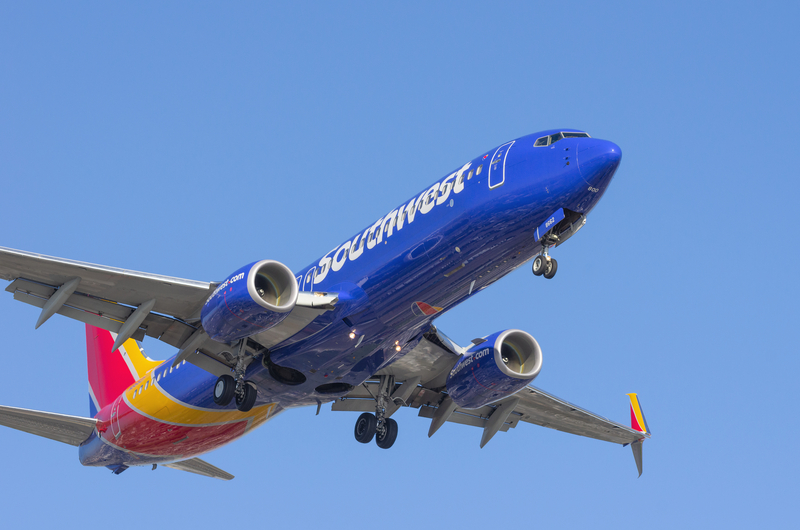
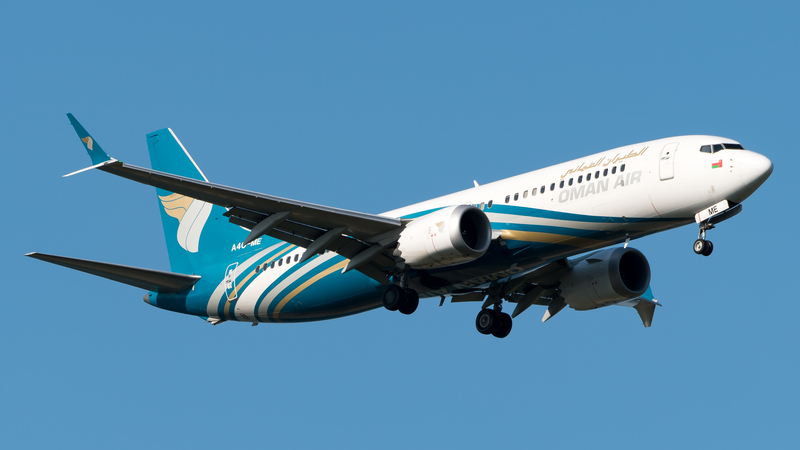
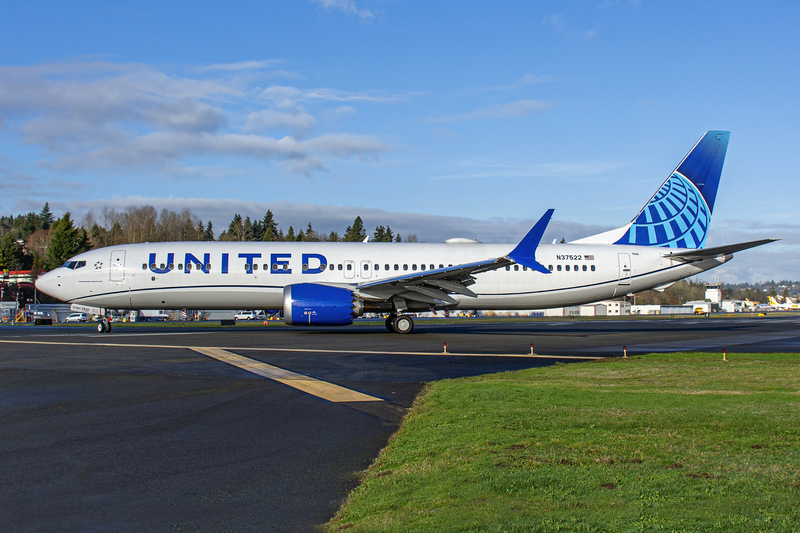
EWR–GOH is roughly 1,600+ nautical miles each way—long enough to require serious planning (including ETOPS considerations on a single-aisle jet) but not long enough to demand widebody economics. United operated the route with the Boeing 737 MAX 8, a smart choice for a market that’s small by any definition. The MAX 8 gives United the range and fuel efficiency to do something like GOH without the trip cost penalty of a widebody, and its performance margin matters when you’re working with Arctic alternates, weather volatility, and limited local infrastructure.
Nuuk’s airport story is central to why this route exists at all. GOH’s runway extension to 2,200 meters (about 7,200 feet) and the new terminal were specifically designed to move Greenland’s aviation center of gravity away from Kangerlussuaq (SFJ), which historically handled longer-haul flying because it had the runway for it. The upgraded GOH changed the game: it made a U.S. narrowbody mission feasible without the old “land at SFJ and connect onward” structure.

Why a 51% Load Factor Looks Worse Than It Is—and Still Bad
Let’s put the number in context. With a 166-seat 737 MAX 8 and only two weekly frequencies, United didn’t flood the market. This was “long and thin” flying in its purest form: limited capacity, high novelty, and a heavy bet on summer peak demand.
And yet, DOT figures show the route carried 4,869 passengers round-trip in the first season—roughly half the seats available. Monthly performance reportedly peaked around 61% in August, then fell sharply to roughly 41% in September, which is exactly when Greenland’s leisure curve drops off a cliff and shoulder-season weather becomes less forgiving.
For airline professionals, the instinct is to treat load factor as a proxy for profitability. That’s a trap—especially on a brand-new market—because what really matters is contribution margin: yield, premium capture, and what kind of connecting traffic the flight pulls over the hub.
Still, 51% is low enough that it demands an explanation, even before we talk about yields.

The Cabin Setup Matters More Than People Think
United didn’t send a “true long-haul product” to Nuuk (GOH). It sent a domestic-config MAX 8—exactly the sort of aircraft you’d expect to see bouncing around the Northeast and Florida.
What’s interesting is how the front cabin has been positioned. On paper, the aircraft includes 16 forward seats in a 2–2 layout (United’s typical domestic First-style recliners), with the remainder split between Economy Plus and standard economy. On a four-plus-hour transatlantic sector, that forward cabin can be a meaningful revenue lever—if United can sell it consistently to corporate travelers, high-end leisure, media, and tour operators. If it can’t, the route quickly becomes a pure leisure play with leisure yields, and that’s a tough place to live with Arctic operating complexity.
The flip side is cost control: a MAX 8 keeps trip costs down and reduces the “break-even load factor” versus anything larger. If a route is going to survive with mediocre demand, it will usually do so on the smallest appropriate gauge—exactly what United picked.
What Likely Held Back Year One Demand
A new route to a niche destination doesn’t magically fill itself. In Greenland’s case, there were several headwinds that can depress the first season without necessarily predicting long-term failure:

Awareness lag and distribution.
Even with strong media coverage, Greenland is still a specialty destination in the U.S. leisure market. Tour packaging, cruise tie-ins, and group travel pipelines take time to build. Two weekly frequencies also make it harder for tour operators to create clean, repeatable itineraries.
Seasonality is brutal.
Greenland’s “sellable” window is narrow. July and August carry the market; September can fall off quickly. That’s visible in the month-to-month load factor drop.
Operational confidence is fragile on a brand-new station.
Any irregular ops at GOH—staffing, screening throughput, deicing rhythm, equipment availability—gets magnified because there aren’t multiple daily flights to recover misconnects. One disruption can cascade into lost bookings for weeks if travelers perceive the route as unreliable.
New airport, new learning curve.
GOH is modernized, but it’s still ramp-limited compared to major European airports. Turn performance, handling capacity, and contingency planning are all different in an Arctic environment, especially at the edges of the season.
So Why Is United Bringing It Back in 2026?
Despite the weak first-year load factor, United is scheduled to operate the route again in summer 2026, with service planned to restart on June 6, 2026, again from Newark (EWR) to Nuuk (GOH). The timing signals something important: United is not treating this as a one-off publicity stunt. It’s treating it like a developing market.
There are also strategic reasons to keep a route like this alive:
-
Network distinctiveness out of EWR (EWR) is part of United’s identity. Unique destinations help defend hub relevance, especially against carriers competing for the same premium customers.
-
First-mover advantage in a brand-new market can pay off later if demand ramps and competitors stay out.
-
Connecting value over EWR is real. Even if local EWR–GOH traffic is limited, United can pull feed from across its domestic system into EWR and distribute it to GOH with one stop.
-
Route maturity often takes more than one summer, particularly when the destination is “new” to the U.S. mainstream.
What to Watch This Summer: The Metrics That Actually Decide Survival
If you’re trying to forecast whether EWR–GOH makes it beyond 2026, these are the indicators that matter most:
-
Peak-week performance in July/August: Does it move closer to a healthy load factor, or does it stay stuck in the low 60s?
-
Forward cabin monetization: Are those 16 front seats selling at a meaningful premium, or are they being dumped as upgrades?
-
Booking curve stability: Does the route sell steadily, or does it rely on late discounting?
-
Season trimming: If United shortens the operating window or reduces shoulder-week flying, that’s usually a sign the airline is protecting margins rather than giving up.
-
Operational reliability at GOH (GOH): Completion factor and on-time performance matter disproportionately on routes with only two weekly recovery opportunities.
Bottom Line
A 51% load factor on a brand-new international route is the kind of number that normally triggers a quick rethink. But Newark (EWR) to Nuuk (GOH) is not a normal route: it’s long, thin, highly seasonal, and enabled by a once-in-a-generation infrastructure upgrade at GOH. United’s choice of the Boeing 737 MAX 8 is the right economic tool for that mission, and a second season in 2026 suggests the airline believes the market can mature.
If summer 2026 shows meaningful improvement—especially in July and August—and United can consistently monetize the front cabin while keeping ops smooth at GOH, this route can survive as a niche seasonal flagship out of EWR. If it doesn’t, expect the classic network-planning response: a shorter season, fewer seats, or a quiet exit.