Turkish Airlines Adds Yerevan to Its Istanbul Hub, With Service Ramping Up to Twice Daily
Turkish Airlines is set to restore a high-profile link across the eastern edge of its short-haul network, scheduling new nonstop flights between Istanbul Airport (IST) and Yerevan’s Zvartnots International Airport (EVN) beginning March 11, 2026.
For travelers, the headline isn’t just another two-hour hop across the region—it’s what IST unlocks. Turkish Airlines’ mega-hub is built around tightly banked connections, and bringing EVN into that system gives Armenia’s main gateway a one-stop pathway to hundreds of onward markets across Europe, North America, the Middle East, and Asia.
What’s Planned: Daily at Launch, Then a Fast Summer Ramp-Up
As filed in airline schedules, Turkish Airlines will start with a straightforward daily pattern and then add frequency as the 2026 summer peak approaches:
-
From March 11, 2026: 7 weekly round trips (daily service) between IST and EVN
-
From May 14, 2026: 10 weekly round trips (select days with a second frequency)
-
From June 15, 2026: 14 weekly round trips (twice daily service)

That’s a meaningful escalation in a short window: moving from “daily” to “double-daily” typically signals confidence that the route can support both local traffic and connecting flows through IST.
Why This Route Matters: It’s About the Hub, Not Just the Hop
On a map, Istanbul (IST)–Yerevan (EVN) is a relatively short sector—well within the sweet spot for single-aisle aircraft economics. But commercially, the route is more interesting than the mileage suggests.
IST is a connectivity machine. A daily flight timed into the right banks can feed long-haul departures in multiple directions, while also providing Armenia-bound passengers with competitive one-stop options that previously required less convenient routings. For corporate travel, that matters: schedule choice and connection quality often outweigh the marginal differences in block time.

There’s also a network-structure angle: Istanbul has more than one commercial airport, and most Armenia–Istanbul flying in recent years has centered around Istanbul’s Sabiha Gökçen Airport (SAW). A Turkish Airlines-operated link into IST puts Yerevan into the carrier’s primary long-haul hub ecosystem—an entirely different proposition for connections, lounge access, and interline/codeshare behavior.
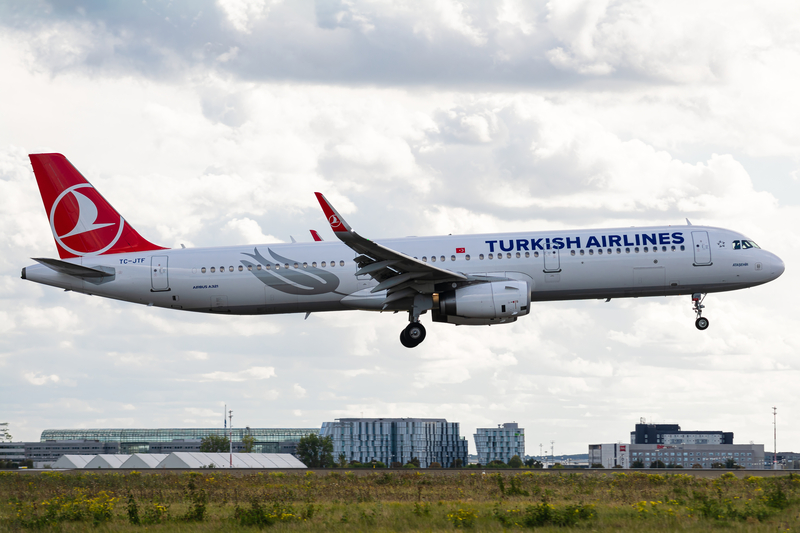
ID 159351604 © Gilles Bizet | Dreamstime.com
Aircraft Watch: Boeing 737-800 vs. Airbus A321
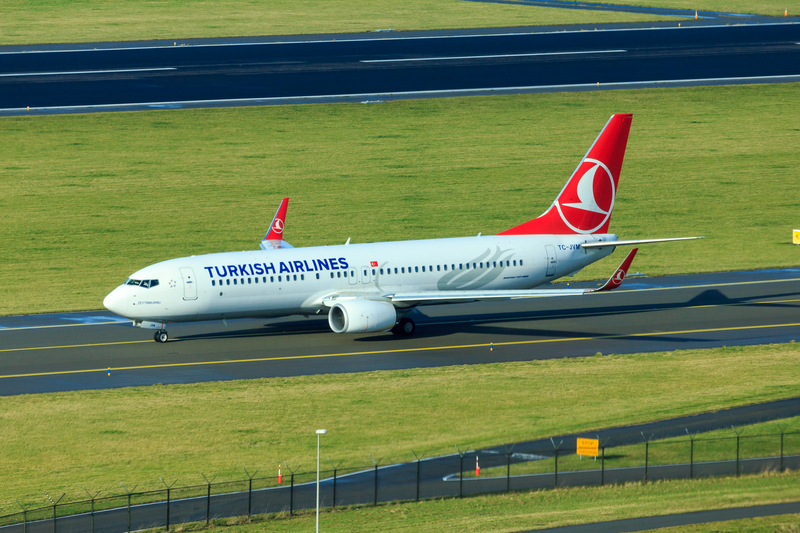
Turkish Airlines is planning to operate the route with a mix of Boeing 737-800 and Airbus A321-family aircraft.
That’s not a trivial detail. The aircraft choice often tells you how the airline is thinking about the market:
-
The 737-800 is a proven short/medium-haul workhorse, well-matched for thinner business markets and off-peak demand while still offering solid cargo capability and flexible scheduling.
-
The A321 brings extra capacity and typically stronger unit economics on high-demand regional routes, which lines up neatly with the planned step up to 14 weekly frequencies in peak summer—where airlines often balance more seats with more schedule utility.
Onboard, expect the typical short-haul two-cabin setup—European-style business class with upgraded service and economy behind—built for network connectivity rather than long-haul-style cabin differentiation.
The Airport Piece: EVN’s Role as Armenia’s Main Gateway
Yerevan’s Zvartnots (EVN) is Armenia’s primary international airport and the country’s most important aviation asset for inbound tourism and outbound diaspora travel. Operationally, EVN is well-positioned to handle narrowbody intensity, and its infrastructure supports regular international operations without the performance constraints you see at some high/hot airports.
From a route-development standpoint, adding a global connector hub like Istanbul (IST) tends to reshape itinerary behavior quickly—especially when the new option is both frequent and well-connected.
Bottom Line
Turkish Airlines will begin nonstop service between Istanbul Airport (IST) and Yerevan (EVN) on March 11, 2026, starting daily and then ramping up to 10 weekly flights in mid-May and twice daily (14 weekly) by mid-June. With Boeing 737-800 and Airbus A321 aircraft in the plan, the operation looks designed to scale with summer demand while plugging EVN directly into Turkish Airlines’ IST hub connectivity.