TAP Doubles Down on Porto: New Long-Haul Lift and New Routes
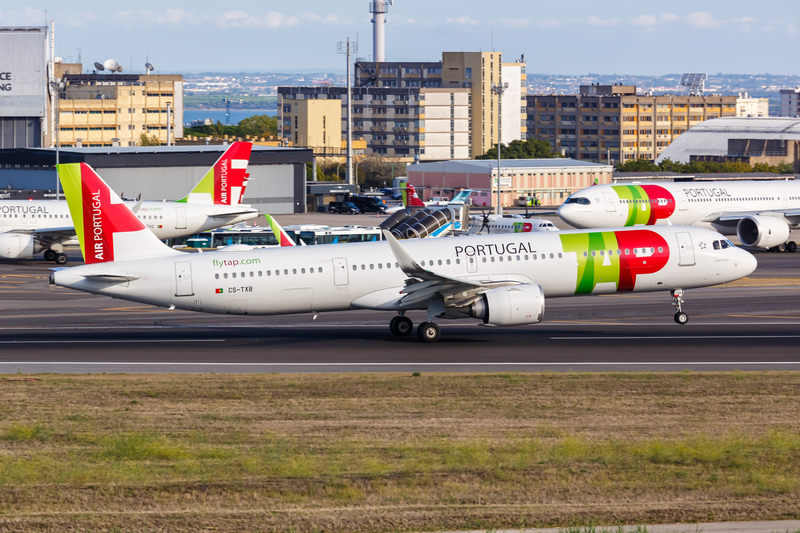
Porto’s Francisco Sá Carneiro Airport (OPO) is quietly becoming far more than a “north-of-Lisbon” alternative in TAP Air Portugal’s map. The flag carrier is expanding intercontinental flying from OPO while simultaneously committing to a sizable maintenance footprint that should reshape how the airline supports its narrowbody fleet—especially as TAP leans harder into longer-range single-aisle economics.
The headline is simple: more long-haul seats from OPO, more year-round certainty on core North Atlantic demand, and a maintenance investment designed to keep more work—and jobs—inside Portugal.
Porto’s Long-Haul Portfolio Gets Sharper
For the upcoming winter season, TAP is scheduled to operate 135 weekly direct flights from OPO, including 13 weekly intercontinental frequencies. Those long-haul departures link Northern Portugal nonstop to Rio de Janeiro/Galeão (GIG), São Paulo/Guarulhos (GRU), New York/Newark (EWR), and Luanda (NBJ).
That mix isn’t accidental. Each market hits a different pillar of long-haul sustainability:
-
Brazil (GIG/GRU): high-volume VFR flows plus resilient leisure, with year-round demand curves that often help smooth shoulder seasons.
-
New York/Newark (EWR): a corporate and VFR anchor—particularly strong for Northern Portugal catchment traffic, while also feeding TAP’s broader connectivity via Portugal.
-
Luanda (NBJ): a premium-and-essential market where schedule reliability and cargo capability can matter as much as seat count.

A note for ops-minded readers: Luanda service is now tied to Dr. António Agostinho Neto International Airport (NBJ)—a meaningful distinction, given the market’s historical association with Luanda (LAD).
The Aircraft Story: Why Gauge Matters More Than Ever
What makes TAP’s Porto push especially interesting is how it aligns with the industry’s most important long-haul trend: right-sizing. Rather than forcing widebody capacity into every transatlantic city pair, TAP has repeatedly shown it’s willing to deploy long-range narrowbodies where frequency and risk management trump sheer seat volume.

The long-range single-aisle lever
On routes like Porto (OPO)–Boston (BOS), TAP has already demonstrated how the Airbus A321LR can open (and sustain) thinner transatlantic lanes with a lower trip cost than a widebody. The A321LR’s design—additional fuel capacity and long-range performance—lets airlines serve North Atlantic stage lengths with a single-aisle cabin, while offering the scheduling flexibility of smaller gauge aircraft.
Where widebodies still win
Markets such as São Paulo (GRU) and Rio (GIG) tend to reward widebody economics when demand supports it—especially if belly cargo is part of the profitability story. TAP’s widebody fleet strategy (including the A330neo family) remains critical for high-density trunk routes where premium cabins, cargo volume, and peak-season demand justify larger aircraft.
New Short- and Medium-Haul Links That Feed the Long-Haul Bank
TAP is also adding routes that strengthen OPO’s role as a practical origin-and-connection point:

-
Porto (OPO)–Terceira/Lajes (TER) begins July 1 with three weekly flights, improving access between mainland Portugal and the Azores.
-
Porto (OPO)–Praia (RAI) also starts July 1 with three weekly flights, targeting Cape Verde demand that often blends VFR and leisure flows.
-
Porto (OPO)–Tel Aviv (TLV) is planned at four weekly flights in the next winter season—an eye-catching addition given the operational and risk-management complexities that can surround the Eastern Mediterranean.
Meanwhile, TAP is moving to make Porto (OPO)–Boston (BOS) a year-round operation starting next winter—exactly the kind of shift that signals confidence in baseline demand, not just summer peaks.
The Bigger Bet: A Maintenance & Engineering Hub at OPO
Network headlines grab attention, but TAP’s Maintenance and Engineering Hub at OPO may prove the more strategic move over the long run.
Planned for completion in 2028, the facility is designed to accommodate two A321-sized aircraft simultaneously, enabling TAP to bring more heavy maintenance capability in-house, tighten control over scheduling, and reduce dependence on third-party slots during peak check seasons. The airline expects the project to create around 200 highly qualified jobs, a meaningful injection of technical capacity into Northern Portugal’s aviation ecosystem.
There’s also a competitive logic here: as fleets modernize and A321-family utilization stays high, the ability to plan downtime with precision becomes a network advantage. For an airline juggling both hub flows and point-to-point flying, maintenance resilience can translate directly into better completion factors and fewer cascading disruptions.
Bottom Line
TAP’s move at Porto (OPO) is a two-part strategy: expand the long-haul relevance of Northern Portugal with carefully chosen intercontinental flying to GIG, GRU, EWR, and NBJ, while building the technical backbone to support sustained narrowbody growth through a dedicated MRO hub. In an era where margins are won on utilization, gauge discipline, and operational reliability, that combination is far more than a local headline—it’s a blueprint for how a legacy carrier modernizes without overextending.