SWISS A220-300 Blown Into A Snowbank After Landing At Kittilä (KTT)
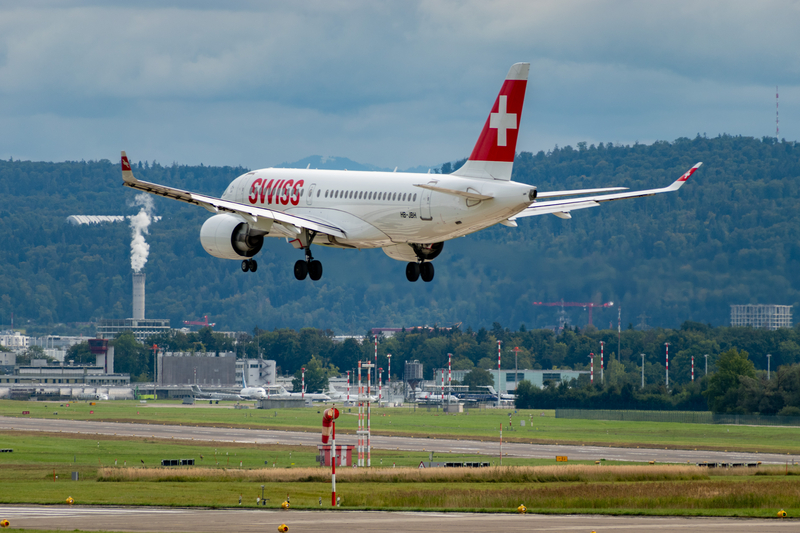
A SWISS Airbus A220-300 arriving in Finland’s Arctic north ended up in a snowbank after severe gusts pushed the aircraft sideways on the taxiway at Kittilä Airport (KTT). The incident occurred after the jet had already touched down and come to a stop, but strong winds and slippery winter surfaces combined to create a low-speed, high-headache situation for crews and ground teams.
SWISS says there were no injuries and no danger to passengers or crew, but the recovery took hours—and travelers remained onboard well beyond normal taxi-in and deplaning timelines.
What Happened On The Taxiway At Kittilä (KTT)
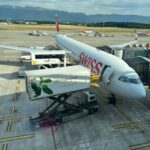
The aircraft involved was SWISS flight LX8904 from Geneva (GVA) to Kittilä (KTT), operated by HB-JCM, an A220-300 that entered the SWISS fleet in 2018.
After a roughly four-hour sector from GVA, the flight landed at KTT and was stationary on the taxiway with brakes applied when a gust reportedly pivoted the aircraft into a sideways orientation and pushed it into a snowbank along the taxiway edge. SWISS states the aircraft was later towed to stand once winds eased, with a total taxi-in time of about three hours.
Why This Can Happen Even After A “Normal” Landing
The key detail here is that this wasn’t a runway excursion during landing—it happened after touchdown, at very low ground speed (or stopped). In extreme winter ops, an aircraft can still slide or be displaced because:
-
Low friction on compacted snow/ice reduces tire grip, even with brakes applied.
-
Strong crosswinds or quartering winds can apply significant lateral force to the fuselage and tail.
-
Reduced taxi speed limits (often walking pace in very poor conditions) mean less directional control authority from nosewheel steering and momentum.
-
Snowbanks can be close to paved edges in Lapland operations, especially after repeated plowing during heavy snowfall.
At airports like KTT—popular in winter for ski traffic and located well above the Arctic Circle—conditions can deteriorate quickly, and recovery equipment may be constrained by visibility, wind, and frozen surfaces.
Passenger Experience: A Long Wait After Arrival
While the aircraft was recovered without reported damage, passengers remained onboard for more than three hours after landing while local teams worked to free and tow the aircraft. Even once on stand, strong winds reportedly complicated the positioning of mobile stairs and ground handling equipment.
With touchdown around 16:00 local time, passengers reportedly did not disembark until roughly 19:20, turning an “arrived” flight into a drawn-out cold-weather event.
The Aircraft: Airbus A220-300 In Winter Operations
The Airbus A220-300 (originally designed by Bombardier as the CS300) is well-suited to long, thin routes like GVA–KTT, particularly for seasonal demand into smaller airports. In SWISS service, the A220 family is a core narrowbody type, prized for:
AirBaltic Expands Winter Network with New Destinations Across Europe and North Africa
-
Efficient performance on medium-haul sectors
-
Strong short/contaminated-runway handling in appropriate conditions
-
A cabin optimized for passenger comfort (notably wider seats and larger windows than many older narrowbodies)
That said, no airliner is immune to physics: on slick surfaces, a stopped aircraft can still be pushed laterally if wind loads exceed available tire friction.
Wider Impact At Kittilä (KTT)
Around the same time, a business jet reportedly also ended up off-course in a snowbank and required recovery. Knock-on disruptions followed, including aircraft on the ground waiting for clearance and at least one inbound flight reportedly abandoning its KTT arrival plan due to conditions.
SWISS’ return leg to GVA was ultimately delayed and later canceled, which is consistent with how quickly winter irregular operations can cascade once an aircraft and crew are out of sequence.
Bottom Line
A SWISS A220-300 (HB-JCM) operating LX8904 from Geneva (GVA) to Kittilä (KTT) was blown into a snowbank by severe gusts after landing—an unusual but very “Lapland winter ops” scenario where wind, low-friction surfaces, and tight taxiway margins can combine fast. No one was hurt, but the recovery and deplaning took hours, underlining how quickly cold-weather ground conditions can turn a routine arrival into a major disruption.