Smoke in the Cabin: Why Airlines Are Tightening Power-Bank Rules After Back-to-Back Incidents
Aviation’s relationship with lithium-ion batteries has always been uneasy. The devices are everywhere—phones, laptops, e-cigarettes, medical equipment—and portable power banks have become the traveler’s default fix for dead batteries and weak seat power. But when a power bank fails, it doesn’t fail politely. It can enter thermal runaway: a self-heating chain reaction that produces intense heat, thick smoke, and—if it propagates—open flame.
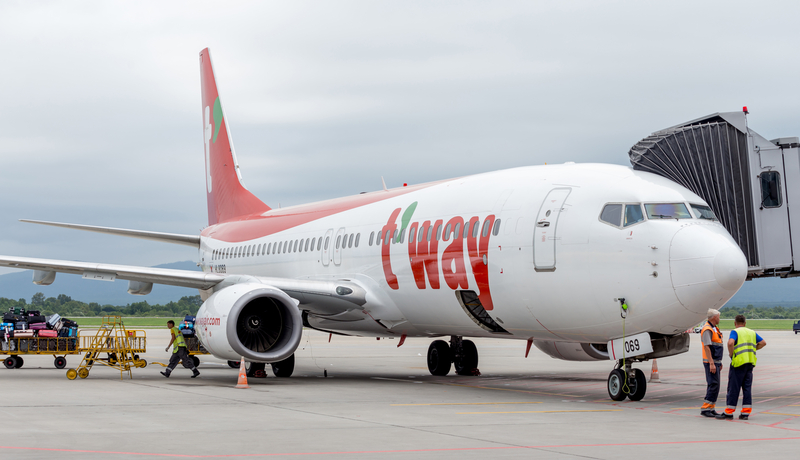
That risk moved back into the spotlight over the weekend of January 10, after two separate in-flight events in the region involving passenger power banks, one of them producing smoke onboard a T’way Airlines Boeing 737 MAX 8 and another igniting in an Asiana Airlines cabin on the Seoul Incheon (ICN)–Hong Kong (HKG) sector. The near-term takeaway is operational, not theoretical: airlines are leaning harder into rules that keep power banks accessible, visible, and unused in flight, because hidden battery events are the ones that escalate fastest.
Two events, two different failure modes
On the short-haul corridor between China and South Korea, T’way Airlines flight TW634 from Sanya Phoenix International (SYX) to Cheongju International (CJJ) experienced smoke traced to a passenger’s power bank while airborne. The aircraft was a Boeing 737 MAX 8—LEAP-1B powered and typically configured for high-density short/medium-haul flying—yet operating that day with a very light load. Crew members reportedly contained the device in water to arrest heat and smoke, a common best practice when a lithium-ion source is actively venting. Even when the fire risk is controlled quickly, smoke exposure is its own hazard in the confined volume of a narrowbody cabin, and several occupants reportedly required medical checks after landing.
A separate incident on Asiana Airlines flight OZ745 from Seoul Incheon (ICN) to Hong Kong (HKG) underlined the other nightmare scenario: a power bank igniting after being stowed overhead. Cabin crew reportedly extinguished the fire within minutes, and the flight continued to Hong Kong, but at least one passenger suffered burns. From a safety-management standpoint, the outcome was “contained,” but the message to operators is blunt: overhead bins are a bad place to discover a battery event. Visibility and access matter.
Why power banks worry safety teams more than your phone
A smartphone battery is “installed equipment.” A power bank is essentially a spare battery with a large energy reserve and exposed failure pathways: ports, cables, and sometimes questionable internal protection circuitry. Most passenger power banks are lithium-ion (UN 3480 classification in dangerous goods terms), and their risk profile is shaped by a few practical realities:
-
Energy density keeps rising. The same pocket-sized brick that was 5,000 mAh a decade ago is now routinely 20,000–30,000 mAh.
-
Labeling is inconsistent. Capacity is often marketed in mAh, but aviation limits are set in watt-hours (Wh). A “big” power bank can be compliant—or not—depending on voltage and pack design.
-
Quality varies wildly. Counterfeit cells, damaged packs, and poor battery-management systems are disproportionately represented in overheating events.
-
Charging adds stress. Heat, high current draw, and cable/connector wear raise the probability that a marginal pack becomes an in-flight problem.
For airline professionals, the key nuance is that the industry isn’t just reacting to “more devices.” It’s reacting to a device category that concentrates energy in a form factor passengers casually toss into the darkest corner of a roller bag.
The operational logic behind bans on in-flight use
Most airlines aren’t trying to prohibit passengers from carrying power banks outright. They’re trying to prevent the highest-risk behavior: charging devices (or the pack itself) while the power bank is buried in a bag or overhead locker.
That’s why the newest policies across multiple regions trend toward the same three controls:
-
Carry-on only. Power banks remain prohibited from checked baggage, because a cargo-compartment battery event is harder to detect early and is operationally far more complex to manage.
-
No use, no charging. If it isn’t being used, it’s less likely to overheat, and the cabin crew doesn’t have to play “find the smoking bag” at 35,000 feet.
-
Keep it accessible. Seat pocket, under-seat bag, or on-person storage makes early detection and rapid intervention realistic.
This is also why airlines increasingly dislike overhead-bin storage for spare batteries. The bin is out of sight, packed tightly with other combustibles, and typically opened only after smoke becomes obvious—by then, the event is already behind the curve.
What the new rulebooks are starting to look like
Australia has become one of the clearest case studies because the language is explicit and traveler-facing. Qantas and Jetstar moved to restrict power bank use onboard—no charging devices and no recharging the pack during flight—while still allowing carriage within capacity limits. Virgin Australia’s guidance goes even further in the “accessibility” direction by instructing passengers not to place power banks and loose batteries in overhead lockers, instead keeping them in the seat pocket, under the seat, or on-person.
In the United States, the direction of travel is similar even when the wording differs. Southwest’s approach focuses on behavioral control: charging from a power bank inside a carry-on bag is the problem, so devices being actively used should remain visible and quickly reachable.
Airlines don’t write these rules to be punitive; they write them because they’ve watched the same sequence play out repeatedly: a hot pack inside a closed bag becomes a smoke event, the bag becomes hard to locate, and the crew loses precious time in the highest-risk phase of escalation.
What operators and travelers can do that actually reduces risk
This is one of the rare safety issues where small habits have outsized payoff.
-
Verify the label before boarding. If the power bank doesn’t clearly display specifications, expect increased scrutiny—and don’t be surprised if it’s denied.
-
Avoid overhead-bin storage. If you can’t access it quickly, neither can the crew.
-
Don’t charge from the pack while it’s buried. If an airline allows power-bank use at all, keep it in sight while charging and disconnect it when you’re done.
-
Retire questionable packs. Swollen cases, cracked housings, loose ports, or intermittent charging behavior are all reasons to stop flying with a unit.
From an airline perspective, the most effective mitigations aren’t flashy. They’re consistent cabin messaging, crew drills that treat smoke as time-critical, and ensuring the right tools are actually reachable (containment bags, water source, protective equipment) when a device vents.
Bottom Line
The events on T’way TW634 (SYX–CJJ) and Asiana OZ745 (ICN–HKG) are the kind of “small” incidents that change policies—because they reveal how quickly a routine cabin can become a smoke-management exercise. The industry’s move toward restricting power-bank use, pushing packs out of overhead bins, and keeping lithium devices accessible isn’t overreaction; it’s an operational response to a hazard that is increasingly common, increasingly energetic, and increasingly passenger-driven. When lithium fails, speed and access are everything—and the rule changes are designed to buy both.