Screams Below Deck at Toronto: The Ramp Error That Stopped Air Canada Rouge AC1502
Air travel’s biggest safety margins aren’t found at 35,000 feet. They’re built on the ramp—where minutes matter, people are tired, and small misses can become life-threatening in a hurry.
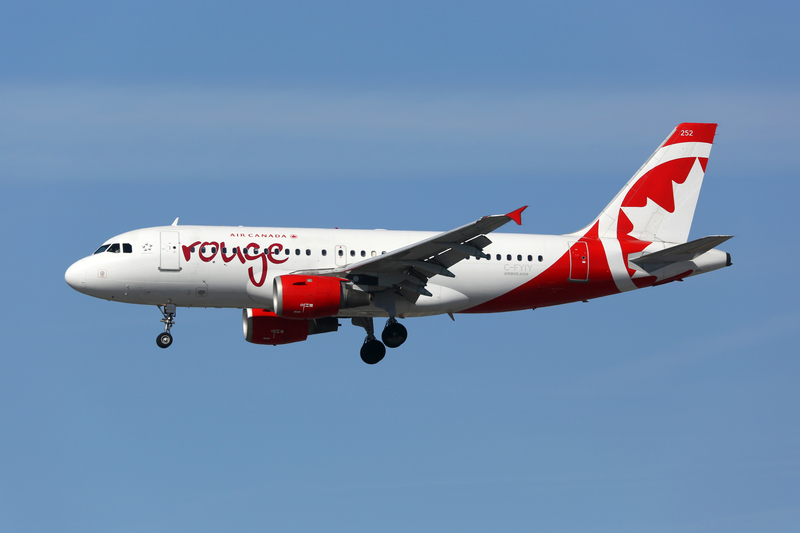
That reality came into sharp focus on December 13, 2025, when Air Canada Rouge flight AC1502—scheduled from Toronto Pearson International Airport (YYZ) to Greater Moncton Roméo LeBlanc International Airport (YQM)—returned to the gate after passengers reported banging and screams coming from the cargo hold. The “noise complaint” wasn’t a loose bag or a shifting cart. It was a person.
A ramp worker had been inadvertently trapped in the aircraft’s lower hold before the cargo door was closed. The crew stopped the taxi, coordinated a gate return, and the worker was freed on the ground—an outcome that avoided a much uglier scenario if AC1502 had departed YYZ with someone still below deck.
What Happened on the Taxi Out at YYZ
AC1502’s day was already going sideways before the incident began. The YYZ–YQM sector is typically a straightforward domestic hop—about 752 miles and roughly two hours in the air under normal conditions. But on this particular afternoon and evening, delays stacked up to the point that when the aircraft finally pushed back, passengers were already deep into the “how is this still not moving?” portion of the travel experience.
Then came the sounds: pounding from beneath the cabin floor and unmistakable shouting. Passengers alerted the cabin crew; some reports suggest travelers also tried contacting emergency services directly. From the flight deck, the decision was simple and immediate: stop, return, and investigate.
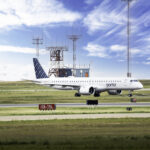
A gate return in that phase isn’t just a quick U-turn. Once you’re off the blocks, you’ve entered a tightly choreographed environment: ramp traffic flows, pushback lanes, ground control spacing, and departure banks. Reintegrating into the gate plan requires coordination across ramp, ops control, the gate team, and—depending on the airport’s setup—towing or stand reassignment. Still, compared with the alternative, the operational inconvenience is trivial.
The ramp worker was removed safely. But the flight’s operational day was effectively compromised from that moment forward.
The Aircraft Matters: Why “Just the Cargo Hold” Is Still Dangerous
Most reporting described the aircraft as an Airbus A321 (A321)—part of the ubiquitous A320 family. In airline operations, that detail isn’t trivial, because the A320-family lower holds are designed for bags and freight, not people.
A few technical points aviation professionals will appreciate:
The lower hold is pressurized, but it isn’t a livable space.
On an A321, the cargo compartments are typically pressurized to a cabin-altitude environment—but they are not intended for human occupancy. Temperature control varies by aircraft and operator configuration; it can be significantly colder than the cabin, especially in winter operations out of YYZ. Even on a short YYZ–YQM flight, exposure can become a medical emergency surprisingly quickly.
There’s no passenger safety infrastructure down there.
No seats, no restraints, no supplemental oxygen, no easy access to medical support, and no practical way for crew to intervene in flight. Even if the person remains conscious, the environment is hostile—and the aircraft is not set up to “recover” them until the airplane is on the ground with the cargo doors open.
The hold isn’t easy to escape from.
Cargo doors on the A320 family are powered and secured for flight. The compartment itself is not designed with “occupant egress” as a requirement the way a cabin is. A trapped worker’s options are basically limited to making noise and hoping someone hears it—exactly what happened on AC1502.
This is why a mistake that might sound small in plain language (“someone got closed in the hold”) is treated as a serious safety event in airline ground operations.

Why the Delay Spiral Was Almost Inevitable
Once the aircraft returned to the gate at YYZ, AC1502 wasn’t just late—it was operationally “uncertain.”
Events like this trigger layers of follow-on work:
-
Mandatory reporting and documentation (internal safety systems, ground handler processes, and potentially regulator-facing reports)
-
A renewed departure closeout (load confirmation, hold status, and in many cases a reset of who-signs-what responsibilities)
-
Crew duty time risk (when a flight is delayed for hours, even a relatively short sector like YYZ–YQM can run headfirst into legal limits)
And then comes the part passengers see: deplaning, reboarding, crew swaps, and, all too often, an eventual cancellation when the day simply runs out of viable options.
From a network reliability perspective, a late-night cancellation on a domestic out-and-back also tends to create a secondary wave of disruption—because the aircraft and crew are often positioned for next-day flying, and YQM isn’t exactly overflowing with spare lift or standby crews at midnight.
The Bigger Lesson: Ground Safety Is a System, Not a Slogan
Aviation doesn’t “hope” errors won’t happen. It designs layers to catch them. When someone ends up inside a hold with the door closed, multiple layers have failed—usually some mix of time pressure, communication breakdown, and human factors like fatigue.
Airlines and ground handlers commonly rely on procedural barriers such as:
-
positive confirmation that holds are clear before closure
-
two-person cross-checks on door closure
-
headset/radio callouts between ramp and cockpit during closeout
-
final walkarounds that verify doors, panels, and service points before taxi
But procedures alone are only as strong as the environment they’re performed in. When a turnaround is behind schedule, the ramp is congested, and teams are trying to recover a bank, the system needs extra resilience—not fewer steps.
This is also where technology can play a meaningful role, as long as it’s implemented thoughtfully. Sensors, access-control logging, or even simple “hold occupancy” confirmation workflows can reduce reliance on memory and assumptions. But the human piece remains central: staffing levels, realistic turnaround planning, and a safety culture where “stop the operation” is supported—not punished—when something looks wrong.
It Could Have Been Worse: The Industry Has Seen That Movie Before
The most unsettling part of the AC1502 story is how close it came to becoming an in-flight emergency rather than a gate return.
A widely reported 2025 incident involving a Turkish Airlines Airbus A321 underscored the stakes when a trapped worker isn’t discovered until after takeoff. That event reportedly ended with a diversion and severe cold exposure for the individual involved—exactly the kind of outcome YYZ avoided by catching the problem on the ground.
Aviation safety often comes down to when an error is detected. AC1502 was detected early enough to stay in the realm of a serious ground incident rather than an accident investigation.
Bottom Line
Air Canada Rouge AC1502’s gate return at Toronto Pearson (YYZ) wasn’t just a bizarre passenger anecdote—it was a reminder that the ramp is one of aviation’s highest-risk environments. A trapped worker in the cargo hold is the definition of a low-frequency, high-severity event: rare, but potentially catastrophic if it slips past the last available checkpoints.
The good news is the system did work at the final moment that mattered most—passengers and crew recognized something was wrong before departure, and the flight deck took the only acceptable option: stop and return. The bad news is that the situation existed at all.
For airlines, airports, and ground handlers, this is the kind of incident that should trigger more than a procedural refresher. It’s a cue to examine fatigue, turnaround pressure, communication practices, and whether the operation has enough redundancy to catch the one mistake nobody gets to make.