Salem’s Security Checkpoint Goes Dark: Why SLE Lost TSA Screening
Salem-Willamette Valley Airport (SLE) has been here before: a hopeful push to restore scheduled passenger flying, followed by a hard reset back to a general aviation profile. This time, the reset comes with a tangible operational consequence—SLE is losing its Transportation Security Administration (TSA) passenger screening footprint after failing to restart commercial service before the federal deadline, effectively turning the terminal back into a non-commercial facility in the eyes of aviation security planners.
For travelers in Oregon’s capital region, the practical outcome is simple: if you want scheduled airline service, you’re back to driving north to Portland International (PDX) or south to Eugene (EUG). For airports and airlines, the story is more complicated—and more important—because once TSA equipment and staffing are pulled, restarting service becomes less about “finding an airline” and more about rebuilding the entire chain of operational readiness that scheduled passenger service requires.
From a 737 Comeback to Another Pause in Scheduled Service
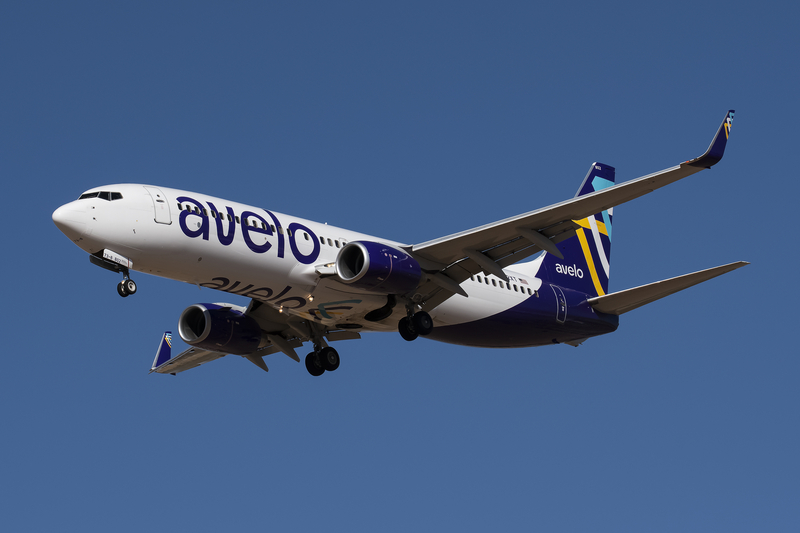
SLE’s most recent commercial chapter was powered by Avelo Airlines, which brought mainline narrowbody service into a market that hadn’t seen sustained scheduled flying in years. Avelo’s SLE routes were designed around leisure demand, with nonstop flights to Hollywood Burbank (BUR) and Las Vegas (LAS), later adding Santa Rosa (STS). Avelo typically operates Boeing 737-700s and 737-800s—workhorse CFM56-powered narrowbodies that are straightforward to dispatch, easy to crew, and efficient on short-to-medium stage lengths when the fare environment supports them. In a small market, though, those same aircraft can become unforgiving: you need consistent volume, decent yields, and minimal schedule disruption to keep a mainline gauge profitable.
When Avelo exited, it didn’t just remove seats from SLE. It removed the underlying justification for a federalized passenger screening operation at the airport—something TSA staffs and equips based on real scheduled demand, not on aspiration.
What “Losing Federal Status” Really Means at an Airport Like SLE
In practical airport terms, SLE’s loss of federal passenger screening status means the TSA checkpoint operation is being stood down and its assets reallocated. That typically includes the visible pieces (screening lanes, scanners, and checkpoint infrastructure), and the less visible—but equally critical—parts such as on-site staffing models, supervisory coverage, training cycles, and local operational rhythm.

For an airline evaluating a restart, this matters because TSA screening isn’t something an airport simply “turns back on” overnight. Even if an airline wanted to launch service quickly, the process of re-federalizing screening can introduce lead time that clashes with route planning, aircraft rotations, and the need to publish schedules far enough in advance to stimulate demand.
In other words: SLE’s barrier to re-entry isn’t runway length or terminal size—it’s the absence of an active, staffed, federally supported security operation that scheduled service essentially depends on.
The Airline Planning Problem: Schedules Move Faster Than Infrastructure
Airline network planning is built around deadlines: aircraft allocation cycles, crew basing constraints, slot timing (where applicable), and seasonal demand windows. Airports rebuilding commercial readiness are often working on a different clock—procurement, staffing, regulatory approvals, and facility readiness.
That mismatch is why many small airports try to secure a committed carrier before federal support sunsets. Once TSA is gone, the airport must persuade an airline to commit despite added uncertainty: “We can get screening back, but it will take time.” Airlines don’t love “maybe” in an environment where aircraft time is scarce and every rotation has alternatives.

What SLE Still Has Going for It Operationally
Despite the loss of scheduled passenger ops, SLE remains a capable airfield with real utility:
-
Airfield capability: SLE’s runway package is sufficient for a wide range of regional and mainline operations, and it has long supported business aviation and other traffic.
-
Geography and catchment: Positioned in the Willamette Valley with relatively easy surface access, SLE can be attractive when travelers want to avoid PDX congestion—if the schedule and pricing are right.
-
Non-passenger flying continues: Cargo and general aviation activity doesn’t disappear just because TSA pulls out of the terminal. Freight, corporate flying, and training operations can continue without the same passenger screening footprint.
For a future carrier, the winning formula at SLE is less about aircraft performance and more about right-sizing and frequency discipline. A 76-seat regional jet or a 99–110-seat narrowbody configuration, paired with the right days-of-week and strong distribution, may be a better fit than trying to fill a higher-density 737 multiple times per week—unless the fare mix supports it.
Bottom Line
Salem-Willamette Valley Airport (SLE) losing TSA’s passenger screening presence is more than symbolic—it raises the operational hurdle for any airline that might consider returning. Once screening staff and equipment are redeployed, restarting scheduled service becomes a multi-step project that requires a carrier commitment, TSA lead time, and a coordinated relaunch plan that aligns with airline scheduling cycles. SLE still has the airfield and location to support commercial flying, but until security screening is re-established, the airport’s path back to scheduled passenger service will be measured in planning seasons, not weeks.