Rat Stowaway On KLM A330 Grounds The Aircraft At Aruba, Stranding 250+ Passengers
A transatlantic flight is usually a tightly choreographed routine: ETOPS alternates, crew duty windows, and a widebody rotation that has to be in the right place at the right time to keep the long-haul network intact. This week, KLM’s Dutch Caribbean “triangle” run from Amsterdam Schiphol (AMS) to Aruba Queen Beatrix (AUA) and Bonaire Flamingo (BON) was disrupted by something no dispatcher wants to hear over ACARS:
A rat was spotted in the cabin.
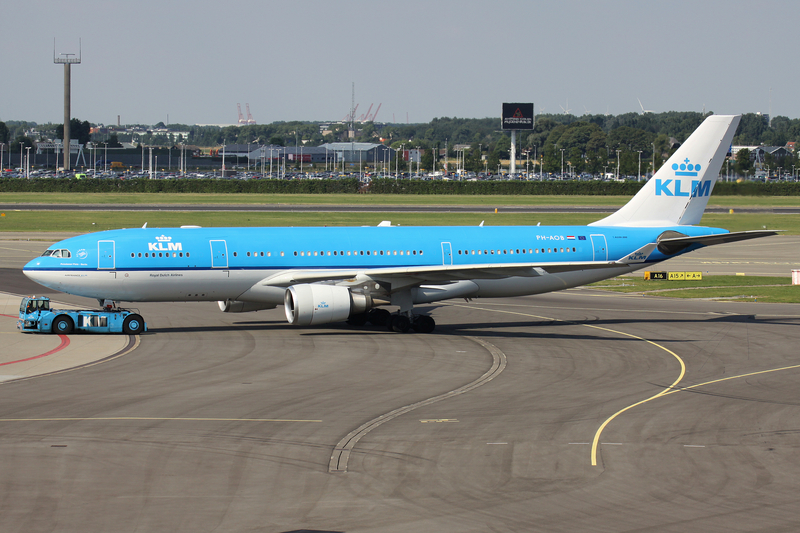
The Airbus A330 continued from AMS to AUA—there’s little practical value in turning back once you’re committed across the Atlantic—but the aircraft was pulled from service on arrival, triggering cancellations and leaving more than 250 passengers stranded between AUA and BON while KLM worked to locate the animal and clear the jet to fly again.
A Rodent At Cruise: Why The Flight Continued To AUA
Dutch media reports indicate the rat was first seen mid-flight, moving along a curtain track inside the cabin. By that point, the A330 was already deep into the oceanic portion of the crossing.
From a cockpit perspective, this is where real-world constraints kick in:
-
Turning around doesn’t necessarily shorten the problem—especially if you’re already near the midpoint.
-
Over the Atlantic, diversion options can be limited by weather, alternates, fuel, and ETOPS planning.
-
The immediate priority becomes monitoring (to ensure the animal isn’t creating a safety issue in the cabin) and getting the airplane on the ground at a capable station.
KLM ultimately kept the flight on schedule to AUA, with reports noting that onboard service continued and the animal did not interfere with catering.
The Knock-On Effect: The AMS–AUA–BON–AMS Triangle Breaks
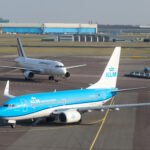
KLM operates multiple weekly flights on the AMS–AUA–BON–AMS triangle routing—an efficient way to serve two Dutch Caribbean points with one long-haul widebody rotation.
Once the A330 arrived at AUA, the airline canceled the onward segment to BON and the return to AMS, effectively snapping the triangle in half:
-
Travelers expecting to continue from AUA to BON were left on Aruba.
-
Passengers positioned in BON for the return to AMS were also impacted.
-
The return-side disruption rippled because the aircraft couldn’t legally or operationally be dispatched until the situation was resolved.
KLM arranged hotels in AUA and began reaccommodating customers while the aircraft underwent enhanced cleaning and inspection.
Why A “Simple” Rat Becomes A Serious Airworthiness Problem On An A330
Seeing a rat in the cabin is unpleasant. Operationally, it’s bigger than that.
A modern widebody like the Airbus A330 has extensive wiring runs, avionics bays, environmental ducting, insulation blankets, and underfloor spaces—areas a small animal can potentially access if it gets beyond the cabin.
The two major concerns airlines and regulators take seriously are:
-
System integrity risk: rodents can chew wiring or insulation. That’s not a Hollywood scenario—maintenance teams treat any unaccounted-for animal as a potential hidden-damage event until proven otherwise.
-
Hygiene and contamination: droppings and urine introduce biohazard concerns, particularly around galleys, service areas, and soft furnishings.
That’s why the standard response is not “spray and go.” It’s typically a combination of:
-
targeted inspection (including areas beneath floor panels and around service monuments),
-
deep cleaning/sanitation, and
-
traps and monitoring until the animal is caught and engineering is satisfied there’s no secondary damage.
In this case, local reporting indicates it took roughly 36 hours from the initial sighting to successfully trap the rat—an eternity when your aircraft is supposed to be turning back to AMS.
How Rodents Get Onboard In The First Place
Airliners don’t exactly invite wildlife aboard, but the pathways are well known in operations:
-
Catering and service equipment: carts and containers staged near aircraft doors can provide shelter.
-
Baggage/cargo loading: baggage holds, ULDs, and belt-loader areas are exposed points during turnarounds.
-
Jet bridge/service doors: a brief gap during servicing is all it takes for a determined stowaway.
Airports run pest-control programs, but ramp environments are complex ecosystems—food waste, warm equipment bays, and lots of hiding places. One small breach is enough to create a very expensive delay.
What Stranded Passengers Can Typically Expect Under EU Rules
Because the journey originates from Amsterdam (AMS), EU passenger-rights protections generally apply to cancellations on this itinerary. In practical terms, that usually means:
-
Duty of care: rebooking options, meals, hotel accommodation (as needed), and transport between hotel and airport while passengers wait.
-
Cash compensation: this is where it gets nuanced. Airlines can contest compensation if they can show “extraordinary circumstances” and that they took all reasonable measures. Events involving animals are frequently argued in that category, though outcomes can depend on the specifics.
For affected travelers at AUA and BON, the best advice is boring but effective: keep receipts, document rebooking offers, and file claims directly with the carrier once you’re home.
Bottom Line
A rat sighting onboard a KLM Airbus A330 operating the AMS–AUA–BON triangle route turned into a full-blown operational disruption: the flight continued to Aruba (AUA), but the aircraft was then grounded for inspection and deep cleaning, canceling the onward leg to Bonaire (BON) and the return to Amsterdam (AMS). With the animal reportedly not trapped until roughly 36 hours after it was first spotted, more than 250 passengers ended up stranded across the Dutch Caribbean while KLM worked to clear the aircraft back into service.