Oman Air’s New Copenhagen Service Comes With A Baghdad Twist – And A Fifth-Freedom First
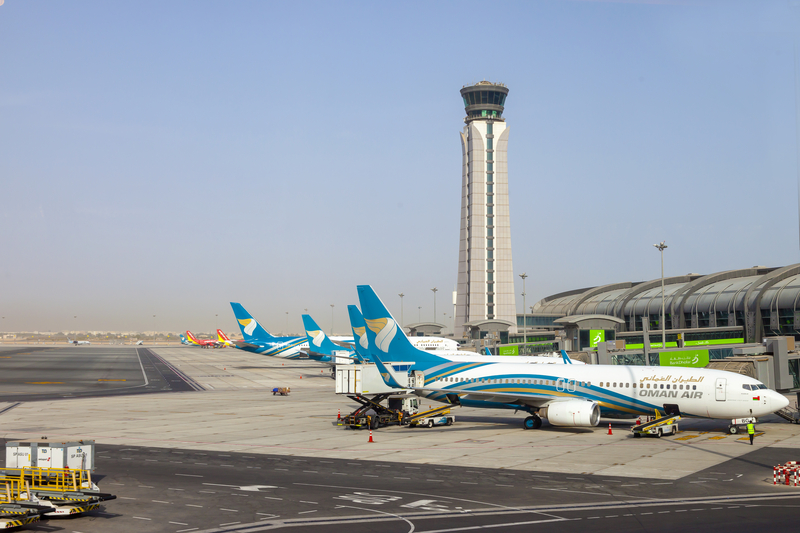
Oman Air is back in the Europe expansion conversation — but not in the way most travelers would expect. Instead of a straightforward Muscat–Copenhagen nonstop, the carrier has launched a tag-on routing that links Muscat International Airport (MCT) to Copenhagen Airport (CPH) via Baghdad International Airport (BGW). It’s a move that simultaneously adds new city pairs, improves aircraft utilization, and creates an unusual new one-stop option between the Gulf and Scandinavia.
Just as interesting: the Baghdad–Copenhagen (BGW–CPH) sector is being sold as a standalone fifth-freedom flight, giving Denmark a new nonstop link to Iraq in the process. Airways
The Route: Muscat (MCT) – Baghdad (BGW) – Copenhagen (CPH)
Oman Air’s operation is structured as a 2x-weekly service, with flight WY425 operating westbound (MCT–BGW–CPH) and WY426 operating eastbound (CPH–BGW–MCT). The carrier had initially targeted a mid-month start, but tracking data shows the first scheduled rotations on December 16, 2025 were canceled, with the service then lining up to operate from December 20, 2025 onward.
Scheduled timings (local times):
-
WY425: Muscat (MCT) 13:00 → Baghdad (BGW) 14:55; then Baghdad (BGW) 15:55 → Copenhagen (CPH) 19:25
-
WY426: Copenhagen (CPH) 20:25 → Baghdad (BGW) 03:25 (+1); then Baghdad (BGW) 04:25 → Muscat (MCT) 08:00
From a network-planning perspective, it’s a clean “two-for-one” pattern: Oman Air gets to serve CPH without committing to a dedicated widebody rotation, while BGW gains a new nonstop to Scandinavia and added connectivity via MCT.
Why Route Via Baghdad (BGW)?
The simple answer is that it allows Oman Air to create multiple viable markets with one aircraft pattern:
-
MCT–BGW: strong enough on its own to justify service (and it’s a logical regional link for business, visiting friends and relatives, and onward connections via Muscat).
-
BGW–CPH: a brand-new nonstop market for Denmark–Iraq traffic, plus a niche option for passengers who prefer to avoid a connection through a larger hub.
-
MCT–CPH (one-stop): a competitive alternative to itineraries via Doha (DOH), Dubai (DXB), Istanbul (IST), or Frankfurt (FRA), especially if the fare is positioned aggressively.
The more nuanced answer is fleet economics. Oman Air has been leaning harder into narrowbody flying as it reshapes its network and prioritizes point-to-point growth — and the MCT–BGW–CPH pattern is exactly the kind of route architecture that makes a single-aisle aircraft work harder across a 24-hour period.
The Fifth-Freedom Angle: BGW–CPH As A Standalone Flight
This is the part that will raise eyebrows across the industry. Oman Air is treating BGW–CPH as a sellable, local market — i.e., you can book Baghdad (BGW) to Copenhagen (CPH) without continuing to Muscat (MCT). Airways Magazine notes this is Oman Air’s first fifth-freedom connection, a significant milestone for a carrier that has historically kept things straightforward: hub-and-spoke through Muscat, or nonstop point-to-point.
In raw distance terms, the sectors are very workable for a narrowbody:
-
MCT–BGW: ~1,082 miles (about 940 nautical miles)
-
BGW–CPH: ~2,161 miles (about 1,878 nautical miles)
That BGW–CPH stage length is firmly in the “long narrowbody” category — long enough that the onboard product matters, but not so long that it becomes operationally fragile on performance alone.
Aircraft Choice: Boeing 737-8 Family, Long-Legged Narrowbody Flying
Oman Air is operating the Copenhagen service with a Boeing 737-8, according to Airways Magazine, with a 162-seat layout: 12 Business Class and 150 Economy Class. (Some schedule systems have filed the operation as “B738,” a designation commonly associated with the 737-800, but Oman Air’s published route details and onboard product description for this operation are aligned around its 737-8 cabin standard.)
What to expect onboard
This isn’t lie-flat territory — but it’s also not a barebones short-haul setup pretending it can do Europe.
Airways’ cabin details for Oman Air’s 737-8 highlight a genuinely premium narrowbody front cabin:
-
Business Class (2-2): Collins Aerospace Air Rest recliners (20″ width, 46.6″ pitch) with 17″ HD IFE and power at each seat
-
Economy (3-3): Collins Aerospace Meridian seats with 10.2″ HD IFE, ~30.7″ pitch, and USB charging
For passengers eyeing BGW–CPH, that seat-and-IFE spec matters: it’s the difference between “interesting new route” and “six hours I’ll never do again.”
Who Is This Flight Really For?
This isn’t designed solely for one type of passenger — and that’s the point.
1) Denmark–Iraq traffic (CPH–BGW)
A new nonstop is a big deal in any unserved market. It can stimulate demand quickly, particularly for VFR traffic, contract travel, and government/NGO movement — the kinds of flows that don’t always show up loudly until a nonstop exists.
2) Oman–Denmark traffic (MCT–CPH)
Muscat (MCT) has quietly built a reputation as a premium, lower-stress connecting point compared with the mega-hubs. For travelers willing to take a one-stop, Oman Air can compete on schedule convenience and price — and for oneworld frequent flyers, alliance alignment helps.
3) Opportunistic connectors
Oman Air will inevitably sell beyond these endpoints, using Muscat (MCT) to feed select Asia/Africa flows onto the Copenhagen (CPH) service, depending on bank structure and fares. The narrowbody gauge keeps risk in check: fewer seats to fill than a widebody, with the upside of higher frequency potential if it works.
Bottom Line
Oman Air’s new Muscat (MCT) – Baghdad (BGW) – Copenhagen (CPH) service is one of the more strategically interesting route launches we’ve seen from the Gulf this season. It’s a twice-weekly operation built around smart aircraft utilization, and it doubles as a headline-grabber: a fifth-freedom Baghdad–Copenhagen (BGW–CPH) nonstop that creates a brand-new market pairing.
Whether it turns into a durable niche success or a short-lived experiment will come down to two things: how consistently Oman Air can fill BGW–CPH year-round, and whether the carrier can price MCT–CPH competitively enough to pull traffic away from the entrenched one-stop options via larger hubs.