MH370: Beijing Court Orders Malaysia Airlines To Pay About $410,000 Per Case
More than 11 years after Malaysia Airlines Flight MH370 vanished, two long-running threads in the story have moved again—the legal fallout and the hunt for the wreckage.
First, a Beijing court has ordered Malaysia Airlines to pay 2.9 million yuan (about $410,000) in compensation per case for a set of MH370-related lawsuits. Second, Malaysia’s Transport Ministry says the deep-sea search will resume on December 30, with Ocean Infinity returning to the southern Indian Ocean for another targeted seabed campaign.
For families who have spent a decade in limbo, neither development answers the central question—what happened to the airplane?—but both are concrete steps in a saga often defined by the absence of certainty.
The Flight That Disappeared: KUL–PEK On A Boeing 777-200ER
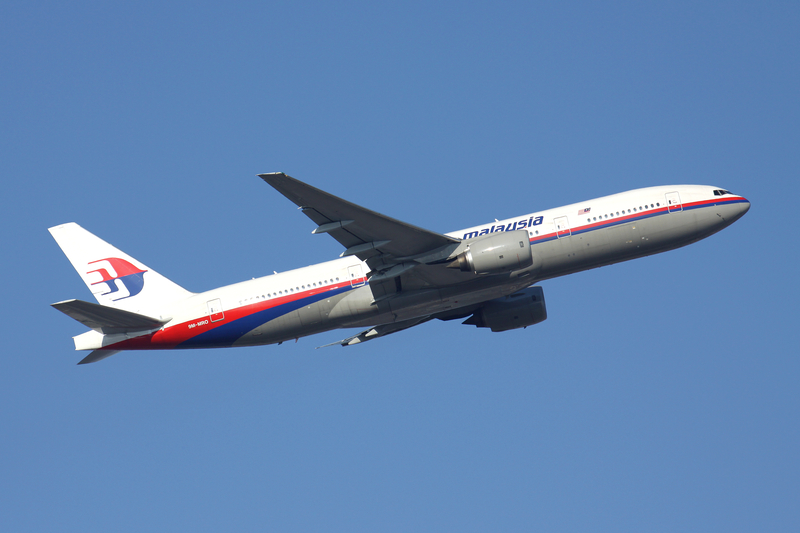
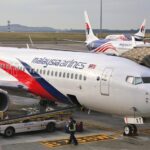
MH370 was a scheduled Malaysia Airlines service from Kuala Lumpur International Airport (KUL) to Beijing Capital International Airport (PEK) operated by a Boeing 777-200ER—a long-range variant built for transoceanic work with higher fuel capacity and ETOPS capability.
The aircraft was 9M-MRO, a Boeing 777-2H6ER (Malaysia Airlines customer code H6), powered by Rolls-Royce Trent 892 engines. In Malaysia Airlines’ two-cabin configuration at the time, the jet could seat 282 passengers (35 business / 247 economy). MH370 carried 239 people total—227 passengers and 12 crew—when it departed KUL in the early hours of March 8, 2014.
The last known voice contact occurred roughly 38 minutes after takeoff, around the handoff point between Malaysian and Vietnamese controllers over the South China Sea. After that, the aircraft’s track diverged dramatically from its filed routing. Subsequent satellite communications analysis pointed investigators toward a final corridor in the southern Indian Ocean, but the main wreckage has never been located.
Beijing Court Orders Compensation: 2.9 Million Yuan Per Case
According to reporting carried by Chinese state media and international outlets, a Beijing court has ordered Malaysia Airlines to pay more than 2.9 million yuan per case (about $410,000) to families tied to eight MH370 passenger cases currently in court.
A few key details that matter:
-
The rulings involve eight cases (eight passengers).
-
47 cases have previously been settled or withdrawn.
-
23 cases remain under trial.
The amount is reported to cover multiple categories of loss—typically framed in the court record as death-related damages, funeral-related costs, emotional distress, and associated expenses. Importantly, these are court-ordered awards tied to specific claims, not a blanket “per family” settlement for all MH370 victims.
China’s courts are involved largely because the majority of MH370’s passengers were Chinese citizens, and families have pursued legal action domestically over the years.

The Search Restarts December 30: Ocean Infinity Returns To The Seabed
Malaysia’s Transport Ministry says Ocean Infinity will resume search operations on December 30, 2025, conducting a 55-day campaign—intermittently, based on weather and operational windows.
This is best understood as the third major seabed hunt in the MH370 case:
-
The multinational/Australian-led underwater search that followed the early surface effort (covering an enormous swath of the southern Indian Ocean).
-
Ocean Infinity’s privately run subsea search in 2018.
-
The current Ocean Infinity effort under a refreshed agreement—now returning again at the end of 2025.
The commercial structure remains unusual by aviation-investigation standards but has become familiar in the MH370 era: “no find, no fee.” Malaysia has agreed to pay Ocean Infinity up to $70 million only if significant wreckage is located.
What’s Different This Time?
Ocean Infinity’s pitch is straightforward: better tools and a narrower search box.
Modern seabed searches lean heavily on autonomous and remotely operated systems—think AUVs running disciplined “mow-the-lawn” sonar patterns, backed by improved seabed mapping, refined drift studies, and updated interpretations of satellite handshake data. The aim isn’t to re-search the entire Indian Ocean; it’s to concentrate on the most credible high-probability zone and interrogate it with higher-resolution sensors than were available (or economically feasible) a decade ago.
Why Finding The Wreckage Still Matters: FDR/CVR, But Also Structural Clues
A common misconception is that MH370’s flight recorders—the Flight Data Recorder (FDR) and Cockpit Voice Recorder (CVR)—are the only “answers.” They’re crucial, yes, but they’re not the whole story.
Even without pristine recorder data after more than a decade underwater, recovering major components can still provide:
-
impact signatures (breakup vs. relatively intact entry)
-
configuration clues (slats/flaps positions, gear status, control-surface evidence)
-
fire/explosion indicators (or lack thereof)
-
maintenance and structural fracture patterns that can validate or contradict theories
In other words, the wreckage itself is forensic evidence—sometimes as decisive as the recorders.
Bottom Line
A Beijing court has ordered Malaysia Airlines to pay about $410,000 (2.9 million yuan) per case in eight MH370-related lawsuits, while 23 more cases remain in trial. At the same time, Malaysia says the Ocean Infinity-led seabed search for MH370 will resume on December 30, 2025, running 55 days under a “no find, no fee” arrangement with a potential $70 million success fee.
MH370 departed Kuala Lumpur (KUL) for Beijing (PEK) on a Boeing 777-200ER (9M-MRO) and disappeared with 239 people onboard. Until the main wreckage is found, the aviation world will keep cycling between courtrooms, search grids, and the same unresolved question—how a long-haul widebody can vanish into the ocean leaving so few definitive answers.