Manchester’s Transatlantic Shake-Up: Aer Lingus Freezes Long-Haul Sales as UK Unit Faces an Inflection Point
Aer Lingus (EI) has effectively put its Manchester transatlantic experiment on pause—at least from a booking perspective. The carrier has stopped selling tickets for travel from March 31, 2026 on its long-haul services out of Manchester Airport (MAN), covering the three routes that have defined Aer Lingus UK’s flying: New York–JFK (JFK), Orlando (MCO), and Bridgetown, Barbados (BGI).
Aer Lingus has not formally confirmed a base closure, but the move is a classic early signal: shut off forward sales to reduce disruption while management evaluates whether the operation continues in its current form. In airline terms, it’s a way to “protect the schedule” before the schedule gets rewritten.
The Manchester Long-Haul Operation Was Always a Specific Kind of Play
Aer Lingus UK wasn’t built to replace Dublin Airport (DUB). It was built to complement it.
When Aer Lingus launched transatlantic flying from MAN in 2021, the goal was straightforward: deploy widebody capacity directly into a large UK catchment while leisure demand rebounded faster than corporate travel. Manchester is the UK’s key non-London long-haul arena, and MAN-JFK, MAN-MCO, and MAN-BGI are exactly the kind of “high awareness, high seasonality” markets that can support a point-to-point leisure-heavy operation—when the unit costs and staffing model cooperate.
The catch is that Aer Lingus is, at its core, a hub airline. Its most powerful transatlantic advantage is not Manchester at all—it’s Dublin (DUB), where connecting feed, schedule banks, and the ability to aggregate demand can lift both load factor and yield. The deeper the industry moved back toward “normal,” the harder it became to justify a standalone long-haul base competing for scarce aircraft and crews.
A Small Fleet Creates Big Strategic Constraints
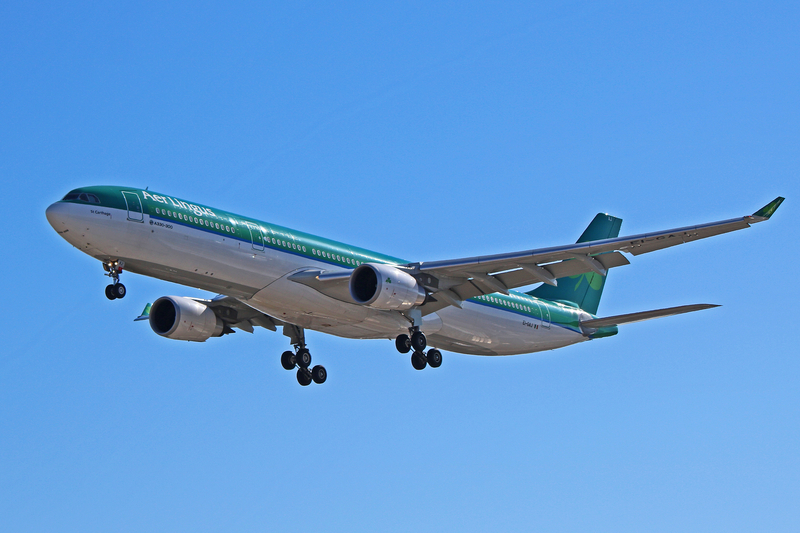
The long-haul flying from MAN has been operated by Aer Lingus UK using an Airbus A330-300 subfleet. On paper, the A330-300 is an excellent tool for these missions:
It’s a mid-size widebody with transatlantic legs well within its capability, typically offering the cargo volume and range airlines want without forcing the trip costs of a larger aircraft. Airbus lists the A330-300 at up to 6,350 nautical miles of range with a maximum takeoff weight around 242 tons—plenty for MAN to the US East Coast (JFK), Florida (MCO), and the Caribbean (BGI), even with the winter-wind penalty and typical alternate planning.
But when your entire UK long-haul program is essentially two A330-300s, the operation becomes brittle:
One aircraft out of service can collapse the schedule.
Maintenance routing and spare coverage get complicated quickly.
Irregular operations become disproportionately expensive.
And you have far less flexibility to optimize capacity by season, day-of-week, or route performance.
This is where Dublin (DUB) wins every time. At DUB, an A330 swap is a fleet-management problem. At MAN, it can become a customer-recovery crisis.
Why the A321LR Didn’t Solve the Manchester Equation
Aer Lingus initially mixed Airbus A321LR flying into the UK operation, which made sense. The A321LR is a narrowbody with long-range capability designed to right-size thinner transatlantic routes: fewer seats than a widebody, lower trip cost, and less risk during shoulder seasons. It also gives an airline more options for frequency versus gauge.
However, the A321LR is also a strategic asset for Aer Lingus’ Dublin (DUB) hub—particularly for secondary North American markets where widebodies are too much aircraft. Over time, the economics and network logic tend to pull those airplanes back to Ireland, where they can be deployed across a broader set of routes with stronger connecting flows.
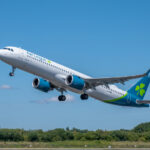
Once the A321LRs left the Manchester long-haul mix, the UK operation became a pure A330-300 play—and that increases the pressure to fill a larger aircraft consistently, especially outside the summer peak.
Manchester (MAN) Is a Tough Place to Win Margins on Leisure-Heavy Long-Haul
A route can be “profitable” and still be strategically vulnerable.
Leisure-heavy flying often generates good top-line demand but softer unit revenue. When multiple airlines compete nonstop on the same leisure markets—particularly MAN-JFK (JFK), MAN-MCO (MCO), and MAN-BGI (BGI)—the revenue environment can get crowded quickly. Fares are more elastic, premium demand is less consistent, and the best bookings tend to cluster into school-holiday peaks.
Add in the operational reality of running a small long-haul base—hotel costs, standby staffing, training pipelines, and the recovery burden when disruption hits—and margins can get thin in a hurry.
That’s why airlines often consolidate long-haul back to their primary hub when the market stabilizes. If the aircraft can earn a higher contribution margin from Dublin (DUB), the network will eventually pull it back.
What Happens Next for Passengers Booked After March 31, 2026?
Aer Lingus has already indicated it will contact customers directly, and the key point for travelers is this: advance notice generally changes the compensation picture, but it doesn’t erase passenger rights.
If flights are ultimately canceled beyond March 31, 2026, passengers should expect one of two outcomes:
A refund back to the original form of payment, or
Re-accommodation on an alternative itinerary.
For many customers, the “Aer Lingus-shaped” rebooking will be via Dublin (DUB), using MAN-DUB (DUB) connections onward to JFK (JFK) or MCO (MCO). That option can be operationally attractive for Aer Lingus because it pulls demand back into the hub, where flight options and rebooking inventory are far deeper.
For Barbados (BGI), reaccommodation may involve different routings depending on seasonality and available partner capacity.
The other practical reality: if MAN loses a nonstop competitor on those long-haul leisure routes, remaining nonstop capacity tends to price stronger. Even if overall demand stays steady, fewer seats competing nonstop can shift the fare curve upward—especially in peak holiday periods.
The Wider Implication: MAN’s Long-Haul Map Keeps Evolving
Manchester (MAN) remains a highly relevant long-haul airport, but it’s also a living case study in how airlines continually rebalance widebody capacity. Transatlantic flying is not just about demand—it’s about where an airline can earn the best margin with the least operational complexity.
If Aer Lingus ultimately winds down Aer Lingus UK’s long-haul operation from MAN, it won’t mean the routes were “bad.” It will mean the routes were less compelling than the alternative uses of the same aircraft and crews elsewhere in the network—most obviously at Dublin (DUB).
Bottom Line
Aer Lingus has stopped selling transatlantic tickets from Manchester (MAN) for travel from March 31, 2026, affecting the A330-300-operated routes to New York–JFK (JFK), Orlando (MCO), and Bridgetown (BGI). While a full closure hasn’t been formally confirmed, the sales freeze is a strong tell that Aer Lingus is positioning to consolidate long-haul flying back to its Dublin (DUB) hub, where network economics and operational resilience are materially stronger. For passengers, the most likely outcomes are refunds or rebooking—often via DUB—while the longer-term market impact at MAN could be fewer nonstop seats and firmer fares on the remaining carriers.