Lufthansa May Be Preparing To Offload Two Boeing 747-8s To The U.S. Air Force
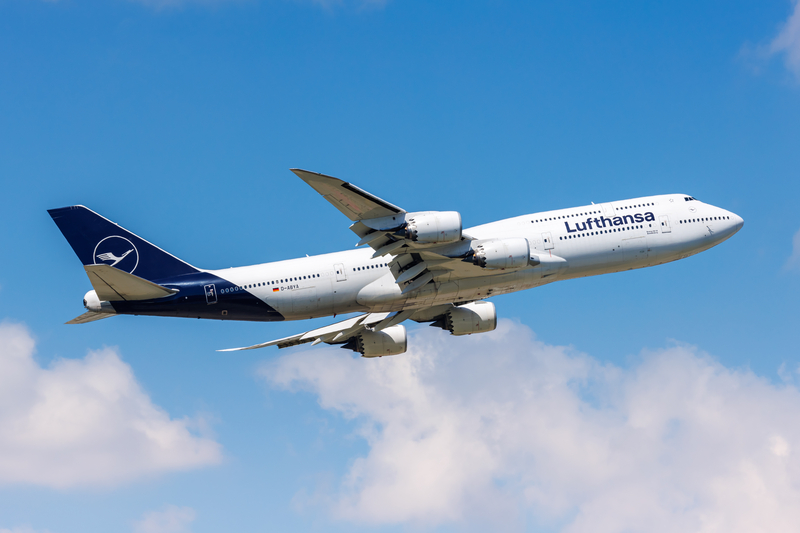
For most of the past decade, Lufthansa’s Boeing 747-8 Intercontinental has been one of the last “big-jet” constants in scheduled passenger service—an unmistakable double-decker silhouette still regularly seen at Frankfurt (FRA) when much of the world moved on to efficient twinjets.
That’s why fresh industry chatter about Lufthansa potentially parting with two of its 19 Boeing 747-8s has gotten the aviation world’s attention. Even more eyebrow-raising: the whispers linking the deal to the U.S. Air Force.
Two Specific 747-8s Are Being Flagged for Departure
Multiple aviation tipsters and fleet watchers are pointing to two identifiable airframes:
-
D-ABYD (Boeing 747-830, LN 1453) — delivered August 24, 2012, named “Mecklenburg-Vorpommern”
-
D-ABYG (Boeing 747-830, LN 1470) — delivered March 13, 2013, named “Baden-Württemberg”
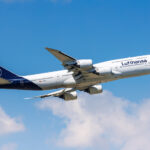
The talk is that D-ABYD could exit as early as January 2026, with D-ABYG following in Q3 2026. If that happens, Lufthansa’s long-term 747-8 fleet would shrink from 19 aircraft to 17.
As of now, there’s no public, on-the-record confirmation of a buyer—so treat the “who” as unproven, even if the tail numbers and timing are being discussed with unusual specificity.
Why Lufthansa’s 747-8 Is Still a Big Deal at Frankfurt
The Lufthansa 747-8 at FRA isn’t just nostalgia—it’s a purpose-built capacity and premium product tool. Compared to the 747-400, the 747-8I brought a new wing, new engines, and a meaningful efficiency jump while keeping the unique passenger experience of the upper deck.
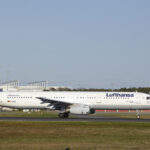
A quick avgeek refresher on Lufthansa’s Boeing 747-8 (type code: B748):
-
Engines: 4× General Electric GEnx-2B67
-
Length / Wingspan: 76.30 m / 68.40 m
-
Max takeoff weight: about 442 tonnes
-
Range: roughly 13,000 km (about 7,000 nm class, depending on payload and winds)
-
Typical Lufthansa seat count: 364 seats in four cabins (8F / 80J / 32W / 244Y)

For many frequent flyers—and a lot of aviation photographers—Lufthansa’s 747-8 has effectively become a “flagship on demand,” especially out of Frankfurt (FRA) where the airline can reliably fill a very large airplane when network banks and seasonality line up.
Selling Used Passenger 747-8s Is Hard… So Why Do It?
Here’s what makes this story interesting: used four-engine widebodies are a tough sell, and passenger-configured 747-8s are rarer still. The normal pool of secondhand buyers is small, because operating economics, maintenance planning, and engine shop visits can overwhelm the purchase price “deal.”
So if Lufthansa really is letting two frames go, one of these is likely true:
-
A special-mission customer is involved (government, military, or ISR/command-and-control conversion).
-
A VIP completion path exists (a deep-pocket buyer willing to fund a full teardown + bespoke interior, potentially via a specialist completion center).
-
The value is in parts and support, not passenger flying (engines, landing gear, rotables—especially for organizations that already operate or convert 747-8s).
That’s why the U.S. Air Force angle won’t die: the USAF is one of the few entities on the planet still investing in the 747 platform for strategic missions.
The U.S. Air Force Angle: Air Force One and the “Doomsday Plane” Program
This is where the rumor gets complicated—because the U.S. Air Force already has two 747-8 airframes committed to the next Air Force One program, and it’s also involved in a separate 747-8 pipeline for a different mission entirely.
Air Force One: VC-25B work is already underway (and delayed)
The next-generation presidential aircraft, VC-25B, is based on the Boeing 747-8 and has been undergoing an extensive modification program in San Antonio (SKF)—at the former Kelly Field complex—rather than at a typical airline MRO site.
Those VC-25B jets were originally undelivered “white-tail” 747-8s built for Russia’s defunct Transaero (a detail that matters, because it means the Air Force One program doesn’t need Lufthansa’s frames to have airframes). Recent reporting has pushed expected delivery to around mid-2028.
SAOC / E-4C: a separate fleet of 747-8s is being converted in Dayton
Separately, the U.S. is moving ahead with a 747-8-based replacement for the E-4B “Nightwatch” — the survivable airborne command post often nicknamed the “Doomsday Plane.” Sierra Nevada Corporation has been converting multiple ex-Korean Air 747-8s at Dayton (DAY), and flight test activity has already begun.
So could the U.S. Air Force be shopping for more 747-8s—either for airframes, spares, training, or mission growth? It’s not impossible. But there is still a big gap between “plausible” and “proven,” and right now the Lufthansa rumor sits firmly in that gap.
What to Watch Next (If You’re Tracking This Like an Avgeek)
If these jets truly are changing hands, a few tells usually appear before the public paperwork catches up:
-
Ferry flights to storage, paint, or maintenance bases (watch for unusual routings out of FRA)
-
Registration changes (de-registration in Germany, temporary registrations, or export marks)
-
Maintenance positioning (engine pulls, cabin deconfig work, or preservation steps)
-
Slotting shifts at FRA if Lufthansa is reallocating very high-capacity flying to other types
The 747-8 is too distinctive—and too operationally “loud” in planning terms—for a move like this to stay invisible for long.
Bottom Line
Two Lufthansa Boeing 747-8s—D-ABYD and D-ABYG—are being widely discussed in industry circles as potential near-term fleet exits in 2026, which would reduce Lufthansa’s 747-8 fleet from 19 to 17. The most attention-grabbing claim is that they could be headed to the U.S. Air Force, but that part remains unconfirmed, and the USAF already has other 747-8 airframes dedicated to major programs.
Still, the bigger takeaway is this: there are very few credible buyers for passenger 747-8s, so if Lufthansa is truly letting two go, it likely points to a non-traditional use case—special mission, VIP conversion, or high-value parts/support—rather than a simple airline-to-airline transfer.