KLM Begins 737-800 Phase-Out As First Jet Heads To The Breakers
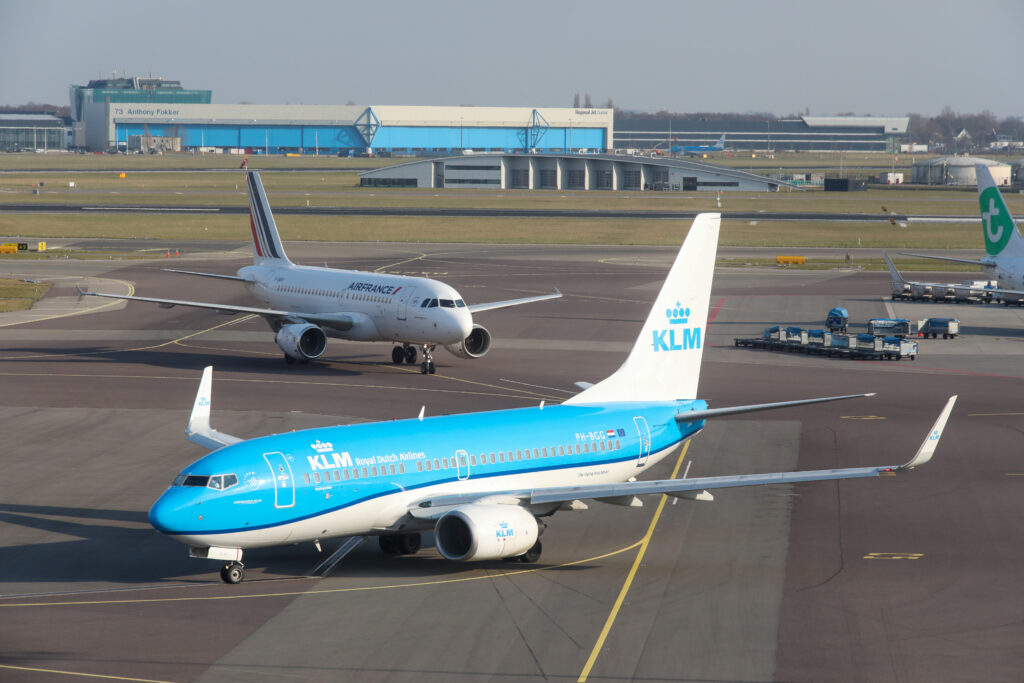
KLM has said farewell to the first Boeing 737-800 it ever introduced, marking the start of a new era for the Dutch flag carrier’s narrowbody fleet. The aircraft, registered PH-BXK, has been retired and sent for dismantling as KLM accelerates its shift toward more efficient Airbus A320neo family aircraft.
PH-BXK Flies Its Final Sector For KLM
After operating its final passenger service into Amsterdam Schiphol (AMS), PH-BXK flew a short positioning sector to Twente Airport (ENS). There, it was handed over to specialist dismantling firm AELS for teardown and recycling.
The aircraft was the first 737-800 ever to join KLM, and its retirement is both a symbolic and practical milestone as the airline reshapes its European operation around newer, quieter, and more fuel-efficient jets. Another 737-800 is expected to follow it to Twente in January 2026.
Engines Saved, Airframe Sent For Teardown
Before PH-BXK left the mainline fleet, KLM Engineering & Maintenance removed the aircraft’s engines and auxiliary power unit (APU) for reuse elsewhere in the airline’s operation.
AELS will now strip the remaining airframe for parts that can be sold on to other operators. Any components that cannot be reused will be recycled, allowing KLM to recover residual value from the 737 while keeping waste to a minimum.
KLM has framed this as a carefully managed end-of-life process that aligns with both its financial and sustainability goals.
Boeing 737s To Be Replaced By Airbus A320neo Family
PH-BXK’s retirement is one of the first visible steps in a phased drawdown of KLM’s 737 fleet. On European routes, KLM plans to replace its Boeing narrowbodies with Airbus A320neo and A321neo aircraft as part of an $8.15 billion fleet-renewal program.
The airline highlights several advantages of the A320neo family over its aging 737s:
-
Lower fuel burn and CO₂ emissions
-
Reduced noise footprint, which is especially valuable at capacity-constrained and noise-sensitive airports like Schiphol
-
Higher seat counts on the A321neo, helping to grow capacity and reduce per-passenger costs on strong routes

This transition is designed to give KLM a more modern and efficient short-haul fleet that is better suited to tighter environmental and operational constraints.
Renewal Reaches Across KLM & Cityhopper Fleets
The narrowbody changes are just one part of KLM’s broader fleet strategy. On the regional side, KLM Cityhopper is phasing out older Embraer E190s and replacing them with the larger, more efficient E195-E2.

At the long-haul end of the network, KLM is also investing heavily in next-generation widebodies:
-
Additional Boeing 787-10s, all due to be in service by early 2026
-
New Airbus A350-900s, which will replace older Boeing 777s and Airbus A330s
-
Airbus A350F freighters, set to take over from the airline’s aging Boeing 747 cargo fleet
Together, these moves support KLM’s goals of lowering fuel consumption, cutting emissions, and simplifying maintenance across the fleet.
Bottom Line
KLM’s retirement of PH-BXK, its first Boeing 737-800, is much more than just the end of one aircraft’s career. It’s the opening act in a large-scale fleet transition that will see 737s replaced by A320neo family jets, regional E190s swapped for E195-E2s, and older widebodies phased out in favor of 787s and A350s.
By combining careful end-of-life recycling with heavy investment in new aircraft, KLM is reshaping its fleet for a future defined by tighter environmental rules, airport constraints, and the need for ever-greater efficiency.