Jin Air Sells Air Busan Flights on Three Core Domestic Routes
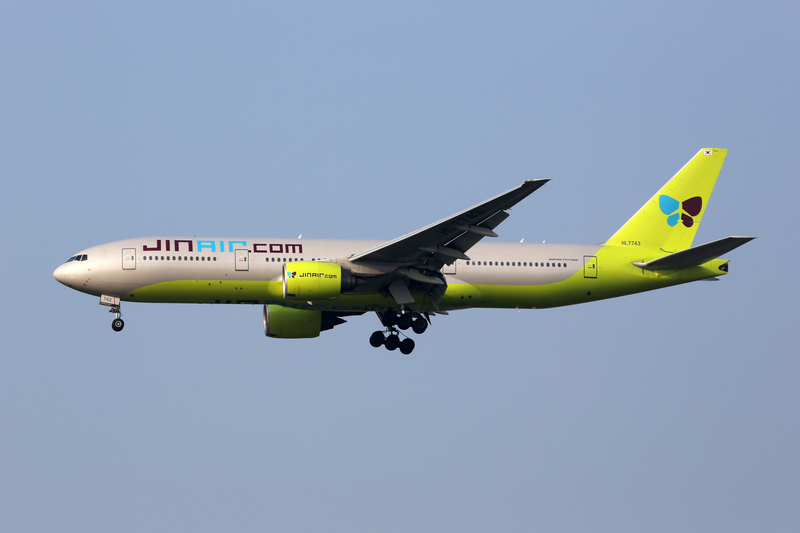
South Korea’s low-cost market is taking a very “airline ops” step toward consolidation: Jin Air (LJ) and Air Busan (BX) have begun a domestic codeshare on three trunk routes, effective January 6, 2026. The flights are operated by Air Busan but are now also sold through Jin Air channels under an “LJ” flight code, covering:
-
Seoul Gimpo (GMP) – Busan Gimhae (PUS)
-
Jeju (CJU) – Busan Gimhae (PUS)
-
Jeju (CJU) – Ulsan (USN)
On its own, a codeshare between two low-cost carriers is noteworthy. In context, it’s more significant: it lands just ahead of the planned integration of Jin Air, Air Busan, and Air Seoul into a single LCC platform in the run-up to the broader Korean Air–Asiana airline reorganization targeted for early 2027.

Why These Three Routes Matter
This isn’t a token partnership built on thin leisure routes. The city pairs are strategically chosen because they sit at the center of Korea’s domestic demand engine:
GMP–PUS is the business-heavy trunk that competes not only with air but also with high-speed rail. Gimpo (GMP) is slot-constrained and schedule utility matters more than almost anywhere else in the country, so any move that improves frequency visibility in booking channels has real commercial value.
CJU–PUS is one of the densest domestic leisure routes in Korea. Jeju (CJU) is the country’s tourism pressure valve; Busan (PUS) is a massive origin market. This route is built on volume, tight turns, and seasonal swings—exactly where codeshare inventory management can smooth the peaks and reduce duplicated flying.

CJU–USN looks smaller, but it’s operationally interesting: Ulsan (USN) is an industrial market with corporate travel patterns that can be sensitive to schedule reliability and booking convenience. A codeshare can help stabilize load factors without forcing either carrier to add marginal capacity.
What a “Domestic Codeshare” Actually Changes
For airline professionals, the key point is that a codeshare is not a merger—yet it can behave like a merger-lite in distribution.
Here’s what this arrangement effectively does:
It expands what Jin Air can sell without adding aircraft.
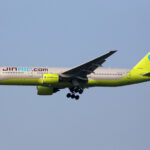
Jin Air can now display and ticket Air Busan-operated flights under LJ-coded flight numbers, improving perceived network breadth in direct channels and some agency workflows.
It lets Air Busan keep metal where it’s strongest.
Air Busan is the operating carrier on all three routes, which aligns naturally with its home-market strength around Busan (PUS) and its established domestic patterns.
It’s a systems rehearsal for the bigger integration.
Before three airlines become one LCC brand/platform, you need processes to work: inventory mapping, schedule coordination, disruption reaccommodation logic, and customer-service handoffs. A limited domestic codeshare is the safest place to test those mechanics.
The Aircraft Angle: What You’re Likely to Fly
Air Busan’s domestic flying is built around the Airbus A320-family, so passengers booking an “LJ” flight on these routes should expect an Air Busan-operated Airbus narrowbody—typically A320s or A321s, with A321neo-family aircraft increasingly prominent across the fleet.
For the airline side, that choice matters because these are short, high-cycle sectors where:
-
gate turn time discipline drives utilization,
-
dispatch reliability is more valuable than cabin bells and whistles,
-
and right-sizing capacity (A320 vs. A321) can swing unit costs meaningfully, especially on CJU routes during shoulder seasons.
Why This Is Happening Now
The timing isn’t subtle. Korean aviation is still working through the structural aftermath of the Korean Air–Asiana tie-up, and regulators, investors, and airport operators all want clarity on what the LCC landscape will look like once the pieces settle.
A codeshare is a low-risk way to start behaving like a consolidated group without forcing immediate changes to operating certificates, crew bases, or fleet allocation. It also gives both carriers a near-term competitive tool: they can market “more choices” while actually tightening how capacity is deployed.
What Travelers and Corporate Buyers Should Watch
If you manage travel policy or buy corporate inventory in Korea, the key practical implications are operational—not marketing:
-
Operating carrier rules still apply. Even if the ticket is sold as Jin Air (LJ), the flight is operated by Air Busan (BX), which typically means Air Busan procedures govern day-of-travel handling.
-
IRROPS will test the partnership. The first real measure of a codeshare isn’t launch day; it’s how reaccommodation works when weather, ATC flow, or aircraft substitutions hit GMP (GMP), CJU (CJU), or PUS (PUS).
-
Schedule visibility may tighten competition. More LJ-coded options in the market can pressure competitors without materially increasing total seats—useful in a domestic market where profitability often hinges on discipline, not growth.
Bottom Line
Jin Air (LJ) and Air Busan (BX) launching a domestic codeshare on GMP–PUS, CJU–PUS, and CJU–USN is a small change on the surface—but strategically, it’s the first visible network step toward Korea’s planned LCC consolidation. With Air Busan operating the flights on its Airbus A320-family fleet and Jin Air selling them under the LJ code, this is best read as an integration rehearsal: improve network reach in the sales channel today, and make the eventual three-airline LCC combination easier to execute tomorrow.