ICE’s New 737 Fleet: Smart Savings Or An Expensive Experiment?
The US Department of Homeland Security (DHS) is shifting how it runs deportation flights, moving away from its long-standing charter model toward what is essentially a small in-house airline. On paper, the agency says this will cut costs. In practice, it may be much harder – and pricier – to pull off.
DHS Swaps Charters For A Mini 737 Fleet
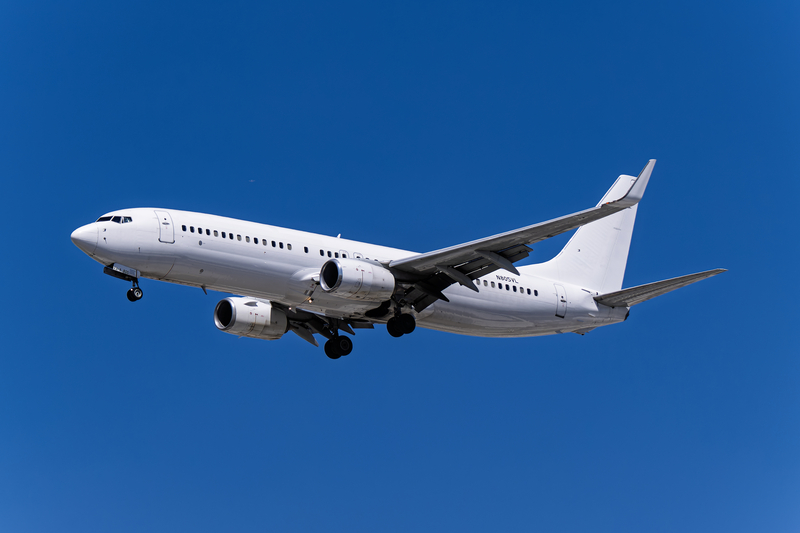
DHS has signed a nearly $140 million contract with Daedalus Aviation to acquire six Boeing 737s that will be dedicated to Immigration & Customs Enforcement (ICE) deportation missions.
Historically, ICE has relied on charter operators to:
-
Run international deportation flights
-
Handle thousands of domestic transfers that move detainees between detention centers and major gateways before removal

Homeland Security argues that owning its own aircraft will:
-
Allow more efficient flight patterns
-
Reduce per-flight costs over time
-
Ultimately save taxpayers around $279 million, according to internal estimates cited by The Washington Post

The money comes from a broader immigration-enforcement funding boost under the Trump administration, aligned with the stated goal of deporting one million people in the first year.
A DHS spokesperson, Tricia McLaughlin, framed the plan this way: the new aircraft would save money by allowing ICE “to operate more effectively, including by using more efficient flight patterns.”
Running An Airline Is The Expensive Part
Buying six second-hand Boeing 737s is the easy bit. The real cost lies in operating them. Even a small fleet like this requires:
-
Certified pilots plus recurrent training
-
Dispatch and flight-following staff
-
A full maintenance control setup
-
Access to hangar space and heavy-check capacity
-
Parts provisioning and inventory management
-
Compliance systems robust enough to keep the FAA happy
Then there are all the “boring” but unavoidable pieces:
-
Fuel contracts at multiple airports
-
Deicing arrangements
-
Crew hotels and transport
-
Minimum Equipment List (MEL) handling
-
Insurance, reserves, and contingency planning
Deportation flying can be spiky and unpredictable, with missions changing based on:
-
Court rulings
-
Diplomatic clearances
-
Sudden changes in detention flows
-
Shifts in political priorities
If utilization drops – for example, if flight schedules are cut or priorities change – those fixed costs (aircraft ownership, crew guarantees, insurance, maintenance reserves) get spread over fewer hours, and the cost per flight can shoot up quickly.
Even if day-to-day flying is outsourced to a contractor, the government is still paying for the airline-like platform on top of mission-specific requirements such as security personnel, in-flight custody procedures, and specialized ground handling.
Why Charters Have Worked So Well
The current system grew around one core reality: ICE’s needs change constantly.
Charter partners can:
-
Scale capacity up or down
-
Swap aircraft types to match demand
-
Add or cancel sectors on short notice
-
Absorb the risk of under-utilized aircraft
When missions change daily, having access to a flexible pool of aircraft is extremely attractive. Charters can be repositioned when:
-
A new diplomatic agreement opens or closes a route
-
A court decision alters how or where people can be removed
-
A sudden surge or drop in detention populations changes the network
With a dedicated fleet, DHS loses some of that plug-and-play flexibility and takes on the risk itself. To truly save money, the six-aircraft operation needs to be:
-
Heavily utilized
-
Reliably scheduled
-
Run at a lower unit cost than charter providers can offer
That’s a high bar for what is essentially a bespoke, mission-driven operation rather than a classic high-frequency airline network.
A Signal Of Long-Term, Large-Scale Deportation Plans
Buying and configuring six Boeing 737s is not a temporary adjustment – it’s a long-term infrastructure bet. It sends a clear signal that:
-
ICE expects to be running large-scale deportation operations for years, not months
-
Homeland Security wants less reliance on outside carriers for its core missions
-
The government is willing to accept airline-style fixed costs in exchange for tighter operational control
This also sits against a broader context: some commercial airlines have already shown growing interest in deportation flying. For example, Avelo has previously described deportation contracts as “too valuable not to pursue,” even as such operations have sparked significant public criticism.
In that light, DHS’s move can be read as both an operational shift and a political one – bringing more of the system “in-house” rather than relying on commercial brands that may face reputational blowback.
Bottom Line
DHS’s plan to acquire six Boeing 737s for ICE marks a major break with the flexible charter-based model that has long supported US deportation flights. Officials argue that owning aircraft will unlock more efficient routing and hundreds of millions in savings, but actually running a mini-airline comes with substantial fixed costs in crews, maintenance, compliance, and infrastructure.
If utilization stays high and operations are tightly managed, the bet could pay off over the long term. If political priorities, legal constraints, or demand patterns shift, however, taxpayers may end up funding an under-used, expensive fleet that charters could have covered more cheaply and flexibly.