How a Runway-End Structure Turned a Jeju Air Overrun Into a Catastrophe
More than a year after Jeju Air flight 7C-2216 crashed at Muan International Airport (MWX), a new simulation-based analysis is reigniting a hard, uncomfortable question: was this accident mechanically survivable—until the airplane hit a structure that should never have been there in its installed form?
According to details cited in a government-commissioned report discussed publicly this week, investigators ran structural and impact simulations suggesting the Boeing 737-800’s initial belly contact with the runway was not, on its own, severe enough to cause mass fatal injuries. Instead, the catastrophe appears to have been sealed at the runway end—when the aircraft struck a concrete-supported navigation installation associated with the ILS localizer system.
For an industry built around layered defenses, this is exactly the kind of finding that lands like a gut punch: one more link in the chain, one more “Swiss cheese” hole, and the outcome changes completely.
A survivable landing… until it wasn’t
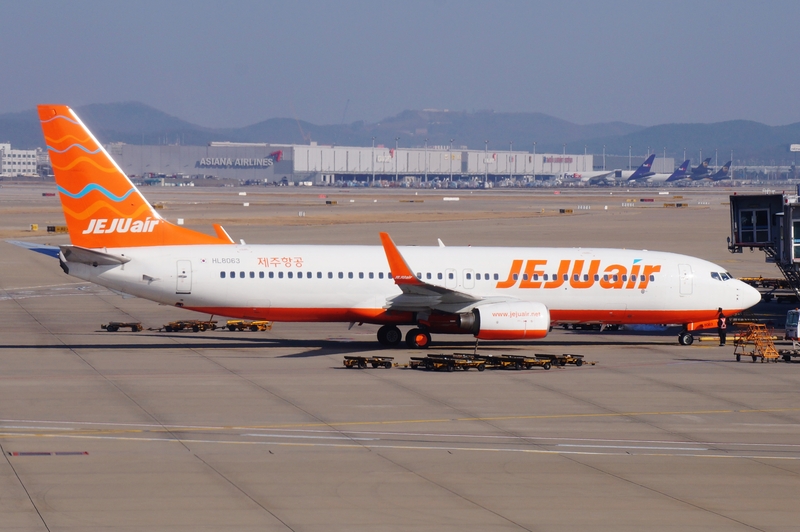
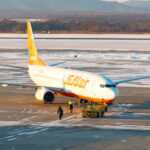
On December 29, 2024, the Jeju Air Boeing 737-800 arrived at MWX from Bangkok Suvarnabhumi Airport (BKK) and, following an emergency sequence, ended up executing a gear-up landing. The aircraft slid down the runway on its belly, overran, and collided with a rigid concrete mound supporting navigation equipment at the far end.
That final impact is now the focal point. The simulation described in the latest reporting indicates the aircraft could have slid for roughly 770 meters (about 2,526 feet) and come to rest without the concrete structure. In other words: the energy management on the belly slide may have been within survivable limits—right up to the moment a non-frangible obstacle turned a runway excursion into a high-deceleration crash event.

This distinction matters. A 737-800 belly landing is dramatic, but it’s not automatically fatal. When a crew keeps the aircraft aligned and the surface is predictable, the fuselage can act like a crude sled. You lose wheel brakes and most of your directional authority, and the risk of fire increases due to friction and fuel system damage—but survivability can remain surprisingly high if the airplane is allowed to slide to a stop in a controlled path.
The problem at MWX, as alleged in the report, is that the aircraft didn’t get the chance to “run out of energy” naturally.
What that structure likely was and why frangibility is the whole point
The concrete mound in question supported a localizer antenna, part of the Instrument Landing System (ILS). The localizer transmitter array is normally positioned beyond the departure end of the runway and is critical to providing lateral guidance on approach.
But localizers are supposed to be the opposite of “solid.” When located in areas an aircraft could realistically reach during an overrun, they are typically designed to be frangible—engineered to break apart on impact to minimize deceleration forces and prevent penetration into the fuselage.
That’s not just a theoretical standard. Runway-end environments are explicitly designed around the assumption that overruns happen:
-
Aircraft land long.
-
Braking effectiveness drops in poor conditions.
-
System failures force abnormal touchdowns.
-
Crews go around late and return with degraded performance.
Because of that, runway end safety is built around keeping the “end of the runway” from becoming the “end of survivability.”
The latest account argues the concrete-supported localizer installation did not meet that safety intent. Even more pointedly, it claims the structure had been flagged previously as unsafe and remained in place anyway.
Why MWX was a particularly unforgiving place for a gear-up slide
A gear-up landing strips away two of a 737-800’s biggest stopping tools:
-
Wheel brakes: The 737’s primary braking system is on the main landing gear wheels. No gear, no wheels, no brakes.
-
Reverse thrust effectiveness: Reverse thrust can still be used in some abnormal scenarios, but any engine damage or shutdown reduces or eliminates that option.
The investigation has also discussed a reported bird strike during a go-around and subsequent engine-related complications. That’s significant because the 737-800’s CFM56-7B engines are robust, but bird ingestion at the wrong moment can produce an ugly mix of thrust loss, compressor damage, and system knock-on effects—exactly when the crew is high workload and low altitude.
Layer those factors together and you get a scenario where a belly landing becomes the “least bad” outcome—provided the runway environment is forgiving enough to let the aircraft decelerate without meeting something rigid.
In the simulation’s framing, MWX wasn’t forgiving.
The uncomfortable operational takeaway: runway-end design can determine the casualty count
Airline professionals tend to focus on cockpit decisions, maintenance, and aircraft systems because that’s where the operator has direct control. But this report drags the spotlight back to a factor operators don’t control: airport infrastructure.
If the structure truly should have been frangible—or placed differently—and if it was left unchanged through years of upgrades and inspections, then this becomes more than a tragic overrun. It becomes a case study in how a runway end can be “technically compliant” on paper while still being operationally hazardous in the one moment that matters.
And that’s why the politics around MWX are flaring now. Families want accountability. Regulators face questions about oversight. Airport operators face scrutiny about why the hazard remained.
MWX remains closed as authorities continue investigations and review the safety architecture around the runway environment—a move that underscores just how central this infrastructure question has become.
Bottom Line
The emerging claim from simulation analysis is stark: Jeju Air 7C-2216’s belly landing at Muan International Airport (MWX) may have been survivable, but the aircraft’s collision with a rigid concrete-supported localizer structure transformed a runway excursion into a fatal crash.
If the structure had been frangible—or not present in that form—investigators believe the aircraft could have slid to a stop with far fewer injuries. It’s a brutal reminder that runway-end safety isn’t abstract engineering. It’s the difference between an accident people walk away from and one they don’t.