Go-Around in a Gale: What Pegasus’ A320neo Istanbul Approach Reveals About Real-World Wind Ops
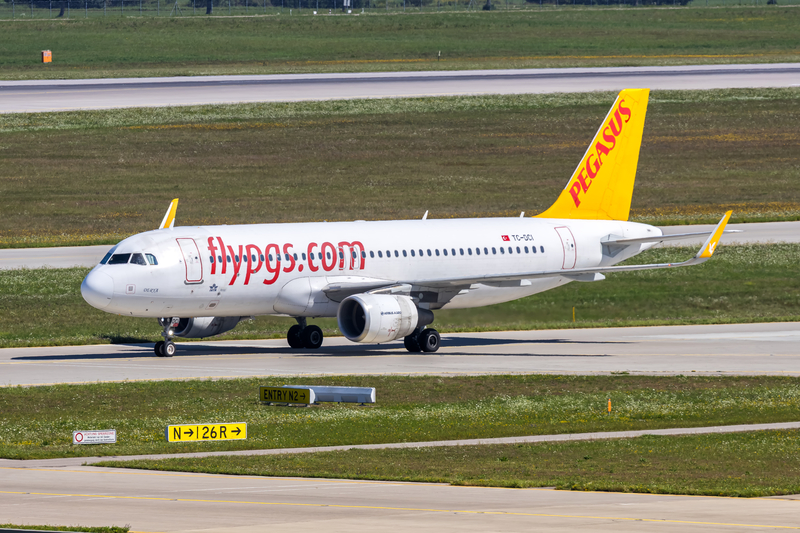
Istanbul’s winter storms don’t just rattle ferry schedules on the Bosphorus — they can compress the entire arrival and departure pipeline at the city’s two commercial airports, Istanbul Airport (IST) and Istanbul Sabiha Gökçen International Airport (SAW). During a recent bout of severe winds and heavy rain, one particularly dramatic clip made the rounds in aviation circles: a Pegasus Airlines Airbus A320neo rocking in the final moments of its approach before the crew elected to go around rather than force a landing.
From the cabin, a go-around can feel like an “almost” moment. From the flight deck, it’s the procedure working exactly as designed — a deliberate decision to preserve margins when conditions stop cooperating.
What likely happened on short final
In strong, gusty surface winds, an approach can deteriorate quickly in the last 200 feet. The aircraft transitions from a relatively smooth airmass aloft to the most chaotic layer of the atmosphere: the boundary layer, where mechanical turbulence from terrain, buildings, and hangars combines with shifting wind direction and speed.
For a narrowbody like the A320neo, the flare is where the airplane is most “exposed”:
-
Low energy state by design: thrust is usually near idle, the aircraft is decelerating, and the crew is managing pitch changes in ground effect.
-
Tight lateral margins: you’re aligning with the runway centerline while keeping bank angle within structural and geometry limits.
-
Gust response is immediate: a sudden tailwind component increase can dump airspeed; a crosswind spike can demand more rudder and aileron than is comfortable or permitted.

If the aircraft begins to drift, roll rapidly, or deviate beyond stabilized approach criteria — even if only briefly — most airline SOPs bias toward an immediate go-around. The decision isn’t a “botched” landing; it’s recognition that the approach is no longer meeting the company’s stabilized parameters.

Why SAW can be unforgiving in “dirty” winds
Sabiha Gökçen (SAW) sits on Istanbul’s Asian side, close enough to the Sea of Marmara that wind can accelerate and shift quickly with passing squall lines. SAW now operates with parallel runways (a major capacity improvement), but extra pavement doesn’t eliminate the core challenge: wind direction relative to runway heading still dictates the crosswind component and the amount of de-crab required in the flare.
The practical reality during storm days is that arrival rates fall even before the first cancellation hits. ATC spacing increases, missed approaches stack up, and alternates begin to fill. Once that starts, a single go-around can quickly cascade into holds, diversions, and aircraft out of position — especially at a high-utilization base like SAW.
The A320neo in gusty crosswinds: what the aircraft gives you — and what it won’t
The A320neo’s fly-by-wire architecture is exceptionally good at smoothing pilot inputs and protecting the envelope, but it’s not a magic wand. In turbulent, gust-spread conditions, pilots are balancing three things simultaneously:
1) Tracking the centerline
Most Airbus operators favor a crabbed approach: fly the localizer, allow the nose to point into the wind, and maintain a stable lateral path. The “alignment” happens late — often in the flare — with rudder to de-crab and a small amount of into-wind sidestick to arrest any downwind roll tendency.
2) Managing the flare without chasing the gusts
In aggressive gusts, over-controlling can be as risky as under-controlling. A320-family technique typically aims for measured corrections: keep the rate of drift under control, align progressively, and avoid a last-second snap that could create high side loads on touchdown.
3) Staying inside limits that can shrink fast
Crosswind capability isn’t one number carved into stone. It depends on runway condition (dry vs. wet vs. contaminated), gust spread, braking action, and whether an autoland is in use. On wet or poor braking runways, many operators apply lower crosswind guidance to preserve directional control during rollout.
This is where professional nuance matters: “maximum demonstrated crosswind” is often misunderstood. It’s a certification-test data point, not a guarantee of comfortable landings in every gust profile — and it isn’t a substitute for real-time risk judgment when the winds are variable and the runway is wet.
Why a go-around is often the best outcome
A go-around at 50 feet can look dramatic on video, but operationally it’s clean:
-
You keep landing gear side loads low (especially important in gusty, quartering winds).
-
You avoid a long landing that could erode stopping margins on a wet runway.
-
You preserve runway occupancy time if the aircraft would otherwise land hard, bounce, or require a high-speed reject.
From there, the playbook is straightforward: fly the published missed approach, coordinate with ATC, reassess fuel and alternates, and either re-sequence for another attempt or divert.
For SAW/IST disruptions, common alternates in the region can include Ankara Esenboğa (ESB), İzmir Adnan Menderes (ADB), and Antalya (AYT), depending on weather systems, congestion, and handling capability. The “best” alternate is rarely the closest one — it’s the one with capacity, acceptable conditions, and available support on the ground.
Pegasus context: why this matters for a high-cycle narrowbody operator
Pegasus is built around high aircraft utilization, tight turn times, and a dense short/medium-haul network anchored at SAW. That makes stability on storm days especially valuable: a single diversion doesn’t just inconvenience passengers — it can knock rotations out of alignment for the rest of the day.
The A320neo is a core tool for that mission: modern engines, improved fuel burn versus prior-generation narrowbodies, and a performance envelope that’s well suited to dense regional flying. And Pegasus is also planning a significant fleet evolution later this decade, with Boeing 737-10 aircraft on order — which will add another layer of fleet and crew-planning complexity when weather events stress the operation.
In other words, the headline video isn’t really about one approach. It’s a reminder that weather resilience is as much about decision discipline as it is about fleet size — and that the safest, most cost-effective “landing” is sometimes the one you don’t complete.
Bottom Line
A last-second go-around in Istanbul doesn’t indicate a close call — it indicates a crew protecting margins when gusts, runway conditions, and stability cues stop lining up. At complex, high-volume environments like SAW and IST, those decisions also protect the wider operation: avoiding a hard landing, a runway excursion risk, or an aircraft stuck out of position during peak disruption. In winter wind events, the most professional move is often the simplest one: add power, fly the missed, and try again only when the approach is genuinely back under control.