Finnair To Launch Bangkok-Melbourne Fifth-Freedom Flights, Extending Helsinki Service To Australia
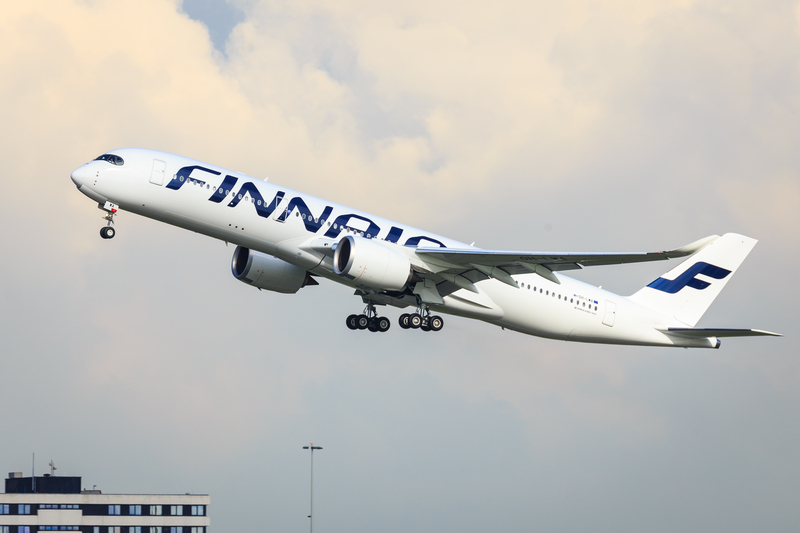
Finnair is adding an unusual new long-haul option to the Europe–Australia market: daily Airbus A350-900 service from Helsinki (HEL) to Melbourne (MEL) via Bangkok (BKK), with the Bangkok–Melbourne segment bookable on its own.
The route is scheduled to begin in late October 2026, marking Finnair’s first regularly scheduled service to Australia using its own aircraft. It also creates a new fifth-freedom widebody choice between Thailand and Australia—an arena that usually skews heavily toward Asian and Gulf carriers.
The Route: HEL–BKK–MEL Goes Daily
Finnair plans to operate the service year-round, daily using the Airbus A350-900. The schedule is built around an overnight departure from Helsinki-Vantaa (HEL), an afternoon arrival into Bangkok Suvarnabhumi (BKK), and an evening departure onward to Melbourne (MEL), landing the following morning.
Planned schedule (local times, subject to change):
-
AY145: HEL 00:10 → BKK 16:30
-
AY145: BKK 18:15 → MEL 07:15 (+1)
-
AY146: MEL 15:40 → BKK 20:50
-
AY146: BKK 22:30 → HEL 06:05 (+1)

The Bangkok stop is a relatively tight turnaround (roughly 1h 45m in each direction), which suggests the flight is intended to function like a single long-haul rotation rather than two disconnected routes.
One timing note worth calling out: because AY145 leaves HEL just after midnight, the first departure from HEL is expected around October 25, 2026, with the first arrival into MEL and the first MEL-originating departure falling on October 26, 2026, depending on the final published timetable.
Fifth Freedom, Explained (And Why It Matters Here)
This route isn’t just HEL–MEL with a stop. Finnair intends to sell tickets for:
-
Helsinki (HEL) ↔ Bangkok (BKK)
-
Bangkok (BKK) ↔ Melbourne (MEL) (the fifth-freedom segment)
-
Helsinki (HEL) ↔ Melbourne (MEL) via Bangkok
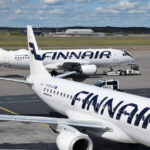
Fifth-freedom flying—where an airline carries local passengers between two countries that are not its home—can be a smart way to keep a long-haul aircraft productive while also tapping into a second demand pool. In this case, Finnair gets both:
-
additional capacity between HEL and BKK, where it already operates, and
-
a new long sector between BKK and MEL, a market large enough to support multiple daily widebodies across the year.
For passengers, it adds a fresh “left-field” option on the BKK–MEL corridor—especially for travelers who care about onboard product and prefer a widebody on a roughly nine-hour sector.
Aircraft: Finnair’s Airbus A350-900 On A Very Long Day
Finnair plans to operate the route with the Airbus A350-900 (A359), one of the industry’s most capable long-range widebodies. The A350-900 is designed for ultra-long sectors with lower fuel burn versus older-generation widebodies, and it’s become a go-to aircraft for airlines that want intercontinental range without stepping up to a larger gauge.
Key A350-900 specifics relevant to this route:
-
Engines: Rolls-Royce Trent XWB
-
Long-range capability: built for missions deep into the 8,000+ nautical mile class (depending on configuration and payload)
-
Cabin pressure and humidity: generally more comfortable on very long flights than older widebodies, which matters when you’re stringing together HEL–BKK–MEL in one itinerary
Finnair’s planned configuration for this service is 278 seats:
-
43 Business Class
-
24 Premium Economy
-
211 Economy
Finnair’s Business Class is also notably distinctive in the market: its “AirLounge” style seat is designed more like a sofa that converts into a flat sleeping surface, rather than a traditional recliner-style pod.
Why Finnair Is Using Bangkok (BKK)
Bangkok (BKK) is already a familiar long-haul station for Finnair, and it plays several roles here:
-
Aircraft utilization: A single A350 can operate a “triangle-style” long mission and stay productive rather than sitting during daylight hours.
-
Demand layering: Finnair can combine Europe–Thailand, Thailand–Australia, and Europe–Australia flows into one rotation.
-
Network connectivity: Helsinki (HEL) is built around banked connections into Northern Europe and the Baltics; the early-morning arrival back into HEL helps feed onward departures.
It’s also hard to ignore the broader operating environment for European carriers in Asia since 2022—routing realities have changed, and airlines have become more creative in how they deploy long-haul aircraft to protect yields and maintain network relevance.
The Competitive Reality: Europe–Australia Is Crowded
Finnair is stepping into a market where passengers have a long list of one-stop options via:
-
Gulf hubs (especially for Europe–Australia flows),
-
Southeast Asia, and
-
a small number of European-branded itineraries that route through Asia.
So this likely won’t be a route that wins on “fastest travel time.” Where it can compete is in:
-
schedule convenience (especially for HEL connections),
-
product differentiation on a widebody BKK–MEL sector, and
-
alliance connectivity, particularly for travelers stitching together oneworld itineraries.
If the fifth-freedom segment is priced competitively, it can also generate meaningful local traffic between Bangkok (BKK) and Melbourne (MEL)—the kind of incremental revenue that can help stabilize a very long-haul aircraft rotation.
Bottom Line
Finnair plans to launch daily Airbus A350-900 flights from Helsinki (HEL) to Melbourne (MEL) via Bangkok (BKK) starting in late October 2026. The headline detail is the fifth-freedom angle: Finnair intends to sell tickets not only between Europe and Australia, but also between Bangkok and Melbourne on the same widebody service.
It’s an unconventional move into a fiercely competitive market—but one that makes strategic sense if Finnair can combine three demand streams (HEL–BKK, BKK–MEL, and HEL–MEL) and keep A350 utilization high while offering a premium-heavy cabin on a route length that rewards efficient aircraft economics.