Emirates Restores Triple-Daily A380 Service for Winter 2026/27
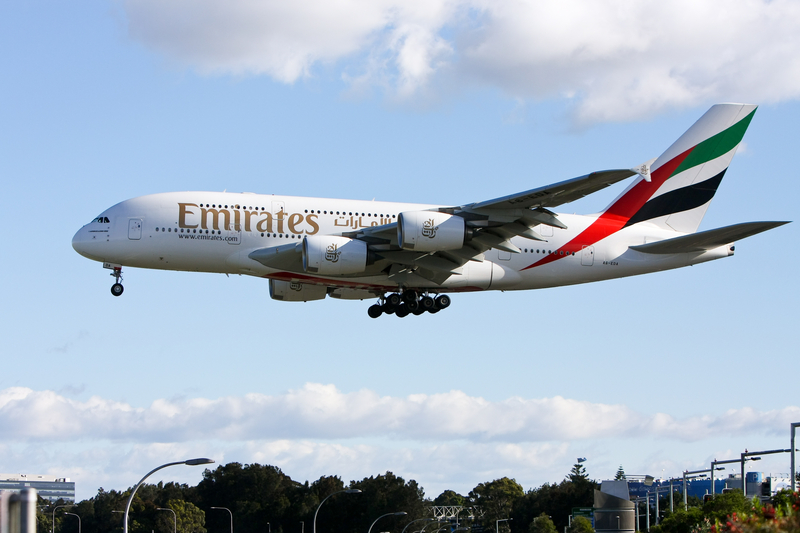
Emirates is once again leaning into scale at London Gatwick Airport (LGW). Latest schedule filings indicate the Dubai-based carrier plans to operate three daily Airbus A380-800 flights between Dubai International Airport (DXB) and LGW throughout the Winter 2026/27 season—reversing earlier plans that would have reduced Gatwick’s A380 presence.
For LGW, one of Europe’s highest-volume airports, the move is more than just a headline-grabbing aircraft swap. It’s a capacity and product statement on a route where frequency, connections, and premium cabin mix all matter.
What’s changing on the DXB–LGW schedule
Emirates’ winter season typically begins with the IATA winter timetable change in late October. From October 25, 2026, the carrier is expected to schedule three A380 departures per day from DXB to LGW, a notable uplift versus prior planning assumptions for the same season.
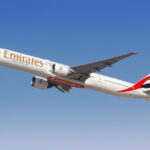
Just as important: Gatwick isn’t only about the A380 for Emirates. The airline has also positioned its new Airbus A350-900 on the route, creating a combined plan that — as currently filed for parts of winter — can reach four daily rotations between DXB and LGW (three A380s plus one A350). That’s a powerful way to add seats without needing additional scarce runway and terminal capacity, especially in the London market where “more lift” often has to come from aircraft gauge rather than brand-new slots.
Why the A380 is still a Gatwick weapon
The A380 works particularly well into slot-pressured, high-demand airports because it converts each takeoff and landing into a maximum number of seats. On a trunk route like DXB–LGW, that matters for three reasons:
-
Connection banks at DXB: Emirates builds much of its long-haul strategy around timed waves in DXB, pulling traffic from Europe into the Middle East, South Asia, Africa, and Australasia (and vice versa). Multiple daily departures help align LGW with those banks.
-
Premium cabin volume: Emirates can offer a meaningful number of Business Class seats each day while keeping Economy capacity high enough to support price-sensitive leisure demand.
-
Fleet economics: When demand supports it, the A380’s seat-mile economics can be extremely compelling—particularly on stage lengths like DXB–LGW, where the aircraft’s size can be fully utilized.
Not all Emirates A380s are the same
A detail that often gets missed: Emirates operates multiple A380 cabin layouts, and Gatwick tends to see a mix.
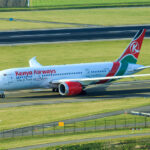
As filed, two of the three daily A380 flights are expected to use Emirates’ high-density two-class A380. This is the aircraft that quietly turns DXB–LGW into a seat machine: 615 seats total, with Business Class on the upper deck and a very large Economy cabin. One of the daily A380 frequencies is also typically planned with a lower-density A380 that includes First Class, giving Emirates a stronger premium proposition at least once per day on the route.
That split is deliberate network planning. The two-class A380 maximizes volume and tends to fit leisure-heavy demand profiles well, while the First Class-equipped A380 protects the top end of the yield curve for travelers who specifically shop for the front-cabin experience (and for those connecting into other premium-heavy long-haul sectors via DXB).
The A350-900 factor at LGW
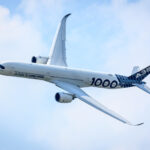
Emirates’ A350-900 adds a different kind of flexibility. Compared with the A380, it’s a modern twin-engine long-haul platform designed for strong economics at lower trip cost—useful for right-sizing frequency and matching demand across the week.
On the DXB–LGW route, Emirates’ A350-900 configuration is expected to include:
-
32 lie-flat Business Class seats (1-2-1)
-
28 Premium Economy seats
-
238 Economy seats
For passengers, the A350 typically delivers a quieter cabin and a “new aircraft” feel, while for Emirates it adds an extra daily frequency option without committing a second superjumbo to the marginal schedule. In other words: Emirates can grow total daily capacity at LGW while fine-tuning the premium/economy mix by aircraft type.
What the current winter timings suggest
While schedules remain subject to change this far out, the filed winter pattern shows Emirates spreading departures across the day from DXB, including:
-
Early morning DXB departures arriving into LGW in the morning arrival bank
-
Midday/afternoon DXB departures that broaden connection options
-
A late-evening LGW departure back to DXB (often useful for same-day UK positioning and onward connectivity at DXB)
This spacing matters in the London market. LGW draws not only from London proper, but also from South and Southeast England, and it’s a meaningful alternative for travelers who want Emirates’ network without the Heathrow (LHR) premium and congestion profile.
Bottom Line
Emirates is planning a meaningful capacity statement at London Gatwick (LGW) for Winter 2026/27: three daily Airbus A380-800 flights from Dubai (DXB), complemented by planned Airbus A350-900 flying that can lift the route to four daily rotations depending on the period. The A380 mix is especially telling—pairing a 615-seat two-class giant with at least one First Class-equipped A380 to cover both volume demand and premium positioning on one of Emirates’ most important UK gateways.