Emirates Reconfigures Seattle: 777-200LR Scheduled for DXB–SEA, First Class Comes Off the Map
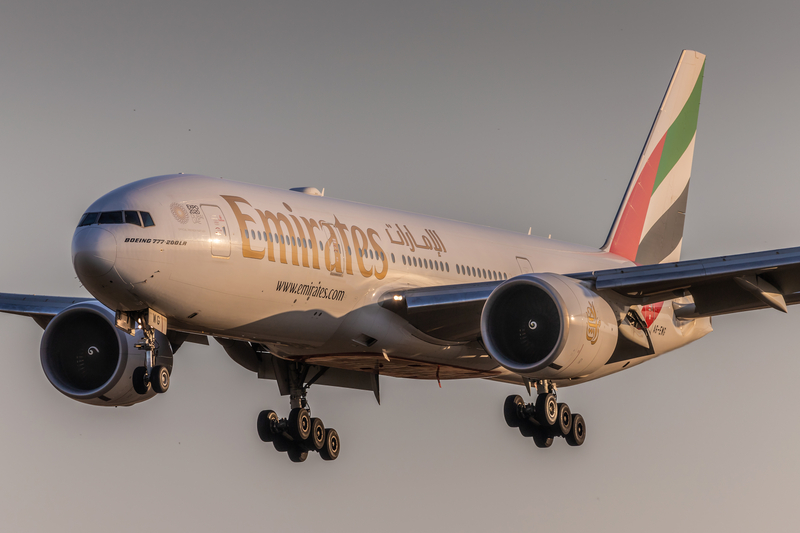
Emirates (EK) is reshaping one of its longest U.S. missions in 2026. Schedule filings show the carrier plans to swap the Boeing 777-300ER for the Boeing 777-200LR on its Dubai International Airport (DXB)–Seattle–Tacoma International Airport (SEA) nonstop starting with the IATA Summer 2026 season.
For Seattle (SEA), the headline is simple: fewer seats and no First Class. For network planners and product teams, it’s a more nuanced play—deploying a niche, ultra-long-range twin on a route where aircraft performance, seasonality, and premium-cabin mix all matter.
What’s Changing on DXB–SEA and When
The filed plan is for Emirates’ DXB–SEA service to operate with the 777-200LR (aircraft code 77L) beginning March 29, 2026, replacing the 777-300ER (77W). The timings remain in the same “daylight” pattern that’s long defined the route:
-
EK229: DXB mid-morning departure, SEA early afternoon arrival
-
EK230: SEA late afternoon departure, DXB early evening arrival (next day)
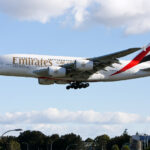
This is a meaningful gauge move, not a cosmetic swap. Emirates is effectively trading the 777-300ER’s higher-capacity cabin for the 777-200LR’s longer-legged performance and smaller footprint—while keeping the market in a daily-operable posture during the peak northern summer period.
The Cabin Story: First Class Leaves, Two-Cabin 77L Takes Over
The most passenger-visible change is the removal of First Class on the DXB–SEA flight once the 777-200LR takes over. In Emirates’ two-class 777-200LR layout used on select long-haul missions, the aircraft is typically arranged as:
-
38 Business Class seats (2-2-2)
-
264 Economy Class seats (3-4-3)
-
302 total seats
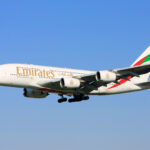
That configuration matters because it signals intent. Emirates isn’t merely downsizing; it’s reshaping the premium mix toward Business and away from a small First Class cabin that can be difficult to consistently monetize in some markets—especially when corporate travel demand ebbs, award inventory gets squeezed, and premium yields are under scrutiny.
For premium customers, the practical implication is that Seattle-area travelers chasing Emirates First Class will likely need to route via other First Class-equipped Emirates gateways—or accept Business Class on the nonstop.
Why the 777-200LR Fits This Mission Technically
The 777-200LR is a specialized variant, built for routes where the network wants twin-engine economics but needs near-747-era legs. On paper, it’s engineered for missions that push into the “ultra-long-haul” envelope:
-
Range: Emirates lists the 777-200LR with a maximum range of 9,420 nautical miles
-
Powerplant: GE90-110 series engines
-
Cruise: Mach 0.84 (typical)
By contrast, Emirates lists the 777-300ER with a shorter maximum range (7,880 nautical miles) but higher seating potential. That’s the classic trade: the -300ER is the capacity workhorse, while the -200LR is the endurance tool.
On DXB–SEA, endurance is not academic. The route regularly contends with seasonal winds and operational realities that can turn “comfortable” great-circle planning into tighter performance margins. A long-range twin can offer Emirates more flexibility in payload and dispatch consistency—especially when the goal is to preserve schedule integrity without oversupplying seats.
Capacity, Cargo, and the Seattle Factor
Seattle (SEA) isn’t just a passenger market; it’s also a bellwether for premium connectivity and belly cargo dynamics in the Pacific Northwest. A down-gauge to the 777-200LR generally implies:
-
Lower total passenger capacity compared with the 777-300ER
-
Different belly cargo economics, because fewer passengers don’t automatically mean more cargo capacity on ultra-long-haul missions—payload/range tradeoffs can still cap what you can carry when tanks are full
For shippers, this can translate into tighter space or higher yields on certain days, even if the flight remains daily. For Emirates, it’s another lever: align lift with demand while keeping the DXB hub feed flowing into SEA.
A Strategic Signal: Optimizing the U.S. Map, Not Expanding It
This move reads like recalibration rather than retreat. Emirates keeps Seattle (SEA) in the daily conversation during the northern summer window, but uses a smaller jet with a different product profile to match what the route appears to be telling the airline—particularly around premium cabin sustainability.
It also dovetails with the broader reality that Emirates is still managing a large widebody fleet through a transition era: retrofits, evolving cabin standards, and delayed new-generation deliveries. In that environment, deploying the 777-200LR is a classic fleet-management solution: put the specialized airframe on the specialized mission, and free up higher-capacity aircraft for markets that can reliably pay for them.
Bottom Line
Emirates’ planned switch from the 777-300ER to the 777-200LR on Dubai (DXB)–Seattle (SEA) starting March 29, 2026 is a clear down-gauge with a sharper edge: First Class drops off the nonstop, total seats fall, and the route becomes an even more “purpose-built” ultra-long-haul deployment. For Seattle, the connection remains—just with a different economics-and-product equation that better fits what Emirates appears to want from this market in 2026.