Emirates’ Premium Economy Push Accelerates: A350s and Retrofitted 777s Headline 14 Market Upgrades
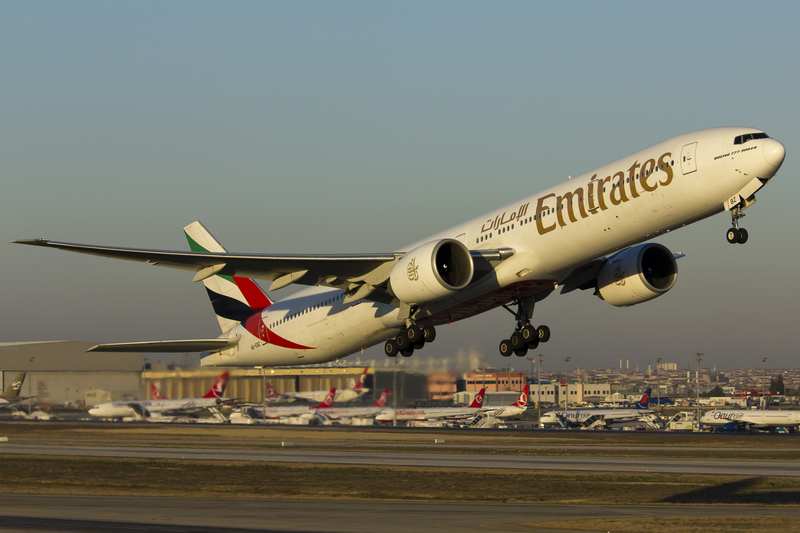
Emirates (EK) is turning Premium Economy from a “nice-to-have” into a network standard—fast. In its latest schedule and fleet update, the Dubai-based carrier is layering Premium Economy-equipped aircraft onto 14 markets spanning Europe, North America, Asia, Australia, Africa, and the Middle East, using a mix of new Airbus A350s and retrofitted Boeing 777s.
For airline planners, this is less about a single cabin and more about consistency: Emirates is now explicitly targeting a point where customers can expect the same step-up product across aircraft types and regions. The airline says Premium Economy-equipped aircraft will operate on more than 84 routes by July 1, an aggressive scale-up for a cabin that—done right—can materially lift revenue without the operational complexity of a full business-class capacity increase.
Three High-Demand Adds Lead the Summer Wave: CPH, HKT, and CPT
The headline capacity moves are three additional frequencies, all operated with Emirates’ next-generation Airbus A350. These aren’t new routes; they’re new daily frequencies added to existing markets where demand support is strongest heading into peak season.
Dubai (DXB) – Copenhagen (CPH) gets a second daily flight from June 1, operating as EK153/154. It’s scheduled to depart DXB at 14:50 and arrive CPH at 19:45, returning CPH at 21:35 and arriving DXB at 05:55 the next day (all local times). The timing is designed to flow connectivity over DXB to East Asia and the Indian Ocean, while also creating cleaner connection options for inbound traffic into Scandinavia.
Dubai (DXB) – Phuket (HKT) picks up a third daily frequency from July 1, operating as EK390/391. The overnight DXB departure (22:40) and morning HKT arrival (08:10) is a classic Emirates bank-builder: it catches a wide set of European arrivals into DXB, then lands into Thailand at a hotel-friendly time. The return departs HKT at 10:00 and arrives DXB at 13:05, feeding afternoon departures westbound.
Dubai (DXB) – Cape Town (CPT) also gains a third daily service from July 1 as EK778/779, departing DXB at 10:25 and arriving CPT at 18:05, then departing CPT at 20:00 and arriving DXB at 07:25 the following day. Emirates is effectively building a third “pillar” into its Cape Town schedule—useful for smoothing misconnect risk and giving revenue management another set of departure times to sell against both leisure and corporate demand.
The Aircraft Angle: Why Emirates Is Using A350s for Growth and 777s for Coverage
From a product and economics standpoint, Emirates is using two levers at once:
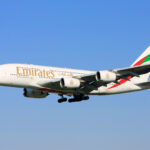
Airbus A350: Emirates’ A350 is emerging as its “network standardizer” for three-cabin flying—especially where the airline wants Premium Economy and a modern business product without needing a First Class cabin. For professionals tracking hard product, this matters because Emirates is using the A350 to add frequencies and protect yields without simply dumping more 777 or A380 capacity into the market.
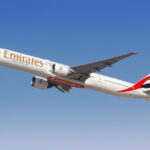
Retrofitted Boeing 777: The retrofit program is doing the heavy lifting on breadth. Emirates is taking legacy 777 airframes and aligning interiors to a newer standard, allowing Premium Economy to appear on a wider set of routes—including regional and medium-haul markets—without waiting for factory-new deliveries.
The net effect: Emirates can add Premium Economy in places where the cabin will sell (high-volume leisure, premium-heavy VFR, and corporate markets), while tightening product consistency enough that the airline can price and upsell more confidently across the network.
The 14 Markets Getting Premium Economy-Equipped Service
Below is the practical “where and when” for the latest wave. This reflects Emirates’ published effective dates and aircraft assignments, with the caveat that aircraft availability can always pull deployments forward if refurbishment and delivery timelines allow.
| Region | Market (airport codes) | Effective date | Planned Premium Economy aircraft |
|---|---|---|---|
| Europe / North America | Dubai (DXB) – Barcelona (BCN) EK187/188 | Feb 1 | Retrofitted Boeing 777-300ER |
| Europe / North America | Barcelona (BCN) – Mexico City (MEX) EK255/256 | Feb 15 | Retrofitted Boeing 777-200LR (three-class) |
| Europe | Dubai (DXB) – Rome Fiumicino (FCO) EK099/100 | Mar 29 | Airbus A350 |
| Europe | Dubai (DXB) – Copenhagen (CPH) EK153/154 (additional daily) | Jun 1 | Airbus A350 |
| Asia | Dubai (DXB) – Cochin (COK) EK530/531 (2x weekly) | Jan 29 | Retrofitted Boeing 777-200LR (three-class) |
| Asia | Dubai (DXB) – Karachi (KHI) EK606/607 | Mar 1 | Retrofitted Boeing 777-200LR (three-class) |
| Asia | Dubai (DXB) – Taipei (TPE) EK386/387 | Mar 15–Apr 30, then May 1 | 777-200LR (three-class), then A350 |
| Asia | Dubai (DXB) – Phuket (HKT) EK390/391 (additional daily) | Jul 1 | Airbus A350 |
| Australia | Dubai (DXB) – Brisbane (BNE) EK430/431 | Mar 29 | Retrofitted Boeing 777-300ER (four-class) |
| Africa | Dubai (DXB) – Addis Ababa (ADD) EK723/724 | Mar 1 | Retrofitted Boeing 777-200LR (three-class) |
| Africa | Dubai (DXB) – Cape Town (CPT) EK778/779 (additional daily) | Jul 1 | Airbus A350 |
| Middle East | Dubai (DXB) – Basra (BSR) EK947/948 (Thu service) | Jan 29 | Retrofitted Boeing 777-300ER (four-class) |
| Middle East | Dubai (DXB) – Kuwait (KWI) EK859/860 | Feb 1–Apr 30, then May 1 | Retrofitted Boeing 777, then A350 |
| Middle East | Dubai (DXB) – Tehran (IKA) EK979/980 | Mar 29 | Retrofitted Boeing 777 (four-class) |
Why This Rollout Matters Operationally
Premium Economy is often framed as a passenger comfort story—wider seats, better pitch, upgraded dining—but the more consequential shift is what it does to network economics:
-
Creates a higher-yield “buffer cabin” that absorbs travelers trading down from business and trading up from economy, especially on long-haul leisure peaks.
-
Improves upgrade and loyalty economics by adding a meaningful redemption/upgrade step that is easier to clear than business, but more valuable than economy plus-legroom seating.
-
Stabilizes revenue across aircraft types when product is consistent enough that scheduling changes don’t automatically trigger customer dissatisfaction or compensation pressure.
With the A350 adding frequency and the 777 retrofit widening coverage, Emirates is essentially building Premium Economy into its long-haul identity—not treating it as a limited-market experiment.
Bottom Line
Emirates is scaling Premium Economy with intent: A350s are being used to add frequency in high-demand markets like Copenhagen (CPH), Phuket (HKT), and Cape Town (CPT), while retrofitted 777s push the cabin into a broader set of 14 upgraded markets worldwide. For the industry, the signal is clear—Premium Economy is now a core revenue and product pillar for Emirates, and by mid-2026 it’s becoming far less of a “hunt for the right aircraft” and far more of a predictable booking proposition across the network.