Delta’s Binghamton U-Turn: Why One Daily Flight Still Matters
For airports with a diversified schedule, a single route cancellation is painful but survivable. For Greater Binghamton Airport (BGM), it was existential.
Delta Air Lines’ Delta Connection link between Binghamton (BGM) and Detroit Metro (DTW) is the airport’s lone scheduled passenger service—one daily flight that effectively plugs New York’s Southern Tier into Delta’s largest hub by departures. When Delta signaled in late December that the route would end on February 14, 2026, BGM was staring at a return to “commercial service: none.”
Then, just over a week later, the story swerved. On January 9, New York Governor Kathy Hochul and Senator Chuck Schumer announced that Delta had identified available aircraft and would resume daily service in the spring. Whether there’s a brief gap or a seamless transition depends on how quickly the schedule is rebuilt—but the bigger takeaway is what this reversal reveals about the fragile math behind small-market flying.
The Route: A Short Hop With Outsized Network Value
BGM–DTW is a classic spoke-to-hub feeder: around 377 miles gate-to-gate on the map, but far longer in strategic reach once you add connectivity.

DTW isn’t just “Detroit.” It’s a sorting facility for flows across the Midwest and Northeast, plus long-haul connectivity over the Atlantic and into Asia. For a small catchment area, a single reliable hub flight often outperforms “point-to-point dreaming,” because it turns a small local market into a matrix of bookable itineraries.
That’s why one daily frequency matters. In network planning terms, daily service is the minimum viable “utility” for business travelers: miss it and you lose the day; lose the day and the corporate account migrates to the car. With BGM’s options limited, the alternative isn’t just another airline—it’s often another airport entirely.
The Aircraft: Why the CRJ-900 Is the Right (and Sometimes Only) Tool
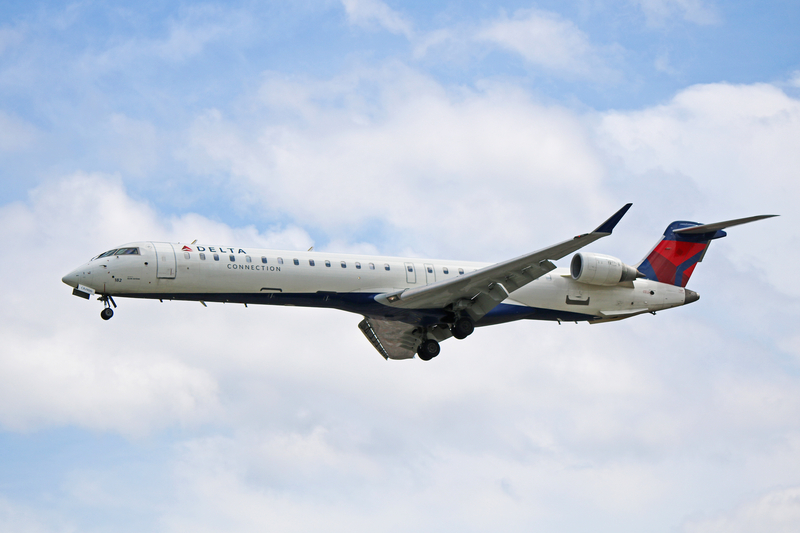
Delta Connection on BGM–DTW is typically a Bombardier CRJ-900, a 76-seat regional jet in dual-cabin configuration. In Delta’s common layout, that usually means a true premium section up front, a small “in-between” cabin, and standard economy behind—exactly the kind of product segmentation carriers want for hub feed without putting a mainline Airbus A320 or Boeing 737 into a market that can’t support that gauge year-round.
Technically, the CRJ-900 is built for this kind of mission profile:

-
It’s efficient on short-to-medium stage lengths where climb and descent time matter as much as cruise.
-
It has the legs to operate in adverse weather diversion scenarios without turning the flight into a fuel math problem.
-
It provides just enough seat count to support daily service while keeping trip costs contained.
But here’s the operational reality that often gets missed: even if the demand picture is stable, regional jet availability is not. That single aircraft rotation depends on a tightly balanced system—crew staffing, maintenance positioning, spare ratios, and the never-ending puzzle of where each airframe earns the best return.

So when state officials say Delta “identified available aircraft,” airline professionals hear something specific: the constraint may not have been demand at BGM (BGM), but the fleet chessboard at the regional level.
Why Non-Hub Airports Keep Losing Service (Even When Planes Look Full)
Small markets can feel blindsided because the cabin can look “busy” and still fail the airline’s hurdle rate. Airlines don’t run routes based on occasional full flights—they run them on yield, seasonality, and network contribution.
Three structural forces are working against airports like BGM:
-
Upgauging and fewer frequencies: Airlines have trended toward larger aircraft in bigger markets, often reducing the number of smaller-gauge aircraft available for marginal spokes.
-
Regional economics: Short routes have disproportionate fixed costs (turn times, staffing, airport handling, deicing exposure), so the margin can evaporate quickly.
-
Operational resiliency: A single daily spoke is vulnerable. One maintenance delay can cascade into missed connections at the hub and expensive reaccommodation costs.
In other words, keeping BGM–DTW alive isn’t just about selling 76 seats. It’s about keeping the cost of serving those passengers lower than the downstream value they create across DTW.
The Politics Question: Pressure, Incentives, or Simple Timing?
The public-facing narrative is straightforward: local and state leaders pushed hard, and Delta reversed course. That’s clearly part of the story—airlines do listen when influential stakeholders call, especially in states where they have broader commercial interests.
But route reversals almost always require one of these practical triggers:
-
Aircraft reallocations: A planned rotation becomes available due to a schedule change elsewhere.
-
Temporary bridging plans: An airline can restore service seasonally while it reassesses longer-term viability.
-
Local support mechanisms: Communities sometimes offer marketing support, fee waivers, or revenue guarantees to de-risk thin routes.
None of that implies anything improper. It’s how the system works—especially when a route is small enough that one variable (a single airframe, a crew base shuffle, a maintenance program change) can flip the decision.
The notable detail here is timing: the original end date of February 14, 2026 suggested a clean break. The “resume in spring” language suggests a pause is still possible, meaning Delta may be solving an aircraft-and-crew availability problem rather than declaring the route permanently safe.
What Passengers Should Expect If There’s a Gap
If the schedule pauses after February 14, travelers will likely be pushed into one of three workarounds:
-
Rebook over alternate Delta hubs (depending on inventory and interline options).
-
Drive-to-fly from nearby commercial airports such as Syracuse (SYR), Scranton/Wilkes-Barre (AVP), Albany (ALB), or Ithaca (ITH), which can add ground time but restore frequency and network choice.
-
Wait for spring reinstatement if travel is discretionary and the schedule returns quickly.
For corporate accounts, even a short interruption can do lasting damage—once travelers establish new routines, they often don’t come back. That’s why the “brief gap” question is more than optics. It’s revenue.
Bottom Line
Delta’s decision to keep Binghamton (BGM) connected to Detroit (DTW)—even with the possibility of a short pause—highlights the harsh reality of single-route airports: service isn’t just about local demand, it’s about fleet availability, regional economics, and network contribution.
The CRJ-900 is the right aircraft for the job, but it’s also the aircraft type most exposed to systemwide constraints. When one daily flight is an entire airport’s commercial identity, the difference between “cancelled” and “rescued” can be as narrow as one freed-up airframe in a regional rotation.