Delta Schedules Atlanta-Riyadh Nonstop For October 2026 As Saudi Route Incentives Court New Service
Delta Air Lines has now filed schedules for its long-anticipated entry into Saudi Arabia, with nonstop flights planned between Hartsfield–Jackson Atlanta International Airport (ATL) and King Khalid International Airport (RUH) beginning in late October 2026.
It’s a headline route for multiple reasons: it would be Delta’s first-ever service to Saudi Arabia, one of the longest missions in the carrier’s network, and a notable sign that Delta sees Riyadh (RUH) as more than just a point on a map—especially as Saudi Arabia continues to invest heavily in air connectivity and tourism growth.
Route Details: ATL–RUH Joins Delta’s Long-Haul Map
Delta currently plans to inaugurate service on October 23, 2026, linking Atlanta (ATL)—its largest hub and one of the most connected airports in North America—with Riyadh (RUH), Saudi Arabia’s capital and primary business center.
Delta has indicated the route will run daily during the launch window and then settle into a three-times-weekly pattern for year-round service. That “daily then 3x weekly” approach is common when an airline wants to:
-
support inaugural demand and operational bedding-in,
-
then right-size capacity once the route finds its natural baseline,
-
while still offering enough frequency to be relevant for premium and connecting travelers.
Tickets are expected to go on sale shortly, and the route’s appearance in published schedules is usually the last step before sales open.
Flight Schedule And Frequency
Delta’s filed timings show late-evening departures in both directions—classic long-haul “hub-bank friendly” scheduling that maximizes connections on each end.

Planned schedule (local times):
-
DL318: ATL 22:30 → RUH 19:35 (+1 day)
-
DL317: RUH 23:30 → ATL 07:05 (+1 day)
On paper, the route clocks in at approximately 7,283 miles (11,721 km / ~6,329 nm) and is currently blocked around 13h 05m eastbound and 15h 35m westbound. The westbound leg is longer largely because it’s flying into prevailing winds, and because real-world routing is influenced by day-to-day airspace and flow constraints between North America, Europe, and the Gulf.
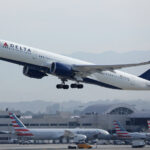
The Aircraft: Delta’s 275-Seat Airbus A350-900
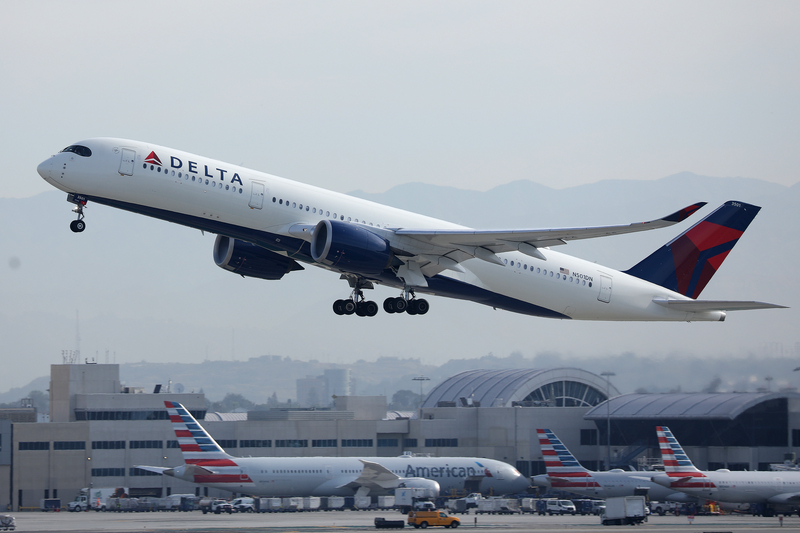
Delta plans to operate ATL–RUH with the Airbus A350-900, a flagship long-haul widebody built for exactly this kind of mission: ultra-long sectors where fuel efficiency, cargo capability, and passenger comfort all matter.
A few reasons the A350-900 is a logical fit for ATL–RUH:
-
Range and performance: The A350 family is designed for long-haul missions up to roughly the 8,000+ nautical mile class, giving Delta margin for seasonal winds and routing variability.
-
Economics: The A350’s efficiency is especially valuable on a brand-new intercontinental route, where demand is still being proven and yields can swing by season.
-
Premium cabin capacity: Delta is deploying an A350-900 configuration with 275 seats, including a substantial premium footprint:
-
40 Delta One (business class lie-flat)
-
40 Premium Select (premium economy)
-
36 Delta Comfort+
-
159 Delta Main (economy)
-
That mix matters. On a route like ATL–RUH, premium demand isn’t just about local Atlanta–Riyadh travelers. It’s also about:
-
corporate traffic connecting over ATL from across the U.S.
-
higher-yield inbound demand tied to business, government, and major events
-
and connecting itineraries that can be packaged with partners beyond RUH
Why Riyadh, Why Now
From a network perspective, Delta has historically been light in the Middle East compared with its U.S. peers’ partner ecosystems in the Gulf. Riyadh (RUH) changes that equation—especially if Delta can build a strong onward network through partnerships rather than trying to fly deeper into the region with its own metal.
Riyadh is also in the middle of a sustained aviation and tourism push tied to Vision 2030, with the Kingdom aiming to broaden inbound leisure travel, expand events and entertainment, and increase international business links. For airlines, that translates into two things:
-
more “real” demand over time, and
-
a willingness from the market to help make new routes viable early on.
What Delta And Riyadh Air Get From The Partnership
Delta’s Riyadh strategy isn’t happening in isolation. Delta and Riyadh Air—Saudi Arabia’s high-profile new airline backed by the country’s sovereign wealth ambitions—have already announced a planned partnership framework.
For Delta, the upside is clear: if Riyadh Air builds a meaningful long-haul and regional bank at RUH, Delta can offer one-stop options via Riyadh to markets where it currently has weaker coverage (think parts of the Middle East, South Asia, and Africa), while still funneling U.S. demand through ATL.
For Riyadh Air, a deep U.S. partner anchored at ATL is about instant scale—access to hundreds of North American city pairs without needing to launch dozens of its own routes on day one. That’s how new long-haul carriers accelerate relevance quickly: partnerships first, metal later.
The Incentive Question: Saudi Arabia’s Route Support Programs
Delta isn’t alone in noticing Saudi Arabia’s connectivity push. Over the past few years, the Kingdom has actively worked to attract airlines through programs designed to stimulate new routes and strengthen inbound tourism.
Saudi Arabia’s Air Connectivity Program (ACP)—a government-backed initiative—has been publicly positioned as a route development engine, supporting new and expanding services into the Kingdom. In practice, these programs often come with a mix of marketing support, startup assistance, and other commercial incentives that can materially improve a route’s early economics.
That doesn’t guarantee long-term success—routes still have to mature into sustainable demand—but it does reduce the risk profile for airlines testing new long-haul markets. For Delta, launching ATL–RUH with an A350-900 and a premium-heavy cabin mix suggests it’s targeting both connectivity and higher-yield segments from day one, while broader market development catches up.
Bottom Line
Delta has now published schedules for nonstop flights between Atlanta (ATL) and Riyadh (RUH) beginning October 23, 2026, initially operating daily around the launch period before shifting to three weekly frequencies. The route is slated for the Airbus A350-900, a natural choice for a 7,000+ mile mission, and Delta is bringing a 275-seat, premium-forward cabin layout that signals it’s aiming well beyond just local traffic.
The bigger story is strategic: Riyadh (RUH) is being built into a global aviation node, and Delta appears ready to plug into that growth—supported by partnership plans with Riyadh Air and an environment where Saudi route development incentives are actively attracting new international service.