Delta A350 Diverts To Tokyo Haneda After Mid-Flight Hydraulic Issue
Mid-Flight Hydraulic Problem Prompts Diversion
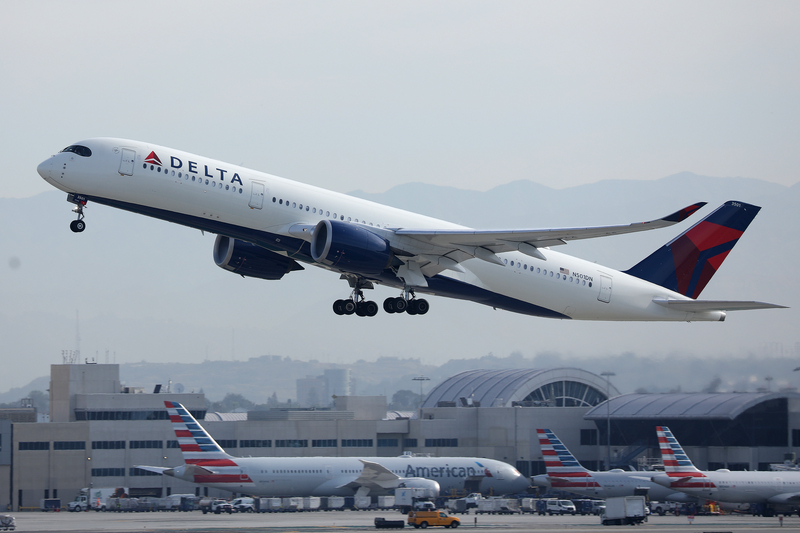
Passengers on a Delta Air Lines flight from Shanghai to Detroit found themselves unexpectedly in Japan after their Airbus A350-900 experienced a hydraulic issue en route.
The flight, operating as DL388 on Friday, November 28, had departed Shanghai Pudong (PVG) slightly behind schedule at 17:46 for its usual 13-hour journey to Detroit (DTW). When the aircraft was around 140 nautical miles (259 km) north of Tokyo, the crew detected a problem with one of the hydraulic systems and chose to divert to Tokyo Haneda (HND) out of an abundance of caution.
The captain declared an emergency for a hydraulic system issue and set up for a landing at Haneda, prioritizing safety over schedule.
Safe Arrival & Runway Closure At Haneda
Around 30 minutes after declaring the emergency, the A350 landed safely on Runway 34R at Haneda. Emergency services were positioned to meet the aircraft on arrival, as per standard procedure.
The runway remained closed for roughly 30 minutes following touchdown while the aircraft was secured and inspected before it was towed off the runway and taken to a gate. The remainder of the Shanghai–Detroit flight was canceled, with passengers needing to be rebooked onto alternative services.
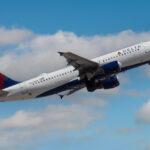
Delta issued a statement confirming the diversion and emphasizing that the crew followed procedures and that safety of customers and crew remains the top priority.
Aircraft Stayed Overnight Before Repositioning
The A350-900 involved, registration N512DN, remained on the ground at Haneda overnight while Delta and maintenance teams arranged the next steps.
The following day, the aircraft operated a positioning flight to Seattle–Tacoma (SEA) as DL9888, departing Haneda late on November 29 and arriving in Seattle the same day. From there, it continued on to Detroit, and subsequently returned to normal revenue service.
Since the incident, N512DN has already operated several long-haul flights, including Detroit–Seoul and is scheduled to fly Seoul–Atlanta as DL26. This indicates the issue was addressed without requiring long-term grounding.
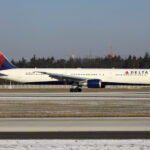
Inside Delta’s A350-900 N512DN
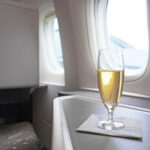
Delta’s A350-900 fleet is configured for long-haul flagship routes, and N512DN is no exception. The aircraft features a three-class layout:
-
32 Business Class seats
-
48 Premium Economy seats
-
226 Economy Class seats
Key details for N512DN:
-
Registration: N512DN
-
MSN: 267
-
First Flight: December 12, 2018 (as Airbus test aircraft F-WZGE)
-
Delivery To Delta: January 26, 2019
-
Engines: Two Rolls-Royce Trent XWB-84
It is one of 38 A350-900s currently in Delta’s fleet, with six more on order. The airline also has the larger A350-1000 coming from 2026, which will sit at the top end of its long-haul offering.
Why Hydraulic Issues Are Taken So Seriously
Modern widebodies like the Airbus A350 use multiple independent hydraulic systems to operate critical components such as:
-
Flight controls (ailerons, elevators, rudder)
-
Flaps and slats
-
Landing gear and brakes
A fault in one of these systems does not automatically mean immediate danger, because the aircraft is built with redundancy. However, any unusual behavior or fault in a hydraulic system—especially on a long overwater segment—can raise concerns about:
-
Possible uncommanded control surface movement
-
Reduced redundancy if another system were to fail
-
Challenges with landing gear extension or braking
That’s why crews are trained to divert to a suitable airport as soon as practical when a significant hydraulic anomaly is detected. With Japan directly under the flight path and Tokyo Haneda offering long runways, first-rate emergency services, and Delta handling capability, it was the logical diversion point.
In this case, the combination of a clear system issue, a long remaining flight time to Detroit, and the proximity of a major hub made the decision to divert both conservative and prudent.
Bottom Line
A Delta Air Lines Airbus A350-900 operating DL388 from Shanghai to Detroit diverted to Tokyo Haneda after the crew identified a hydraulic system problem and declared an emergency. The aircraft landed safely, temporarily closed the runway while emergency checks were carried out, and the onward flight to Detroit was canceled.
After overnight ground time and a repositioning flight via Seattle, N512DN has returned to normal long-haul service. While hydraulic issues on the A350 are rare, the potential safety implications mean that diversions like this are absolutely the right call—especially on long-haul routes over water.