Cockpit Standoff At Mexico City (MEX): 737 Captain Protest Halts Magnicharters Flight To Cancún (CUN)
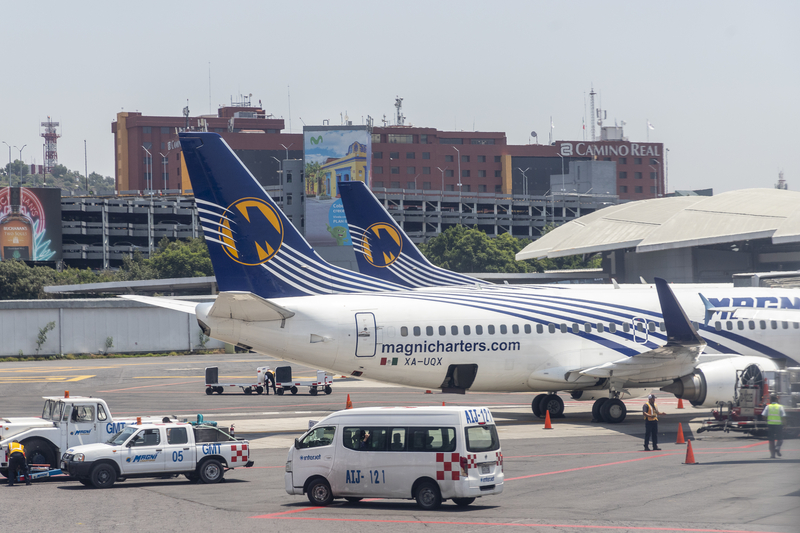
A routine domestic departure at Mexico City International Airport Benito Juárez (MEX) turned into a full-scale operational disruption this week after the captain of a Magnicharters Boeing 737 refused to operate the flight, prompting authorities to step in and passengers to be offloaded.
The flight in question was scheduled from MEX to Cancún International Airport (CUN)—one of Mexico’s busiest trunk routes and a workhorse sector for leisure-focused carriers. But instead of pushing on to the Yucatán Peninsula, the aircraft returned to the ramp after an aborted departure sequence, and the situation escalated into what multiple outlets described as a cockpit standoff tied to an employment and pay dispute.
While the human drama grabbed headlines, the incident is also a sharp reminder of how quickly an airline operation can tip from “minor delay” into “security response” when the cockpit becomes the focal point—especially at a high-tempo, capacity-constrained airport like MEX.
What Happened On The MEX–CUN Departure
According to aviation authorities, the chain of events began during the takeoff roll when the captain reported a technical issue and discontinued the departure. The aircraft returned to the ramp area at MEX, where the matter was addressed on the ground.
That’s the straightforward part.
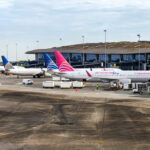
Where accounts diverge is what followed. Local reporting and passenger-posted videos describe the captain speaking to the cabin and refusing to continue the flight, with some reports stating he remained in—or secured—himself in the cockpit while demanding payment or resolution of employment issues. Separate reporting suggested the captain had been underpaid for months or had been dismissed before the flight, and that the dispute spilled into the operation in front of passengers.
What is consistent across reports: the flight did not operate as planned from MEX to CUN, passengers were removed from the aircraft, and authorities became involved on scene. In a major airport environment, once a cockpit access issue is even suspected, the response tends to be swift and structured.
Why This Quickly Looked Like A Security Event
To passengers, “the pilot won’t fly” sounds like an HR problem. To airport and airline security teams, a crew member refusing to vacate the flight deck can instantly resemble an “unlawful interference” scenario—especially if the cockpit door is closed and the individual is not following standard removal procedures.
A few reasons this escalates fast:

-
The cockpit is a protected space. Post-9/11 security doctrine worldwide treats unauthorized control—or refusal to relinquish control—of the flight deck as a critical risk, even when the individual is credentialed.
-
Airports run playbooks, not gut feelings. Once a situation meets certain triggers (locked door, refusal to comply, disruption at the aircraft, passenger exposure), response protocols kick in. That often means federal authorities, airport security, and specialized units.
-
MEX has no tolerance for extended standstills. Benito Juárez is notoriously congested, with tight gate utilization. A single aircraft stuck at a contact gate can ripple into misconnects, towing requirements, and knock-on delays.
In other words: even if the underlying grievance is payroll, the operational signature can resemble something far more serious. That’s why these events tend to draw a response that looks, from the outside, like a hijacking protocol—without necessarily being one.
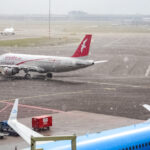
The Aircraft Angle: Why A 737 Classic Still Fits This Route
Magnicharters operates Boeing 737 variants that are well-suited to dense, short-to-medium sectors like MEX–CUN: relatively high seat counts, strong dispatch reliability when maintained properly, and performance that works for domestic Mexico.
In this case, reports identify the aircraft as a Boeing 737 family jet, with Magnicharters’ scheduled fleet widely associated with the 737-300 “Classic.” That matters for two reasons:
1) The 737-300 Is A Mature, Proven Platform
The 737-300 was designed for exactly this kind of work—high-cycle flying with quick turns. Powered by CFM56-3 engines, it brought a big leap in efficiency and noise performance over earlier 737 generations, and many airframes still fly today in charter and leisure service where acquisition costs matter.
2) Cabin Configuration Can Be High-Density
Depending on the specific airframe, 737 Classics can be fitted with layouts pushing toward the type’s exit-limit seating. In leisure markets, that usually means:
-
Single-cabin, all-economy seating
-
Tighter pitch than legacy “full service” layouts
-
Limited connectivity/IFE compared with newer 737NG/MAX aircraft
For a two-to-three-hour sector like MEX–CUN, that’s a trade many price-sensitive travelers accept—especially when the airline packages flights with tour products.
Quick 737-300 Primer (Why It’s Still Used)
-
Engines: CFM56-3 series turbofans (the distinctive flat-bottom nacelle is a Classic giveaway)
-
Typical seating: up to ~149 seats depending on exits and cabin layout
-
Sweet spot: short/medium sectors with high utilization and predictable stage lengths
-
Operational reality: older airframes demand disciplined maintenance planning and spare coverage—especially when operating from hot, high airports like MEX
Labor Disputes Don’t Stay In The Back Office For Long
Airlines like to keep labor issues invisible to passengers. This incident shows how hard that is when disputes intersect with day-of-ops realities.
A cockpit refusal isn’t just a delayed flight; it can cascade into:
-
Immediate crew legality issues: once duty time starts ticking, replacement crews may time out before they can even depart.
-
Aircraft rotation breakage: that 737 isn’t just going to CUN; it likely has multiple legs afterward. One disruption can wipe out an entire day’s utilization.
-
Gate and slot pressure at MEX: even a short “out of position” delay can force towing, remote stands, or cancellations if gate sequencing collapses.
-
Passenger reaccommodation complexity: unlike a hub carrier with dozens of daily options, smaller operators have fewer same-day recovery paths—so cancellations sting more.
For passengers, it’s maddening. For ops teams, it’s a worst-case scenario because the constraint isn’t weather or ATC—it’s human availability and compliance, which is harder to “optimize” in real time.
What Travelers Should Do When A Flight Is Halted On The Ground
If you ever find yourself stuck in a situation like this at MEX—especially on a leisure carrier—there are practical steps that improve your odds of a clean recovery:
-
Document the disruption. Note times, gate, and any official announcements. Screenshots matter.
-
Confirm whether the flight is a delay, aircraft swap, or cancel. These are handled differently in most airline systems.
-
Ask for written confirmation of the cause. Even a basic station note or email can help later.
-
If you booked a package holiday, contact the tour operator immediately. They may have alternate lift options you won’t see in retail channels.
-
Keep your baggage plan flexible. If the airline offloads bags at MEX, that often signals a longer disruption.
The key is speed: once irregular operations start, the earliest passengers to rebook usually get the best options—especially on routes like MEX–CUN where seats can vanish quickly.
Bottom Line
A Magnicharters Boeing 737 departure from Mexico City (MEX) to Cancún (CUN) unraveled after an aborted takeoff and a subsequent crew dispute that spilled into the operation, leading to passenger offload and an on-scene response by authorities.
Beyond the headlines, the episode highlights a hard truth about airline reliability: you can plan for maintenance and weather, but when a labor issue reaches the cockpit door, it instantly becomes an operational—and potentially security-coded—event. At a high-pressure airport like MEX, that’s the kind of disruption that doesn’t just delay one flight. It can derail a whole day of flying.