Canada’s Nolinor Keeps The Boeing 737-200 Alive – And Operates More Of Them Than Anyone
The World’s Biggest 737-200 Operator, By The Numbers
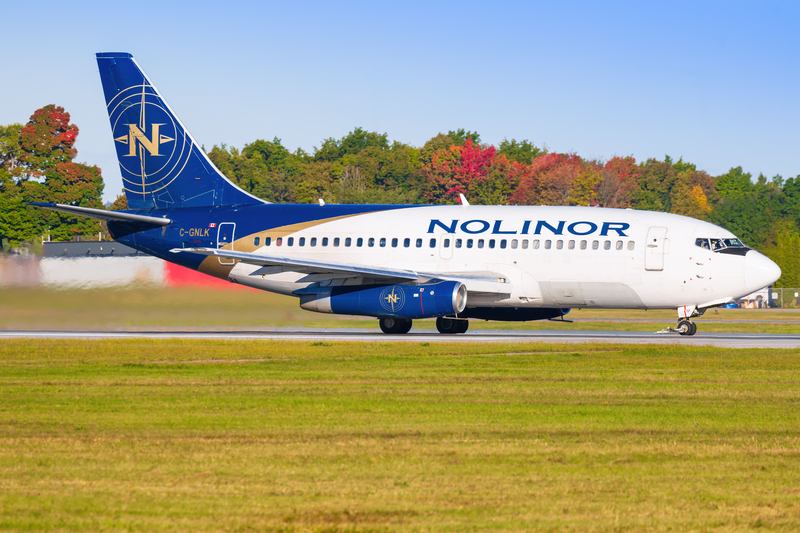
As of December 2025, Les Investissements Nolinor Inc., operating as Nolinor Aviation, holds the distinction of being the world’s largest Boeing 737-200 operator. The Mirabel, Québec-based charter carrier flies eight 737-200s—a substantial slice of a global fleet that’s dwindled to roughly 40 aircraft still in service.
The scale is striking when you consider the 737-200’s age: Boeing built 1,114 examples between 1965 and 1988, and the type has long since vanished from mainstream airline schedules. Yet in Canada’s far north, it remains not only relevant—but, in some cases, irreplaceable.
Why Nolinor Still Needs The 737-200
Nolinor specializes in passenger charter and cargo flying across North America and into select European work, but its signature niche is northern operations where infrastructure is limited. The airline’s 737-200s are equipped with gravel kits, which allow them to operate into unpaved runways—including dirt, gravel, and ice—common at remote communities and industrial sites.
That capability matters because many destinations in northern Canada are defined by harsh weather, vast distances, and limited ground transport. Seasonal conditions and permafrost make building and maintaining traditional paved surfaces difficult and expensive. In that environment, an aircraft that can bring jet speed and meaningful payload into rough-field airstrips becomes a powerful tool.
A Fleet Built Around Flexibility
Nolinor’s eight 737-200s form the backbone of its specialized flying:

-
Six are 737-200C “combi” aircraft, able to be configured for passenger and cargo operations, with seating for up to 119 passengers depending on layout.
-
Two aircraft (including C-GNRD and C-GNLE) are dedicated freighters, focusing purely on cargo lift.
-
The airline has also added additional passenger-focused capability within the -200 fleet, including C-FTWW, acquired in summer 2025.
Across the group, these aircraft are now decades old, with airframes ranging from roughly the low-40s to beyond 50 years. That age would be a deal-breaker for most carriers—but Nolinor’s mission is unusual, and so is the equipment that can do it.
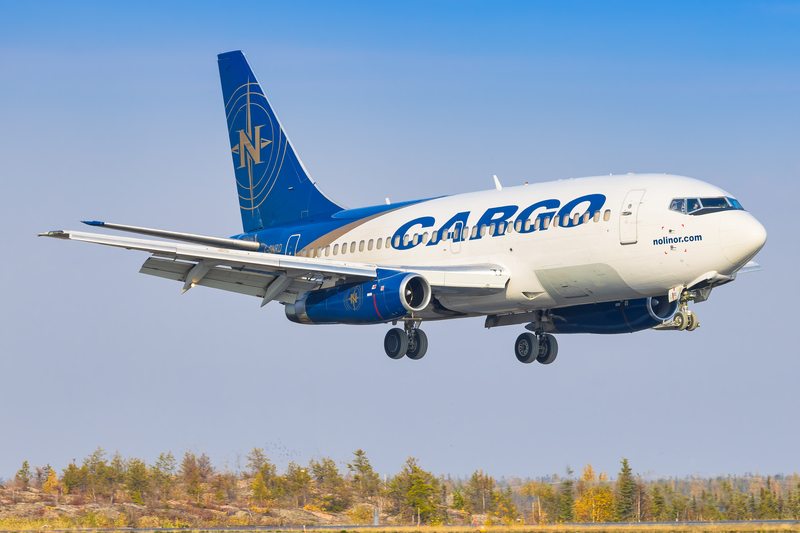
ID 425948221 | Air © Mike Fuchslocher | Dreamstime.com
The Gravel Kit Advantage
The 737-200’s gravel kit configuration is what keeps it in demand for a specific kind of flying. These modifications can include protective shielding, reinforced components, and systems designed to reduce the risk of foreign-object damage when operating on loose surfaces.
For routes serving mining projects, remote camps, and isolated communities, the value isn’t just that the aircraft can land—it’s that it can do so with jet performance and useful payload. Nolinor leverages that advantage from multiple operating points, including Montréal–Mirabel (YMX) and additional bases and operational footprints across Canada, positioning the carrier to support northern logistics where schedules can be time-sensitive and alternatives limited.
Spotlight: C-GNLK And The Extreme End Of Longevity
Among Nolinor’s 737-200s, one aircraft stands out: C-GNLK. The airframe is widely described as not only the oldest 737 still in service, but among the oldest jetliners still operating commercially. Built as the 356th 737-200, it entered service in May 1974 with Dutch carrier Transavia and has passed through numerous operators over the decades, including brief stints with airlines in the United States before spending much of its life in Europe.
Its continued operation underscores two things: the ruggedness of the original 737 design and the level of ongoing maintenance needed to keep legacy aircraft operating safely—especially in demanding environments.

Keeping Old Jets Flying Is A Strategy, Not A Nostalgia Act
Running aging aircraft is never simple. Parts availability, maintenance planning, and operational reliability all become more complex as fleets get older—particularly for a type that’s been out of production for decades.
Nolinor has leaned into that reality by building internal capability, including long-standing maintenance experience that supports both continued airworthiness and the specific needs of gravel-runway flying. The airline’s model depends on keeping these aircraft dependable, because in many cases the 737-200 isn’t just a preference—it’s the tool that makes certain missions possible.
The Wider Fleet And Why The -200 Still Matters Most
While the 737-200 is the headline act, Nolinor operates other aircraft as well, including a 737-300QC (quick-change capable) and 737-400s used for higher-density work. The airline also experimented in the leisure charter space through its OWG division, which has since ended operations, allowing Nolinor to refocus on the flying that best matches its core strengths.
The key point: only the 737-200s provide the rough-field capability that defines Nolinor’s niche. Newer jets generally require paved runways and more conventional infrastructure. Turboprops can access many remote fields, but they don’t always match the speed and payload combination that the 737-200 can bring when configured appropriately.
A Lifeline Role In Northern Canada
In remote regions, aircraft are not just transportation—they’re infrastructure. Nolinor’s 737-200 operations support:
-
essential resupply (food, medical goods, equipment)
-
industrial logistics (mining and exploration personnel, parts, tools)
-
time-critical uplift where surface travel is limited or impractical
The combi configuration adds another layer of utility: being able to move both people and cargo in the same operation is a practical advantage where demand can shift quickly and where every flight needs to maximize value.
Modernization On The Horizon—But The 737-200 Isn’t Leaving Yet
Nolinor has signaled interest in next-generation solutions, including plans to introduce the Natilus Kona blended-wing cargo aircraft concept later in the decade. At the same time, the airline reportedly expects enough ongoing demand to justify adding another 737-200 in 2026.
For now, the formula remains clear: few aircraft can do what a gravel-kit 737-200 can do in a jet-powered package, and Nolinor has built a business around that reality. In an era dominated by next-gen narrowbodies and efficiency metrics, this is one corner of aviation where an older solution still wins—because it reaches places that others can’t.