Bigger Aircraft & Route Resumptions: United’s Middle East Flying Is Up 300% This December
Twelve months ago, United Airlines’ Middle East footprint was essentially a one-route story: Newark Liberty International (EWR) to Dubai International (DXB), once daily each way.
Fast-forward to December 2025 and the picture looks very different. United is not only back in Israel, it’s back with multiple hubs and widebody capacity choices that tell you a lot about where it believes demand is strongest—and where it wants operational flexibility.
Here’s what’s driving the headline jump: United is scheduled for 248 Middle East flights in December 2025 versus 62 in December 2024—a fourfold increase (up 300%). The seat count climbs even faster because one of those core routes now uses bigger metal.
The Simple Math Behind The Spike
In December 2024, United’s Middle East flying was largely just EWR–DXB (31 departures each way).
In December 2025, United layers in Israel flying to Tel Aviv Ben Gurion (TLV):
-
EWR–TLV: scheduled at twice-daily levels (two flights each way most days)
-
Chicago O’Hare (ORD)–TLV: 4x weekly
-
Washington Dulles (IAD)–TLV: 3x weekly
That combination alone accounts for the “why” behind 62 vs. 248 flights.

EWR–DXB: Same Frequency, Bigger Boeing 777
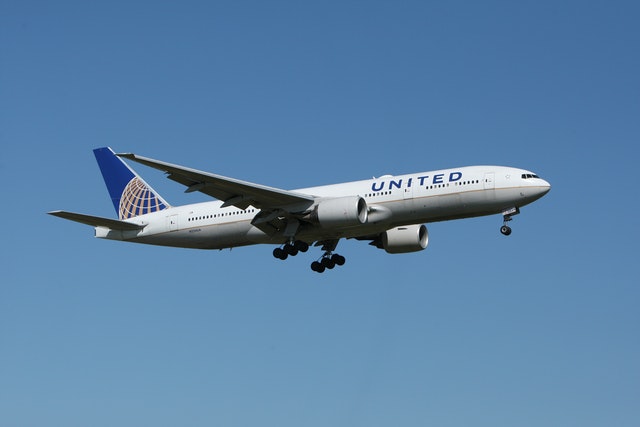
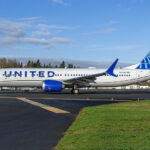
The most tangible capacity change is on EWR–DXB, where United upgauged from the Boeing 777-200ER to the larger Boeing 777-300ER while keeping the cadence at roughly daily service.
Why it matters for avgeeks (and revenue folks):
-
United’s long-haul 777-200ER configuration is commonly cited at 276 seats
-
United’s “flagship” 777-300ER configuration is 350 seats
On a 31-day month, that’s an increase from 8,556 seats each way to 10,850 seats each way—about +2,294 seats per direction, without adding a single extra frequency. That’s the cleanest kind of growth: more capacity, same slots, same route structure.
And it’s not just about raw seats. The 77W is a materially different airplane:
-
Longer fuselage (more seats and more cargo volume potential)
-
Higher thrust GE90 family engines in most global configurations
-
A cabin footprint that often supports more premium seating and better monetization options, especially on long missions like EWR–DXB
United originally positioned DXB as a connectivity play through its partnership ecosystem, and CEO Scott Kirby has previously framed the Dubai link as a way to broaden global access beyond the U.S. network.
EWR–TLV: The 787-10 Is Doing The Heavy Lifting
United’s Israel restart is the other half of the story—and it’s the part that adds the most flights.
United resumed service to Tel Aviv (TLV) in mid-2025 after repeated pauses tied to the regional security environment, restarting with daily flying and quickly restoring a second daily frequency.
For December 2025, the standout is the aircraft choice: the Boeing 787-10 Dreamliner.
That’s a deliberate selection. The 787-10 is Boeing’s largest Dreamliner by capacity, and United’s layout (per current seat map data) is configured with:
-
44 Polaris business-class flatbeds
-
21 Premium Plus seats
-
253 Economy seats
-
318 total
Operationally, the EWR–TLV pairing is well-suited to the -10’s strengths: a high-capacity, efficient widebody that’s happiest when it can fill a big cabin consistently. Typical block times hover around ~10.5 hours eastbound and ~12 hours westbound, depending on winds and routing—long enough to monetize premium cabins, but still within a comfortable mission envelope for the type.
ORD–TLV And IAD–TLV: Two More Hubs Rejoin The Map On The 787-8
United didn’t stop at Newark (EWR). It resumed additional Tel Aviv flying from:
-
Chicago O’Hare (ORD) beginning November 1
-
Washington Dulles (IAD) beginning November 2
Both routes use the Boeing 787-8, which is a smaller gauge than the 787-10 and a sensible fit for rebuilding demand while keeping frequency attractive.
United’s 787-8 layout commonly referenced for this mission is:
-
28 Polaris
-
21 Premium Plus
-
194 Economy
-
243 total
The scheduling is also notably tidy: ORD–TLV runs 4x weekly and IAD–TLV runs 3x weekly, which—when coordinated—creates an “almost daily” presence across the two hubs without forcing either market to carry a full daily widebody schedule on its own.
What United’s Fleet Choices Signal
This isn’t just “more flights.” The way United added capacity is telling:
-
Upgauge on EWR–DXB (777-300ER) suggests the route is performing well enough to justify more seats without the cost and complexity of adding frequencies.
-
High-capacity 787-10 on EWR–TLV points to confidence in demand depth—especially in premium cabins—on its primary U.S.–Israel trunk.
-
Smaller 787-8 on ORD–TLV and IAD–TLV looks like classic risk management: add network breadth, keep gauge conservative, and retain flexibility if demand swings seasonally or operational conditions change.
Put together, that’s how you get to “up 300%” without doing anything particularly flashy—just smart deployment of widebody assets and a willingness to restart routes when the operation pencils out.
Bottom Line
United’s Middle East schedule for December 2025 is four times larger than December 2024—248 flights vs. 62—driven by the resumption of Tel Aviv (TLV) flying from Newark (EWR) plus the return of Chicago (ORD) and Washington (IAD) service. Seats are up even more thanks to an EWR–DXB upgauge from the 777-200ER to the 777-300ER, turning the same daily pattern into thousands of extra monthly seats each way.