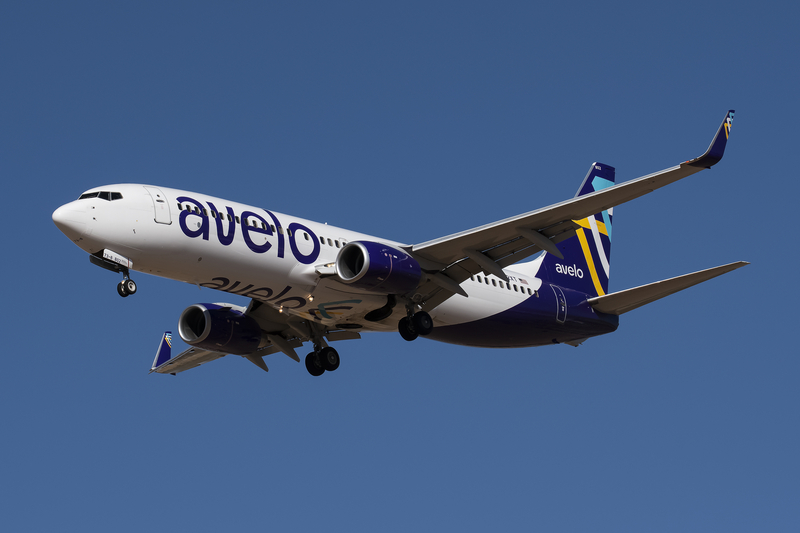
Avelo Exits ICE Charter Flying, Closes AZA Base, and Rebuilds Around a Leaner 737 Network
Avelo Airlines is pulling out of one of the most operationally complex—and publicly scrutinized—segments a U.S. ultra-low-cost carrier can take on: deportation charter flying for the federal government. At the same time, the airline is trimming commercial routes, closing multiple crew bases, and downsizing its fleet, signaling a sharper pivot back toward a simpler, more predictable scheduled operation.
The operational flashpoint is Phoenix–Mesa Gateway (AZA), where Avelo built a dedicated charter footprint. With the government flying ending, Avelo says it will close its AZA base and resize the company around fewer stations, fewer aircraft, and a tighter network that it believes can deliver steadier economics.
Why Avelo Is Walking Away From Deportation Charters
From an airline management perspective, government charter work can look like a stabilizer: contracted flying, less fare volatility, and fewer marketing costs. In reality, it often behaves like a different airline inside your airline.
Charter missions—especially those tied to deportation operations—come with a set of constraints that don’t exist in normal commercial flying:
-
Irregular schedules and repositioning that can spike costs and erode aircraft utilization
-
Higher operational complexity at stations, including specialized handling and coordination requirements
-
Crew planning friction, because charter patterns rarely fit neatly into efficient multi-day pairings
-
Brand and workforce impacts, which can show up as protests, political pressure, and internal morale strain

Avelo’s CEO described the program as providing short-term benefit but not enough consistent, predictable revenue to overcome the complexity and cost. In airline terms, that’s code for a model that looked good on paper but failed the weekly operating-profit test once the real-world disruptions, positioning, and staffing overhead were accounted for.
AZA Was Built for the Charters—and That’s Why It’s Closing
The closure of Phoenix–Mesa Gateway (AZA) is the most telling structural move in Avelo’s announcement. AZA wasn’t a blended base with commercial flying that could absorb aircraft rotations if a charter canceled. It was essentially a purpose-built operation that supported the government program.
That matters because a single-purpose base carries fixed costs that don’t flex down easily: local staffing, maintenance coordination, standby coverage, and the operational management needed to keep aircraft moving even when missions change last-minute. Once the charter flying goes away, AZA doesn’t have a natural scheduled network role to justify the overhead—so the base becomes a cost center.
Avelo says AZA will close as the charter program winds down, and the carrier will redeploy its focus elsewhere.
Fleet Reality: Saying Goodbye to the 737-700
Avelo is also shrinking its fleet by returning six Boeing 737-700s (73W). That decision is more than a fleet footnote—it changes how the airline can schedule and what kinds of markets it can profitably serve.
In Avelo’s configuration, the math is straightforward:
-
Boeing 737-700 (73W): 149 seats
-
Boeing 737-800 (738): 189 seats
That 40-seat jump per departure is a major lever in ULCC economics. The 737-800 generally offers better unit costs when demand is there, but it also raises the “minimum viable load” needed to make thin routes work—especially in off-peak periods. If you remove smaller-gauge aircraft from the mix, some marginal markets and low-frequency routes become harder to support without diluting yields.
Just as important: standardizing more heavily around one primary type simplifies the operation—training, staffing, spares, and scheduling. For a carrier trying to regain predictability, reducing fleet complexity can be as valuable as cutting routes.
The Base Map Is Being Redrawn: RDU and ILM Crew Bases Close
Alongside AZA, Avelo says it will close crew bases at Raleigh–Durham (RDU) and Wilmington, North Carolina (ILM). Closing a base doesn’t necessarily mean abandoning the city, and Avelo has been explicit that it will continue serving both markets—just not as domiciles.
Here’s what that means in practice:
-
RDU remains in the network, but flying is expected to be supported from other stations
-
ILM remains served, but with a reduced local operating footprint
From an operational standpoint, base closures are usually about fixed-cost reduction and crew efficiency. Crew domiciles require staffing buffers, local management, and scheduling flexibility that can become expensive when the airline is shrinking. Eliminating a base lets the carrier centralize resources—but it can also make route recovery tougher during irregular operations and increase complexity for crew commuting.
Where Avelo Is Concentrating: HVN, ILG, USA, and LAL
Avelo’s streamlined operating core will be built around four primary bases:
-
Tweed New Haven (HVN)
-
Wilmington, Delaware (ILG)
-
Concord-Padgett Regional (USA) near Charlotte
-
Lakeland Linder (LAL) between Tampa and Orlando
This lineup reflects Avelo’s long-running strategy: operate from lower-cost, less congested airports where the airline can control its operation, keep turn times tight, and avoid the cost structure of the largest hubs—while still pulling demand from nearby metros.
Avelo also says it plans to open a base at McKinney National (TKI) near Dallas later in 2026, a move that fits the same playbook: target a secondary airport near a major market rather than go head-to-head on cost and access at Dallas/Fort Worth (DFW) or Dallas Love Field (DAL).
What This Means for Jobs and Customers
Avelo has warned employees that the smaller fleet and resized network will require headcount reductions, though some transfers may be available. For customers, the airline has indicated near-term schedule changes will impact itineraries, and affected travelers should expect outreach directly.
If you’re looking at it through an airline ops lens, this is a classic “reset” phase: shrink the fleet, consolidate bases, simplify the network, then rebuild around routes that perform consistently with fewer operational surprises.
Bottom Line
Avelo’s decision to end ICE deportation charters is more than a reputational pivot—it’s a structural simplification. Closing Phoenix–Mesa Gateway (AZA), returning six Boeing 737-700s (73W), and consolidating around HVN, ILG, USA, and LAL signals a carrier prioritizing predictable utilization and lower complexity over opportunistic flying that didn’t deliver dependable returns.
For the markets affected—especially Raleigh–Durham (RDU) and Wilmington (ILM)—the key detail is that Avelo plans to keep service, but with fewer local resources and a tighter schedule. For the ULCC landscape, it’s a reminder that “guaranteed revenue” flying can still lose to the operational reality of running an airline: if the missions don’t produce stable margins after costs, the aircraft will be redeployed—fast.