American Airlines’ New Mattress Pads Underscore Premium Push
American Adds Mattress Pads On All Long-Haul Flights
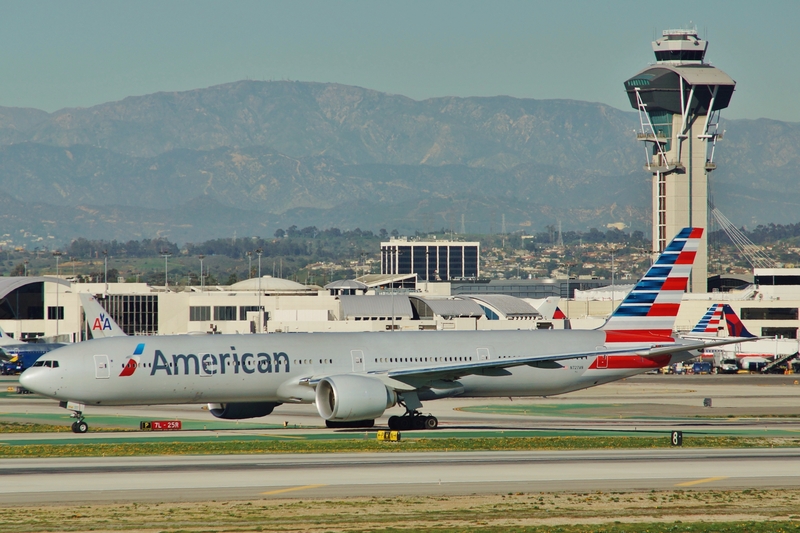
American Airlines is set to roll out mattress pads for Flagship Business passengers across its entire long-haul network.
The carrier had removed mattress pads and pajamas from business class in 2024, then quietly brought them back on select ultra-long routes to Asia and Oceania in the summer of 2025. Now, the airline is standardizing the amenity on all intercontinental flights, aligning more closely with Delta Air Lines and United Airlines, both of which already lean heavily into upgraded bedding.
For a carrier that wants to be seen as truly premium again, not offering mattress pads had become a competitive gap. This new move is one part of American’s broader effort to move upmarket after years of cutting back on the passenger experience.
A Shift Back Toward A More Premium American
The mattress pads are just one element in a wider reset of American’s long-haul product. After spending much of the 2010s chasing cost savings and basic economy, the airline is now reversing course in key areas:
-
Upgraded catering and presentation in premium cabins and lounges
-
Restored or improved bedding and amenities on long-haul flights
-
A major refresh of the hard product with new seats across multiple fleets
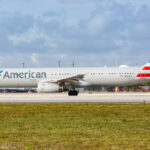
These changes are designed to support the airline’s stated strategy: compete head-to-head with Delta and United for high-yield business and premium leisure traffic, rather than simply undercutting on price.
How American’s Long-Haul Seats Are Evolving
Alongside soft-product upgrades, American is rolling out new and refreshed business class seats on its widebody and long-haul narrowbody fleet. The focus is on all-aisle-access, reverse-herringbone or herringbone layouts, with doors on the newest products.
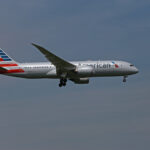
Key configurations include:
-
Airbus A321XLR
-
Collins Aurora herringbone seat with doors
-
1-1 layout in business class
-
-
Boeing 777-200ER
-
Currently a mix of Collins Super Diamond and Safran Concept D
-
Future refit to Adient Ascent with doors
-
All in 1-2-1 reverse-herringbone or alternating herringbone layouts
-
-
Boeing 777-300ER
-
Today: Safran Cirrus II reverse-herringbone seats
-
Future: Adient Ascent with doors in 1-2-1
-
-
Boeing 787-8
-
Collins Super Diamond and Safran Concept D in 1-2-1 layouts
-
-
Boeing 787-9
-
Newest aircraft feature Adient Ascent with doors in 1-2-1
-
Some aircraft still have Collins Super Diamond / Safran Concept D
-
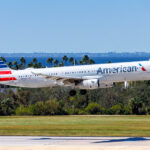
The new 787-9 layout is especially telling: it replaces the old configuration of 30 business and 21 premium economy seats with 51 Flagship Suites and 32 premium economy seats, a huge increase in premium capacity.
The 777-300ER refit is similarly aggressive. Those aircraft will move from a layout with:
-
8 Flagship First seats
-
52 business seats
-
28 premium economy seats
to a configuration with:
-
70 Flagship Suites (business with doors)
-
44 premium economy seats
The 777-200ERs are also expected to gain a more premium-heavy layout, although details are still to come.
Competing With Delta And United
From a seat and cabin standpoint, American is in a relatively strong position. Across its widebody fleet, every business class layout is a form of reverse-herringbone (or herringbone on the A321XLR), and the newest Adient Ascent product with doors is genuinely competitive.
By comparison:
-
United has a single Polaris seat type (Safran Optima), which is dense and efficient, but not especially spacious.
-
Delta offers an excellent Delta One Suite on some aircraft, but still flies older, less competitive seats on its Airbus A330s and Boeing 767s.
Where American lags is on the ground and in total long-haul scale:
-
Flagship Lounges, while extensive, are often seen as a step below United Polaris lounges and the newest Delta One lounges.
-
American operates significantly fewer widebodies than United, leaving real gaps in its long-haul network at a time when premium leisure demand is growing.
To really capitalize on these cabin and soft-product upgrades, American will need both more premium seats and more widebody aircraft to deploy them on.
Bottom Line
American Airlines’ decision to roll out mattress pads across all long-haul flights is another clear sign that the carrier is trying to reclaim a premium position after years of cost-cutting.
Combined with new business class seats featuring doors, larger premium cabins on the 787-9 and 777 fleets, and incremental catering and lounge upgrades, the airline is building a more convincing offering for high-yield travelers.
The fundamentals are moving in the right direction—but to truly go toe-to-toe with Delta and United on the global stage, American will still need more widebodies, a stronger long-haul network, and further refinement of its premium ground experience.