Allegiant’s $1.5B Bet on Sun Country: A Leisure-Airline Merger Built
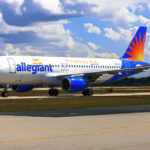
Allegiant Travel Company has signed a definitive agreement to acquire Sun Country Airlines in a cash-and-stock transaction valued at about $1.5 billion including debt—a deal that would stitch together two of the more durable U.S. leisure models at a moment when many “budget” carriers are still fighting yield compression and cost inflation.
If the transaction closes as planned in the second half of 2026, the combined airline will be headquartered in Las Vegas (LAS), operate under the Allegiant brand over the longer term, and—at least on paper—create a leisure-focused carrier with nearly 200 aircraft spanning Airbus and Boeing types. For Sun Country, whose identity is tightly linked to Minneapolis–St. Paul (MSP) and a hybrid scheduled/charter/cargo model, the tie-up offers scale and network breadth. For Allegiant, it’s a chance to add a strong hub anchor (MSP) and a cargo/charter capability that Allegiant never truly built at the same depth.
Deal terms: cash, stock, and a clear control split
The headline economics are straightforward:
-
Implied value: $18.89 per Sun Country share
-
Consideration: $4.10 in cash + 0.1557 shares of Allegiant stock for each Sun Country share
-
Equity value (approx.): ~$1.1B, with Allegiant assuming ~$400M of Sun Country net debt to reach the ~$1.5B headline value
-
Ownership post-close: ~67% Allegiant / ~33% Sun Country shareholders
Operationally, it’s also a leadership continuity play: Allegiant CEO Gregory Anderson is set to lead the combined company, while Sun Country CEO Jude Bricker is expected to join the board. Both airlines will keep selling, flying, and staffing as they do today until they’re integrated under a single FAA operating certificate.
Why this combination makes strategic sense—despite limited route overlap
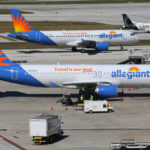
This isn’t a “two carriers fighting on the same city pairs” merger. Allegiant’s core strategy is to connect smaller and midsize cities to leisure-heavy destinations—often using secondary airports and highly seasonal schedules. Sun Country, by contrast, is structurally centered on MSP, with a scheduled network that flexes heavily around peak leisure demand and a meaningful charter business.
That complementarity is what makes the math plausible:
-
MSP becomes a stronger leisure hub inside the combined network, adding a major-airport anchor to Allegiant’s traditionally dispersed system.
-
Allegiant’s breadth of small-city origins can feed leisure demand into Sun Country-style vacation flying—without needing to turn Allegiant into a traditional hub-and-spoke airline.
-
Sun Country’s cargo operation (notably its flying for Amazon’s air network) introduces a revenue stream that behaves differently than leisure passenger demand—useful when shoulder seasons soften.
The companies are projecting $140 million in annual synergies by year three, which is a meaningful number for two carriers whose competitive advantage has been disciplined cost and targeted flying, not sheer scale.
The fleet angle aviation pros will focus on: Airbus + Boeing under one roof
Here’s where the merger gets technically interesting.
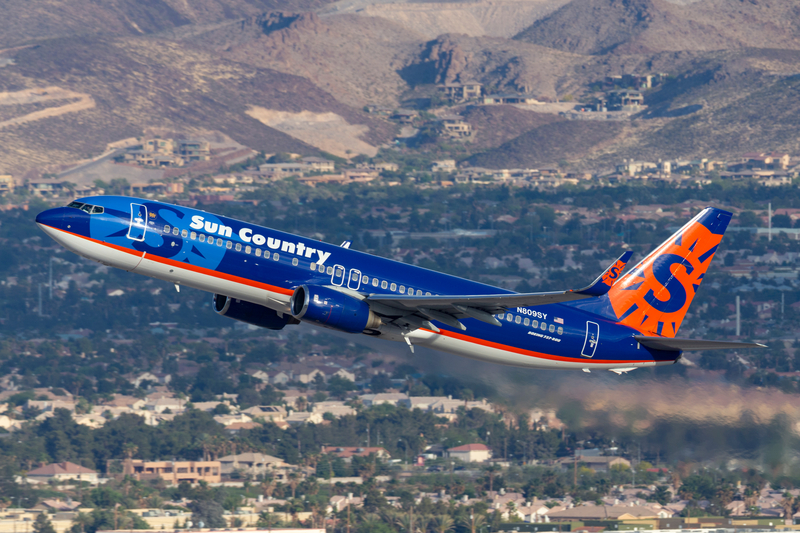
Allegiant has historically been an Airbus A320-family operator—high-density A319/A320 flying that fits its cost structure and mission profile. In parallel, Allegiant has been building a Boeing foothold with 737 MAX 8-200 aircraft and an orderbook that includes additional MAX deliveries. Sun Country is a Boeing shop: its passenger operation has been built around the 737-800, and its cargo flying relies on 737-800 freighters.
That means the combined carrier inherits a mixed-fleet reality immediately:
-
Airbus A319/A320 (Allegiant legacy core)
-
Boeing 737-800 (Sun Country passenger workhorse)
-
Boeing 737-800 freighters (Sun Country cargo)
-
Boeing 737 MAX 8-200 and a MAX orderbook (Allegiant growth plan)
From an operational perspective, “synergy” is harder with two manufacturer ecosystems. Pilot training pipelines, MX tooling, spares pools, and engineering programs don’t magically converge. The upside, though, is flexibility: the merged company can match aircraft to mission—A319/A320 for thinner leisure spokes, 737-800 for dense MSP leisure peaks, and freighters for overnight cargo utilization.
The key question professionals will ask is whether Allegiant uses this deal to accelerate a Boeing standardization over time—especially since Sun Country already has Boeing infrastructure and Allegiant has been adding MAX capacity—or whether it runs a dual-fleet strategy long term and accepts the complexity as the price of optionality.
Network implications: what changes for passengers at MSP, LAS, and leisure gateways
For travelers, the immediate experience shouldn’t change much. Until the carriers share a certificate, you should expect:
-
Separate booking paths and operating rules
-
Separate onboard products and ancillaries
-
Separate operational control centers and recovery playbooks
The bigger changes come later—once the networks can be planned as one:
-
More point-to-point leisure options out of MSP as Sun Country’s network is paired with Allegiant’s small-market origins and leisure destinations.
-
Greater frequency where demand supports it, rather than pure seasonal “pop-up” flying.
-
Potential expansion of leisure “focus” destinations such as Las Vegas (LAS) and Florida gateways, where both carriers already see strong demand—though the combined network will likely rationalize flying to avoid self-cannibalization.
One subtle but real advantage: scale helps during irregular operations. A larger combined leisure network can reposition aircraft and crews more effectively, especially when weather disrupts the vacation corridors.
The regulatory path won’t be automatic, even if overlap is minimal
Yes, these carriers don’t resemble the classic “we’re buying our top competitor on the same routes” storyline. But the U.S. regulatory temperature on airline consolidation has been high, and this deal is arriving in an environment where antitrust scrutiny is politically salient.
Expect the review to focus less on city-pair overlap and more on:
-
airport-level concentration at specific leisure markets
-
impacts on fare competition in small and midsize cities
-
whether the merger reduces “maverick” ULCC discipline in certain markets
Also looming: labor. Airline mergers nearly always reprice workgroups upward over time. If pilot and cabin contracts tighten, some projected synergy gets eaten by wage and work-rule realities—especially as the combined company tries to integrate fleets and bases.
Bottom Line
Allegiant’s planned acquisition of Sun Country is a rare U.S. airline merger that looks strategically logical on first principles: complementary networks, a stronger anchor at MSP, headquarters and brand continuity at LAS, and a diversified business mix that includes Sun Country’s cargo operation alongside core leisure flying. The operational intrigue is the fleet: a combined Airbus A320-family and Boeing 737 ecosystem is flexible—but inherently complex—and the merger’s long-term success will hinge on how intelligently the carrier standardizes (or deliberately doesn’t) across aircraft, crews, and maintenance.