Air Mauritius’ London Problem Just Got More Complicated
Air Mauritius (MK) can’t simply “flip the switch” and move back to London Heathrow (LHR) any time soon—even if the airline wants to and even if the route economics demand it. A written parliamentary response in Mauritius confirms that MK’s historic slot pairs at LHR are locked up under binding lease agreements, effectively ruling out a Heathrow return until at least April 2027.
That leaves the Mauritian flag carrier in an uncomfortable holding pattern: continuing to operate its London service from London Gatwick (LGW)—a move that was meant to unlock growth and frequency—while absorbing what government figures describe as steep losses since the switch away from LHR in late 2023.
The Slot Reality at London Heathrow
Slots at London Heathrow (LHR) aren’t just operational permissions—they’re commercial assets. Air Mauritius historically held three slot pairs at LHR (an arrival and a departure for each pair), and those slot pairs are currently leased to Qatar Airways (QR). The lease reportedly generates about USD $881,000 per year in revenue for MK.
In normal times, a slot lease can be a tidy way to monetize an underused asset while preserving long-term optionality. The catch is contractual: if the lease is locked, the airline cannot simply pull the slots back early without renegotiating terms—often at a cost that can exceed the short-term benefit.
For MK, this means the new government’s push for an “immediate” LHR return runs into a hard legal wall: the lease clocks out in 2Q27, not in 2026.

Why Gatwick Hasn’t Delivered the London Upside
MK moved its London operation to London Gatwick (LGW) in late October 2023, in part to escape Heathrow’s slot-driven ceiling. At LHR, the airline was effectively capped at three weekly flights and faced higher operating costs. At LGW, MK could file a more attractive schedule—daily flying—and pair it with a commercial arrangement involving easyJet (U2), which has a major presence in the London market (including at London Luton, LTN).
On paper, the logic was clear: more frequency improves customer utility, protects corporate accounts, and supports connecting flows (even for carriers outside the big three alliances).
In practice, the financials have been punishing. The parliamentary response cited losses of approximately MUR 920 million on the Mauritius–London route between October 2023 and March 2024, with projected losses of roughly MUR 1.7 billion for the 2024/25 financial year—bringing the cumulative deficit to nearly MUR 2.6 billion through March 2025.
That’s the kind of performance that forces immediate network triage. MK already responded by trimming LGW frequency from daily down to five weekly beginning May 2025, a classic signal that the route’s revenue base is not supporting the original capacity plan.
The Aircraft: A350 Economics vs. 777 Competition
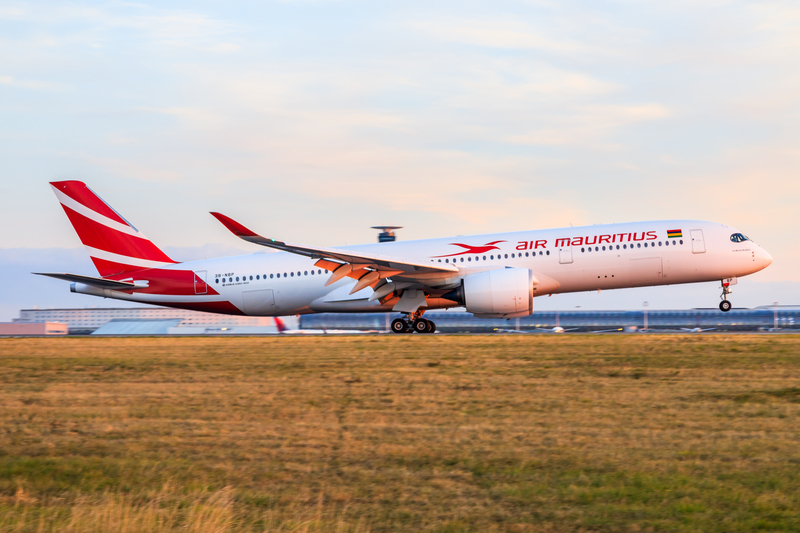
On the London sector, MK is typically deploying the Airbus A350-900, a modern long-haul widebody built for efficiency on exactly this kind of 10–12 hour mission profile. In Air Mauritius’ two-cabin configuration, the A350-900 is set up with 326 seats—28 in Business Class and 298 in Economy—which gives MK meaningful scale without pushing into A380/777-300ER territory.
The A350’s value proposition is well understood in airline planning circles: low fuel burn per seat, strong range capability, and reliable cargo uplift for routes where belly freight still matters to profitability.
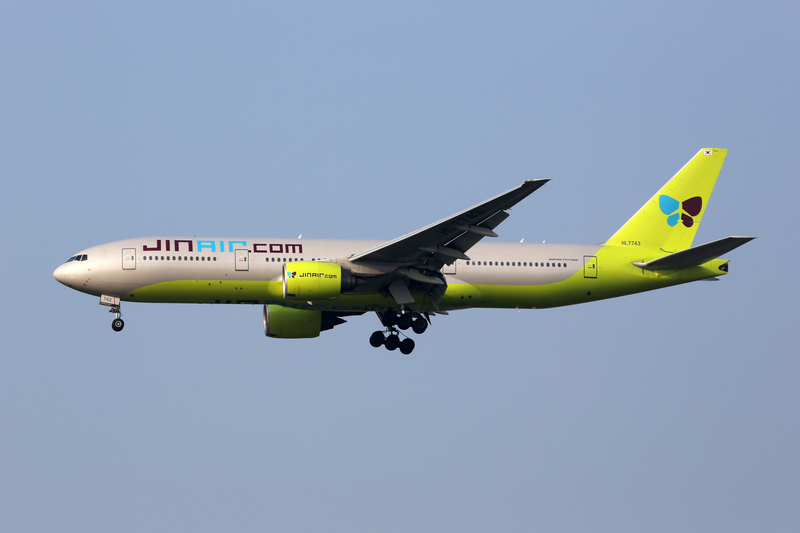
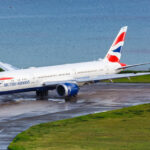
But the competitive set hasn’t gone away. British Airways (BA) continues to serve the London–Mauritius market with three weekly flights operated by the Boeing 777-200ER—a proven twin-engine long-haul platform with a different cost profile and, importantly, deep distribution power in the UK market.
For MK, this is the uncomfortable squeeze: LGW delivers more theoretical room to grow, but the route is still a yield fight—and London’s premium demand historically tends to gravitate toward LHR’s corporate ecosystem, connectivity, and brand signaling.
The Strategic Mismatch: Slot Lease Income vs. Route Losses
Here’s the part that will make network and finance teams wince: the slot lease revenue at LHR—about $0.9 million per year—is tiny compared to reported losses on the London operation from LGW.
That doesn’t automatically mean “break the lease.” Slot agreements can be complex, and Heathrow slots are among the most valuable in global aviation. A rushed, expensive early termination could destroy more value than it saves. But the arithmetic makes one point unavoidable: MK’s London strategy is now constrained by decisions made years ago, and those constraints carry real, measurable cost.
In other words, the airline isn’t only fighting market dynamics. It’s also fighting its own contractual structure.
Bottom Line
Air Mauritius (MK) won’t be back at London Heathrow (LHR) before 2Q27 because its three historic slot pairs remain tied up in a lease to Qatar Airways (QR). That reality keeps MK anchored at London Gatwick (LGW) for at least another year—despite government figures showing heavy losses since the move from LHR in October 2023. With the route now flying five weekly on the Airbus A350-900 and competing against British Airways’ 777-200ER service, MK’s near-term playbook looks less like growth and more like damage control—until the Heathrow clock finally runs out.