Air India Set To Drop Bengaluru-San Francisco And Mumbai-San Francisco
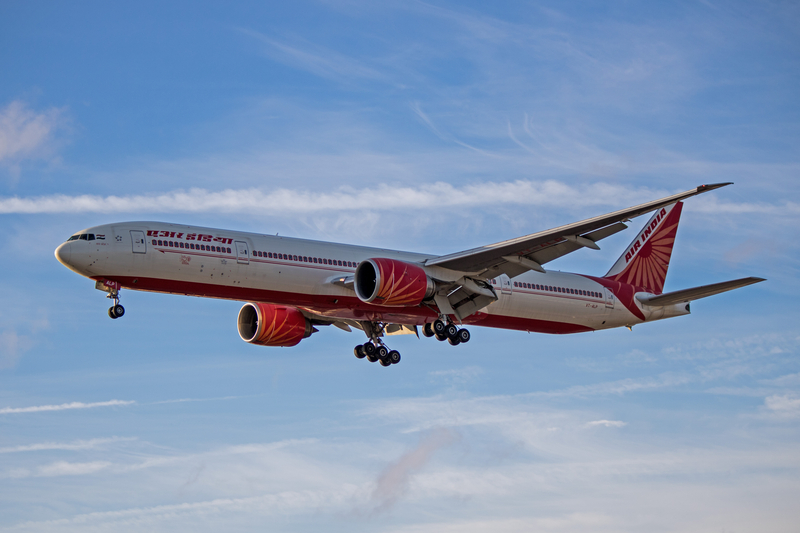
Air India is reshaping its San Francisco International Airport (SFO) footprint in a way that will be felt immediately by corporate travelers and India’s West Coast diaspora alike: service from Bengaluru (BLR) and Mumbai (BOM) to SFO is scheduled to end in late February 2026, while the carrier simultaneously adds frequency on its Delhi (DEL)–SFO trunk.
It’s a consolidation move that says a lot about where Air India’s long-haul operation is today—caught between airspace constraints, fleet realities, and a hub strategy that’s increasingly centered on Delhi (DEL).
Two Ultra-Long City Pairs Are Coming Off The SFO Board
Air India’s San Francisco network has been unusual by global standards: rather than relying solely on a mega-hub-to-mega-hub model, the airline has tried to make SFO work from multiple Indian metros.
That experiment is now being pared back.
-
Bengaluru (BLR) – San Francisco (SFO) is currently scheduled to operate through February 27, 2026.
-
Mumbai (BOM) – San Francisco (SFO) is currently scheduled to operate through February 28, 2026.
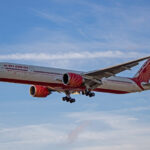
On paper, both markets make sense. BLR–SFO links two of the world’s most important tech ecosystems. BOM–SFO connects India’s commercial capital with Northern California—strong year-round demand, strong VFR traffic, and, historically, meaningful premium demand.
But route “importance” doesn’t always translate into route “survivability,” especially when operating conditions force an airline away from its original value proposition.
Airspace And Range Have Turned “Nonstop” Flying Into A Different Product
The biggest headwind isn’t demand alone—it’s the operational friction that has crept into these missions.
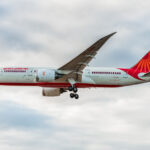
Pakistan Overflight Restrictions Are A Real Cost Driver
Since 2025, restrictions affecting Indian carriers’ access to Pakistani airspace have had knock-on effects across long-haul planning: longer routings, higher fuel burn, and fewer “easy” options when dispatch is tight or winds are unfavorable. For ultra-long-haul operations, the difference between “possible” and “reliable” can be a thin margin.
The Aircraft Mix Matters: 777-200LR vs 777-300ER
Air India’s ability to fly these sectors the way travelers want (true nonstop, with reasonable block times and payload flexibility) depends heavily on which widebody is assigned.
-
The Boeing 777-200LR (the “Worldliner”) is built for missions like this. Boeing lists its design range at 8,555 nautical miles, a figure that gives dispatchers real breathing room on ultra-long sectors.
-
The Boeing 777-300ER, while larger and extremely capable, is listed by Boeing at 7,370 nautical miles of range—great for many long-haul markets, but tighter when you’re stacking in detours, winds, alternates, and operational reserves.
Air India has shifted San Francisco flying toward the 777-300ER in recent schedules, and that change alone can alter the route economics. When the airplane is closer to its performance margins, airlines often end up choosing between payload limits (which hurt revenue) and tech stops (which hurt the customer proposition).
Tech Stops: Kolkata (CCU) And Sometimes Vienna (VIE)
In practice, passengers have already seen these flights operate less like clean nonstops and more like long one-stops, with Kolkata (CCU) frequently serving as a refueling point on certain routings. Depending on the specific flight, winds, and operational needs, some returns have also shown Vienna (VIE) as a fuel stop on the transatlantic crossing.
That matters because the competitive set out of SFO is brutal. When you’re selling an ultra-long-haul itinerary, the product is the time advantage—and once you start adding stops, the comparison shifts quickly toward one-stop Gulf and Asian carriers that have optimized their connecting banks for decades.
Delhi–San Francisco Will Grow To 10 Weekly Flights
While BLR and BOM are being removed from the San Francisco schedule, Air India is not walking away from SFO. Instead, it’s concentrating service at its primary hub:
Delhi (DEL) – San Francisco (SFO) is scheduled to increase from 7 weekly to 10 weekly beginning the first week of March 2026.
In practical terms, that means three days per week with two departures, creating more connection options over Delhi (DEL) for travelers bound beyond the hub—especially to cities like Bengaluru (BLR) and Mumbai (BOM), which will still be reachable via domestic connections.
A representative pattern for the 10x weekly structure looks like this:
-
One daily DEL–SFO frequency
-
A second DEL–SFO frequency on three additional days per week
Notably, while the westbound DEL–SFO sector continues as a nonstop, some returns are scheduled with a Kolkata (CCU) stop on the way back to Delhi (DEL)—a reminder that even the “surviving” SFO route is being planned with operational realism rather than ideal-world routing.
What This Means For SFO, For Corporate Travelers, And For Competition
For Silicon Valley–Bengaluru traffic, the biggest loss is simplicity. BLR (Kempegowda International Airport) is one of India’s strongest premium-demand generators thanks to tech and business travel, and nonstop(ish) service carries pricing power when it’s consistent and time-efficient. If BLR–SFO disappears from inventory, the market will revert to the classic one-stop structure via Middle East and Asian hubs—or via U.S./European gateways—until another carrier steps into the gap.
For Air India, the move is consistent with a carrier that is still in the middle of a long transformation: fleet refresh, cabin retrofits, and network rationalization. Consolidating SFO flying through Delhi (DEL) creates a cleaner operating model: one main long-haul station at SFO, more feed over the hub, and fewer ultra-long-haul edge cases that require specialized aircraft and perfect conditions.
For competitors, this is an opening—especially as more airlines look to expand India–U.S. flying with next-generation widebodies. A350s and 787s can make a meaningful difference on routes where fuel burn, payload, and dispatch reliability determine whether a city pair is sustainable or merely “possible on a good day.”
Bottom Line
Air India is ending its Bengaluru (BLR)–San Francisco (SFO) and Mumbai (BOM)–San Francisco (SFO) services in late February 2026, leaving Delhi (DEL)–SFO as its lone nonstop westbound link in the market—while boosting DEL–SFO to 10 flights per week in early March 2026.
The underlying story isn’t just network tinkering. It’s the reality of ultra-long-haul flying: airspace constraints, route geometry, winds, alternates, and—most importantly—having the right aircraft for the mission. When the operation stops behaving like a clean nonstop and starts behaving like a managed endurance flight with tech stops, the commercial equation changes fast.