Aer Lingus A321XLR Grounded After Reported 3.3G Hard Landing At Dublin (DUB)
Aer Lingus’ newest long-haul workhorse has hit an early speed bump.
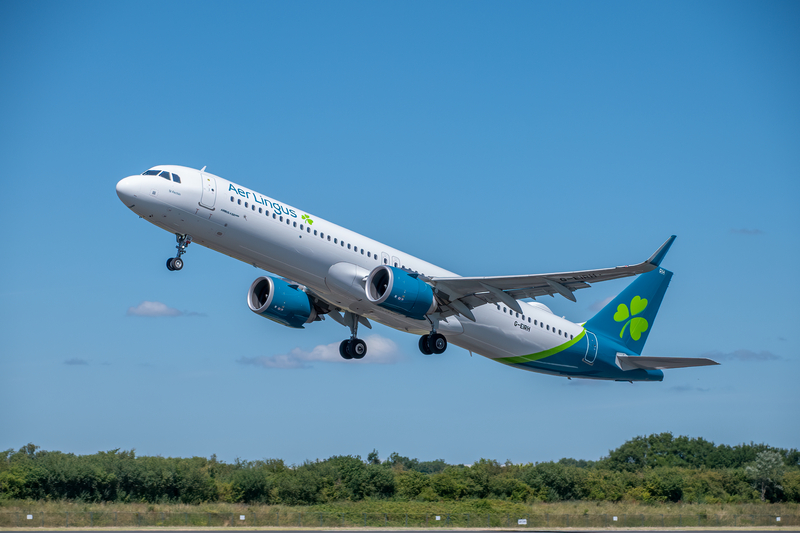
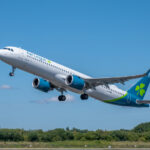
A barely one-year-old Airbus A321XLR—registered EI-XLT—is reportedly facing an extended maintenance stay after a hard landing at Dublin Airport (DUB) on a short hop in from London Heathrow (LHR). The aircraft has been on the ground since the incident, and multiple industry reports suggest the impact loads were high enough to require a full landing-gear replacement—an expensive, time-consuming job on any jet, and an especially painful one on a high-weight, extra-long-range narrowbody.
What Happened On The LHR–DUB Flight
The incident occurred on December 13, 2025, when EI-XLT arrived into DUB from LHR operating flight EI155. Video from the arrival shows a firm touchdown and a noticeable rebound as the aircraft settles onto the runway—an unmistakable visual cue that the landing energy was significant.
The key detail circulating within incident reporting channels: the touchdown was reportedly logged at about 3.3G in the aircraft’s recorded landing loads. Aer Lingus has not publicly confirmed that figure, but if it’s even close, it would place this event well beyond the threshold that triggers mandatory inspections and potential component replacement.
The landing was reported to have taken place on Runway 28L at DUB, with gusty winds noted as a contributing factor—exactly the kind of conditions that can quickly turn an otherwise stable approach into a high-workload flare and touchdown.
Why A “3.3G” Touchdown Is A Big Deal
Airliners “feel” every landing, but they don’t treat every landing the same.
Modern jets continuously monitor loads through onboard sensors and data systems. When those loads exceed specific limits, the result is typically an automatic maintenance requirement—often called a hard-landing inspection. That can range from detailed visual checks to deeper structural inspections, depending on what the data shows.
To put the reported number into context:
-
A normal landing is usually a controlled, firm arrival designed to meet touchdown-zone and braking targets.
-
A high-G event can overstress the landing gear, trunnion fittings, wheels/brakes, and potentially the lower fuselage structure around the gear bay.
-
Once loads cross certain limits, an airline can’t simply “inspect and fly tomorrow” if the required checks reveal deformation, overstress indicators, or component life limits being exceeded.
In plain terms: even if everything looks okay externally, the maintenance program doesn’t leave this to judgment calls. The data drives the next steps.
The Complication: The A321XLR’s Higher-Weight Hardware
The Airbus A321XLR isn’t just an A321neo with extra range on a brochure. It’s built to carry more fuel and operate longer sectors, and that comes with higher certified weights.
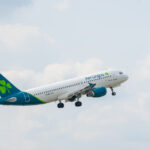
Aer Lingus markets the A321XLR as an up to ~11-hour aircraft—capable of long, thin transatlantic flying that’s difficult to serve profitably with a widebody. That capability is enabled by structural and systems upgrades associated with the XLR program, including higher maximum takeoff weight provisions.
That matters here because landing gear is fundamentally an energy-management system. The heavier the aircraft and the higher the vertical rate at touchdown, the more energy the gear must absorb. If EI-XLT truly experienced a 3.3G-class event, the forces transmitted through the main gear could easily move this from “inspection” to “replacement,” especially if the gear assembly or its attachment points show signs of overstress.
And landing gear replacement isn’t swapping tires:
-
It’s specialized jacking, removal, installation, rigging, functional checks, and sign-off.
-
It requires parts availability (not always immediate).
-
It ties up hangar capacity and engineering hours.
-
And it sidelines a scarce asset in Aer Lingus’ fleet plan.
Why This One Aircraft Matters More Than You’d Think
EI-XLT is one of Aer Lingus’ first A321XLRs and part of a small subfleet that’s strategically important.
Aer Lingus has been using the A321XLR to right-size transatlantic capacity—opening and sustaining routes that benefit from long range but don’t justify an A330 every day of the week. When one XLR goes tech for an extended period, the airline has a few imperfect options:
-
Substitute another A321XLR: possible, but it stresses the remaining frames and reduces schedule flexibility.
-
Swap in an A321LR or A330 (where feasible): may create payload/range trade-offs or oversupply the market.
-
Re-time, consolidate, or cancel: the least desirable outcome, especially during peak travel periods.
In other words, the operational cost isn’t only the repair bill—it’s the network knock-on effects when a long-range narrowbody drops out of rotation.
A Quick Snapshot Of EI-XLT And Aer Lingus’ A321XLR Product
Aer Lingus introduced the A321XLR to bring a widebody-style mission profile to a single-aisle footprint. In Aer Lingus configuration, the aircraft is set up as a two-class long-haul platform, and it’s designed to make longer flights more tolerable than the typical narrowbody experience:
-
Airbus A321XLR with modern long-range systems and cabin improvements
-
Two-cabin layout geared toward transatlantic flying
-
Airbus “Airspace” cabin features, including significantly increased overhead bin volume compared to earlier A321 cabins
-
Built for “long and thin” markets—exactly where schedule reliability and fleet availability matter most
That’s why this incident stands out: it’s not just another hard landing. It involves a flagship narrowbody type that’s central to Aer Lingus’ long-haul strategy.
Bottom Line
Aer Lingus’ EI-XLT A321XLR is reportedly facing a major maintenance event after a hard landing at Dublin (DUB) on a flight from London Heathrow (LHR)—with incident reporting indicating a ~3.3G touchdown and a likely landing gear replacement. If confirmed, the repair will be costly and operationally disruptive, because every A321XLR in Aer Lingus’ fleet carries outsized importance in how the airline sustains and grows its transatlantic network.