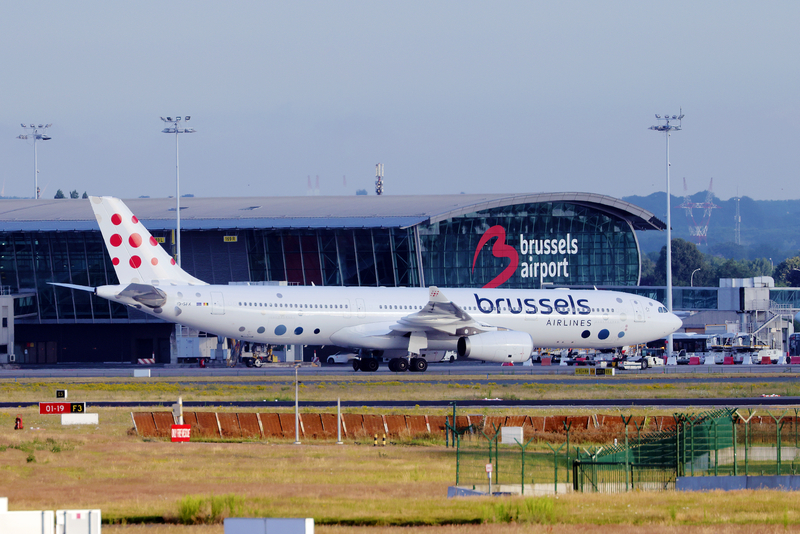
Brussels Airlines Bets On Starlink Wi-Fi As Lufthansa Group Targets 850 Aircraft
Brussels Airlines (SN) is preparing to join a major connectivity upgrade across the Lufthansa Group, with Starlink-powered broadband scheduled to begin rolling out from 2026. For travelers, the headline is simple: faster, more stable in-flight internet that’s designed to behave far more like what you’d expect on the ground—especially on high-density short-haul sectors out of Brussels Airport (BRU), where passengers increasingly treat Wi-Fi as a utility, not a luxury.

For the industry, the more interesting story is what sits behind that promise. Lufthansa Group’s plan is to equip roughly 850 aircraft—across short-haul and long-haul fleets, and across multiple operating airlines—with one connectivity architecture, then scale it at speed. If executed as described, this becomes one of the most ambitious “fleet-wide standardization” projects in European connectivity, with implications for customer experience, operations, and competitive positioning at hubs like Frankfurt (FRA), Munich (MUC), Zurich (ZRH), Vienna (VIE), and Brussels (BRU).
Why Starlink Changes The In-Flight Wi-Fi Equation
Most legacy in-flight connectivity has relied on geostationary (GEO) satellites, positioned ~36,000 km above Earth. GEO has served aviation well, but it brings constraints airline professionals know by heart: high latency, variable throughput depending on beam congestion, and performance that can degrade during peak-use moments (think: the first 20 minutes after takeoff, or the final hour on a night flight when everyone uploads, streams, and messages at once).
Starlink operates as a low-earth-orbit (LEO) network, with satellites much closer to the planet. In practical terms, LEO’s big advantage is latency: the “snap” and responsiveness that makes messaging, VPN sessions, cloud apps, and real-time collaboration feel normal again—rather than delayed and brittle. Pair that with more available capacity per region (depending on constellation density and routing), and you have the building blocks for genuinely high-bandwidth use cases like streaming and video calls—capabilities Lufthansa Group has explicitly positioned as core to the service.

For airlines, the shift isn’t just passenger-facing. A more capable pipe enables richer operational use cases too: faster real-time aircraft health messaging, improved EFB synchronization, more resilient ACARS augmentation, and smoother workflows for cabin operations. The “killer feature” for passengers may be Netflix; the “quiet win” for operators is consistency.
What Brussels Airlines Is Rolling Out First At BRU
Brussels Airlines plans to start with its short-haul Airbus A320 family fleet—the backbone of SN’s European operation from BRU—before extending the installation to long-haul aircraft later on. That sequencing is logical.
A320-family aircraft cycle frequently, fly high-utilization schedules, and touch maintenance bases often. That makes them ideal early candidates because:
-
Install downtime can be absorbed more easily across rotations
-
Performance feedback arrives quickly across many flight legs
-
Cabin crews and frontline operations teams can iterate fast on passenger support, troubleshooting, and service routines
On the long-haul side, Brussels Airlines’ widebody operation (primarily Airbus A330-300s) presents a different value proposition: fewer departures, longer stage lengths, and higher expectations from premium cabins. Connectivity matters more when the flight time supports true “work a full day” behavior—especially on missions from BRU into Africa or North America, where passengers increasingly expect to arrive connected, not digitally disconnected.
The Hardware Reality Airline Pros Will Care About
Starlink’s promise is strong—but the practicalities of installation and certification are where programs succeed or stumble.
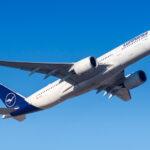
Adding high-speed connectivity isn’t a “software update.” It’s an aircraft modification, which typically involves:
-
Antenna and radome installation on the crown of the fuselage
-
Cabling runs and wireless access point integration in the cabin
-
Power supply considerations and system redundancy planning
-
Interference testing, certification documentation, and fleet-by-fleet configuration control
On Airbus A320-family jets, the challenge is minimizing downtime while keeping configurations consistent across sub-fleets (A319/A320/A320neo/A321 variants where applicable). On widebodies like the A330-300, the installation tends to be more complex simply because the cabin network footprint is larger and the aircraft is expected to support heavier concurrent usage.
There’s also the commercial reality: even with a “fastest available” architecture, airlines still manage bandwidth. Expect policies around streaming quality, session management, and prioritization—especially during peak-use phases. The difference is that airlines start from a higher-performance baseline, so “management” becomes optimization rather than damage control.
Lufthansa Group’s Commercial Angle: Free, But Not For Everyone
Lufthansa Group has made a strategic choice here: the service is positioned as free for status customers and Travel ID users across all cabins. That’s not an accident—it’s a loyalty and identity play.
Airlines have learned that connectivity can be used to:
-
Drive logins and data continuity (customer profiles, preferences, and personalization)
-
Increase loyalty program engagement and retention
-
Create a “sticky” ecosystem where the passenger expects the airline to be their digital platform in the air
For Brussels Airlines at BRU, this matters because the carrier competes hard for premium corporate traffic that often connects onward through FRA, MUC, ZRH, or VIE. If the Lufthansa Group can deliver a consistent connectivity story across the whole journey—short-haul feeder plus long-haul trunk—it strengthens the group’s pitch against competitors whose Wi-Fi experience varies dramatically by fleet type, route, or region.
What To Watch Next
If you’re tracking this like an operator rather than a passenger, a few indicators will reveal how real the transformation is:
-
Which aircraft types enter service first with Starlink out of BRU, FRA, and MUC
-
Whether performance remains consistent during peak leisure loads (summer bank peaks, holiday weekends)
-
How the group handles cabin-wide “everyone logs on at once” moments on A320-family flights
-
The long-haul rollout pace on A330/A350/787/747 fleets across the group
-
Whether the “free for status + Travel ID” model expands, narrows, or becomes tiered over time
Bottom Line
Brussels Airlines’ Starlink Wi-Fi rollout—starting on Airbus A320-family aircraft and later moving to long-haul—slots into a much bigger Lufthansa Group plan: a standardized, high-speed connectivity layer across roughly 850 aircraft, beginning as early as the second half of 2026 and building toward a fleet-wide finish by 2029. For passengers out of Brussels (BRU), it should mean a noticeably more modern internet experience. For the group, it’s a strategic play to unify product quality across hubs like FRA, MUC, ZRH, and VIE—where consistency is often the difference between “good airline” and “default choice.”