Southwest’s “Transatlantic” Moment: The 737 Airline’s New One-Ticket Bridge to Europe
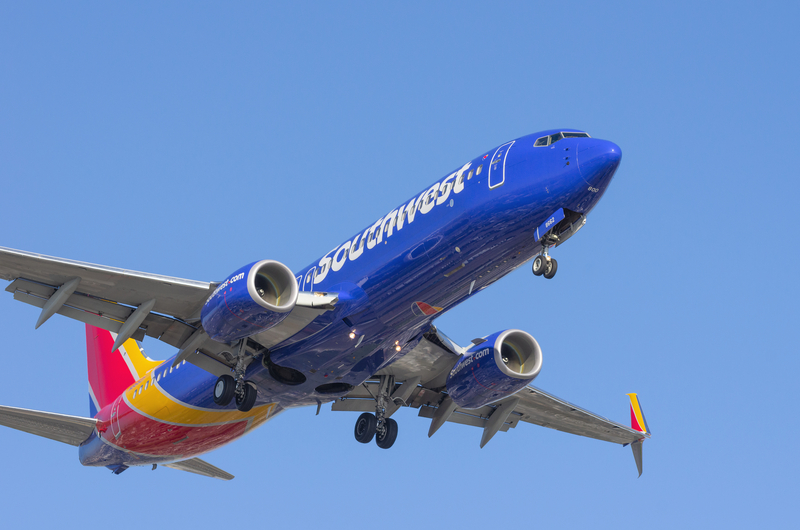
Southwest Airlines (WN) has spent its entire modern history doing one thing exceptionally well: moving people around the United States on a single aircraft family, the Boeing 737. But in 2026, “going international” starts to mean something different for Dallas-based WN—not because you’ll see a Southwest-liveried jet crossing the Atlantic, but because you’ll finally be able to buy true single-ticket itineraries that stitch Southwest’s domestic network to long-haul partners headed for Europe and beyond.

For airline watchers, the significance isn’t the marketing headline. It’s the machinery behind it: interline connectivity, schedule coordination, through-baggage agreements, reaccommodation logic during disruptions, and a very deliberate strategy to expand reach without buying a single widebody.
A Transatlantic Strategy Without a Widebody
Southwest remains an all-737 operator, built around high utilization and short-to-medium-haul flying. Its current fleet mix centers on 737-700/737-800 aircraft and newer 737 MAX variants, a platform optimized for frequency and cost discipline rather than ultra-long-haul stage lengths.
So Southwest’s “transatlantic move” is, in reality, a connectivity move—built on interline partnerships that allow passengers to travel on one ticket, with one itinerary, across two airlines. The long-haul lift belongs to its partners; Southwest supplies the U.S. feed.
That matters because feed is where Southwest has always been strongest: depth across secondary and tertiary U.S. cities, strong point-to-point demand, and a schedule footprint that can fill widebody banks at gateway airports.

What “One Ticket” Actually Changes for Passengers
Interline is not codeshare, and it’s not an alliance-level relationship. But it’s still a meaningful operational step up from piecing together separate tickets.
For travelers, the practical upgrades typically include:
-
Single PNR / single ticket across both airlines (less friction when things go wrong)
-
Baggage interline on outbound journeys, where eligible bags can be tagged to the final destination
-
Better disruption handling than separate-ticket DIY connections, because the itinerary is protected as one journey

There are still real-world constraints airline professionals will recognize immediately:
-
Inbound to the U.S. still means reclaiming bags at the first U.S. point of entry for CBP processing, then rechecking for the domestic leg—interline or not.
-
Benefits don’t automatically transfer. Don’t assume reciprocal elite perks or lounge access just because the ticket is “together.”
-
Irregular operations are where interline gets tested. If a long-haul partner misconnects onto a Southwest leg (or vice versa), reaccommodation depends on the carriers’ procedures, available seats, and how the ticket is plated.

The Three Core Pathways: Reykjavik, Frankfurt, and Istanbul
Southwest’s transatlantic connectivity in 2026 is being built around three very different hubs—each with a distinct role in network design.
Icelandair via Reykjavik (KEF): the classic narrowbody-friendly gateway
Icelandair’s model is built on connecting waves through Keflavik (KEF), turning a mid-Atlantic geography advantage into a banked hub structure. Southwest’s interline connections for Europe-bound itineraries funnel through six U.S. gateways: Baltimore/Washington (BWI), Denver (DEN), Nashville (BNA), Orlando (MCO), Pittsburgh (PIT), and Raleigh-Durham (RDU).
Aircraft nuance matters here. Icelandair’s fleet has been evolving toward newer-generation narrowbodies (including A321LR and 737 MAX-family aircraft depending on route and season), which pairs well with KEF’s stage lengths and gives the airline a flexible cost base for thinner transatlantic markets—exactly the kind of flying that benefits from a strong U.S. domestic feed carrier.
Condor via Frankfurt (FRA): leisure scale with widebody economics
Condor’s hub at Frankfurt (FRA) offers breadth across Europe with a leisure tilt—and importantly, widebody density that can absorb a lot of U.S. feed. For 2026, Southwest’s shared U.S. gateway airports with Condor are Boston (BOS), Las Vegas (LAS), Los Angeles (LAX), Portland (PDX), San Francisco (SFO), and Seattle (SEA).
Condor’s long-haul fleet is now heavily centered on the Airbus A330-900neo, a fuel-efficient widebody with modern cabin economics—well suited to transatlantic leisure flying where yields can swing sharply by season. The partnership is designed to funnel Southwest passengers from deep in the U.S. network into Condor’s transatlantic departures, then distribute them onward from FRA into Europe.
Turkish Airlines via Istanbul (IST): global reach through a megahub
Istanbul Airport (IST) is the opposite of KEF: a massive global connector with scale, frequency, and onward reach. Southwest’s shared gateway airports for Turkish Airlines itineraries include Atlanta (ATL), Boston (BOS), Chicago O’Hare (ORD), Denver (DEN), Detroit (DTW), Los Angeles (LAX), Miami (MIA), San Francisco (SFO), Seattle (SEA), and Washington Dulles (IAD).
Turkish Airlines operates a long-haul mix that commonly includes Boeing 787s, Airbus A350s, and Boeing 777s—widebodies built for high-cycle intercontinental flying and long-range payload performance. For Southwest, the logic is straightforward: plug a massive U.S. domestic network into one of the world’s largest connecting complexes and instantly offer customers a path to hundreds of onward markets—without Southwest needing to staff overseas stations or build long-haul operational muscle.
Why This Matters Operationally: Southwest Is Re-Tooling Its Product
This connectivity push isn’t happening in a vacuum. Southwest has been reshaping parts of its customer proposition—changes that become more consequential when your passengers are using your flights as the front end of an intercontinental itinerary.
Two shifts stand out:
-
Assigned seating: moving away from the signature open-seating model changes gate processes, boarding dynamics, and misconnect recovery behavior—especially when passengers are trying to protect onward long-haul connections.
-
More layered fare structure: interline travelers tend to care more about predictability (bags, seats, change flexibility) than the lowest possible base fare. As Southwest introduces more segmentation, it becomes easier to “sell up” for passengers who treat the domestic leg as the most fragile part of the itinerary.
For frequent flyers, there’s another practical detail: on at least some interline structures, Southwest credit can apply only to the Southwest-operated segments, not the partner-operated long-haul sector. That’s a meaningful difference versus alliance reciprocity—and airline-savvy travelers will notice.
Will a Southwest 737 Ever Fly the Atlantic?
The million-dollar question is whether Southwest eventually operates its own transatlantic flights.
From a pure aircraft-performance perspective, there are city pairs that sit comfortably within Boeing 737 MAX range—particularly from the U.S. Northeast to Iceland or parts of Western Europe. Southwest also already operates extended overwater flying to Hawaii, which means the airline has practical experience with the dispatch discipline and regulatory framework that overwater operations demand.
But “possible” isn’t the same as “likely.” The commercial case for Southwest-operated transatlantic flying would need:
-
competitive unit costs after adding long-haul complexity,
-
station capabilities abroad (or third-party handling robust enough to protect reliability),
-
schedule resilience in a market where ATC, weather, and slot constraints can punish low-frequency operators,
-
and yields that justify tying up aircraft for long stage lengths versus multiple domestic turns.
For now, the smart money is on partnerships doing the heavy lifting while Southwest continues to modernize its core product and revenue engine.
Bottom Line
Southwest’s transatlantic story in 2026 is less about a new route map and more about a new architecture: interline partnerships that let a 737-only carrier sell credible one-ticket journeys to Europe (and far beyond) via KEF, FRA, and IST, using key U.S. gateways like BWI, DEN, BOS, LAX, SFO, SEA, and ORD.
For passengers, it’s a real step forward in convenience—especially on outbound travel—while still falling short of alliance-style reciprocity. For the industry, it’s a clear signal that Southwest is building global relevance the way it builds everything else: with network feed, operational simplicity, and a reluctance to buy complexity it doesn’t need.