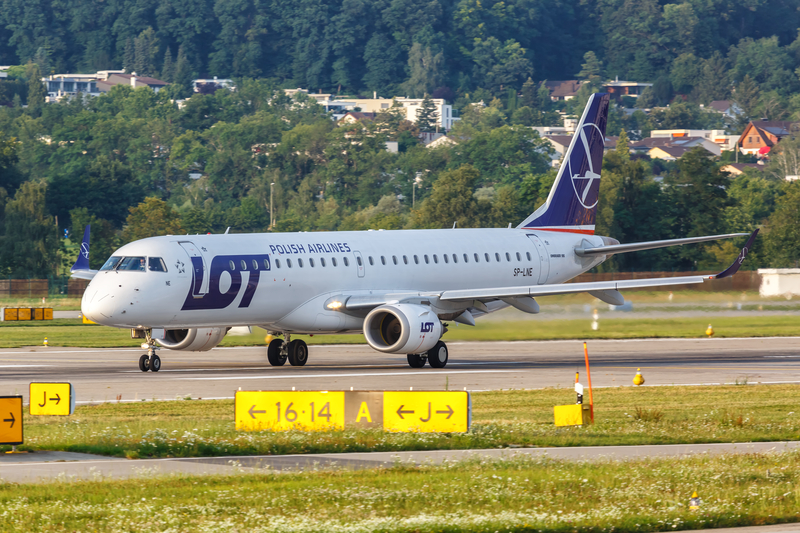
LOT Drops Vilnius-London City as Warsaw Hub Flying Gets a Major Boost
LOT Polish Airlines is preparing to end its Vilnius–London City link, a route that’s long punched above its weight for business connectivity between Vilnius Airport (VNO) and London City Airport (LCY). The final flight is scheduled for March 27, 2026, after which LOT will shift its focus to a much higher-frequency pattern between VNO and its Warsaw Chopin Airport (WAW) hub.

For travelers, it’s a classic trade-off: losing a niche, high-convenience endpoint at LCY in exchange for more lift into a major connecting hub at WAW—where LOT can spread demand across dozens of onward markets and keep aircraft utilization tighter.
A Quietly Strategic Route Comes to an End
VNO–LCY has never been a “mass market” pairing—and that was the point. LCY is built for speed, proximity, and premium time savings, not volume. The airport’s single 1,508-meter runway and steep 5.5-degree approach profile limit the aircraft types that can operate there reliably, pushing airlines toward smaller, performance-capable jets and crews with specific training and approvals.
Read our stories in your inbox
Two aviation newsletters. Zero fluff.
For LOT, that typically means deploying an Embraer 190-class aircraft—an E-Jet that sits in the sweet spot for LCY: enough range and performance for short-to-medium European sectors, with a cabin that can support business-heavy flows (and the yields airlines need to justify LCY’s operating economics). The Embraer 190 family’s four-abreast layout also plays well with the kind of time-sensitive traveler LCY attracts—faster boarding, simpler cabin flow, and generally fewer “big-airport” frictions than larger narrowbodies.
But that same specialization is also why the route can unravel quickly when demand softens.
Why the Numbers Matter More at VNO Than at Bigger Airports
When a large hub loses a frequency, it can hide in the noise. When a smaller airport loses a route—especially one with outsize business value—the impact is immediate.
LOT and Lithuanian Airports have pointed to declining passenger demand as the driver for ending VNO–LCY. That’s notable because the route had been supported by a risk-sharing and route-promotion framework designed to sustain strategically important connectivity. In other words: the route wasn’t being treated as “just another city pair.” It was being treated as infrastructure.
The complication is structural. After the UK’s departure from the European Union, extending certain EU-aligned support mechanisms for a UK route becomes far more difficult—especially under state-aid and exemption frameworks originally designed around intra-EU connectivity. When the policy tailwind fades, marginal routes suddenly need to stand on pure commercial performance.

LOT’s Pivot: Feed the Hub, Protect the Network
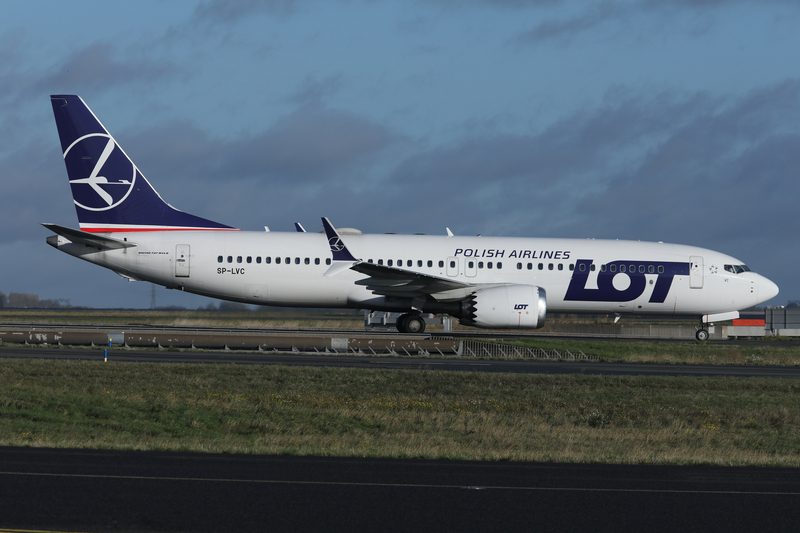
While VNO–LCY winds down, LOT is planning a substantial uplift between VNO and WAW—up to 38 weekly frequencies starting with the 2026 summer schedule. In practical terms, that’s the difference between “good connectivity” and “hub-grade connectivity.”
More flights on VNO–WAW do several things at once:
First, it increases itinerary resilience. Higher frequency means more rebooking options during IRROPS, tighter minimum connect opportunities, and fewer forced overnights when misconnects happen.
Second, it deepens hub utility. WAW is where LOT can monetize connectivity—especially across its European network and long-haul services—by combining local VNO–WAW demand with connecting flows in both directions.
Third, it improves fleet flexibility. Unlike LCY, WAW isn’t constrained in the same way by steep-approach requirements. LOT can rotate more aircraft types through VNO–WAW depending on seasonality and time-of-day demand: smaller regional jets during shoulder periods, upgauges when bank structure and loads support it, and better aircraft/crew recovery options when schedules get disrupted.
In short: one daily-ish niche route to LCY is hard to optimize. Multiple daily links into WAW are much easier to monetize across a network.
What This Means for Travelers in Vilnius—and for the London Market
Losing LCY is a real downgrade for passengers whose destination is the City, Canary Wharf, or anywhere that values LCY’s location and quick curb-to-gate experience. But travelers aren’t losing London access entirely—what’s changing is the type of access:
-
Nonstop convenience to LCY disappears, which may push business travelers toward other London-area airports such as Heathrow (LHR), Gatwick (LGW), Luton (LTN), or Stansted (STN), depending on carrier schedules and corporate travel policy.
-
Connecting options via WAW strengthen, which can be attractive for travelers continuing beyond London or those who prioritize schedule choice and network reliability over a single nonstop to a premium-convenience airport.
For LOT, it’s also a competitive repositioning. A stronger VNO–WAW shuttle improves LOT’s ability to defend traffic flows that might otherwise connect via competing hubs in the region. In today’s Europe, frequency is often the product.
Bottom Line
LOT’s decision to end Vilnius (VNO)–London City (LCY) on March 27, 2026 closes a chapter on one of the more business-oriented “small market, big value” routes in the region. The simultaneous move to ramp Vilnius (VNO)–Warsaw (WAW) up to as many as 38 weekly flights signals a clear strategy: concentrate capacity where it strengthens hub connectivity, improves schedule utility, and allows the airline to optimize aircraft and network economics—rather than fighting to sustain a specialized route into one of Europe’s most operationally constrained airports.
Keep reading FlyMag
Get the Daily Brief in the morning or the Route Watch weekly recap on Fridays. Or both.