BWI’s $520M Connector Sets the Table for Southwest’s Next Baltimore Push
Baltimore/Washington International Thurgood Marshall Airport (BWI) just flipped a major operational switch. The airport has opened its new Concourse A/B Connector and a rebuilt baggage handling system—an investment designed to do more than “look modern.” It’s meant to move people faster, move bags smarter, and create the kind of gate and ramp flexibility airlines can actually monetize.

For Southwest Airlines (WN), BWI isn’t just another station. It’s one of the carrier’s largest airports systemwide—and its biggest on the East Coast. When an airport builds capacity in the exact part of the terminal where your operation lives, that’s not a vanity project. That’s a runway extension in terminal form.
What Actually Changed Inside BWI
At a high level, the project adds a new two-story connector between Concourses A and B and pairs it with a new in-line baggage screening and sorting system built to handle significantly higher throughput. In practical airline terms, the upgrades touch three pressure points that matter every day: passenger flow, gate productivity, and baggage reliability.
The most visible change is the direct A/B linkage. Anyone who has worked a bank of narrowbody departures knows that “walk time” isn’t just a passenger convenience metric—it’s a misconnect driver, a boarding-time risk, and, on tight turns, a downstream departure performance issue. A true connector reduces bottlenecks, improves gate area distribution, and gives operations teams more room to absorb irregular ops without turning the concourse into a parking lot.
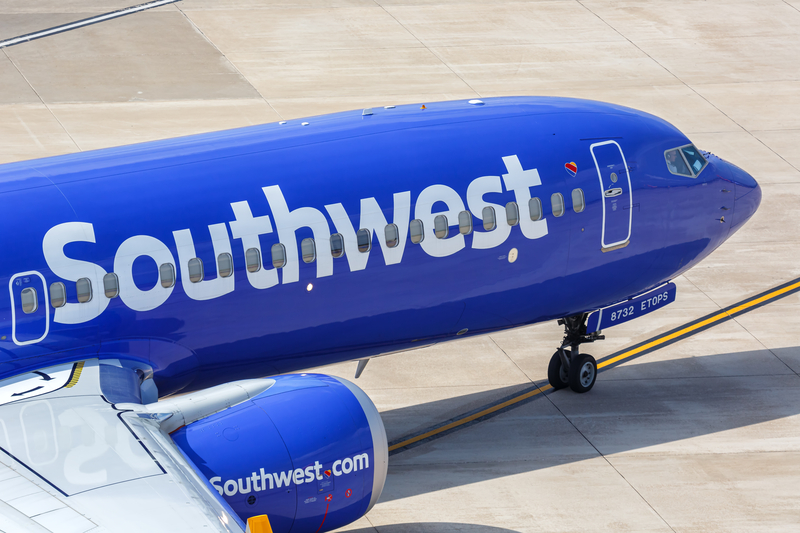
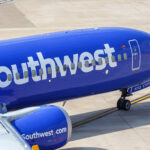
BWI also modernized and relocated five gate areas with updated boarding bridges and holdroom features such as integrated charging and energy-control glass. That matters because Southwest’s fleet at BWI is almost entirely Boeing 737 family aircraft—737-700s, 737-800s, and 737 MAX 8s—so gate geometry, bridge reliability, and holdroom layout directly affect boarding pace and turn performance. On a 737, you don’t have widebody buffers: every minute you lose at the gate shows up in your on-time stats.
The Baggage System Upgrade Is the Quiet Game-Changer
The bigger story, operationally, may be the baggage handling system. BWI’s new in-line screening setup sharply increases hourly bag throughput, replacing a lower-capacity baseline that was becoming a constraint during peaks.
For airlines, this kind of upgrade has knock-on effects that don’t always make headlines:
-
Faster induction and screening reduces late bags that chase flights.
-
More reliable sortation helps stabilize connection flows and reduces misrouted luggage.
-
Better system resilience can shorten recovery time after disruptions—especially when multiple flights are pushing within the same window.

And because this system is aligned with Southwest’s footprint, the airline gets the benefit where it needs it most: on the same concourses where it’s trying to keep 737 turns tight and predictable.
Why This Is a Southwest Story as Much as an Airport Story
Southwest has long leaned on BWI (BWI) as a high-volume East Coast gateway, with a schedule built around high-frequency domestic flying and growing leisure connectivity. The carrier carried more than 18 million passengers at BWI in fiscal year 2025, with roughly 230 daily departures to 82 destinations—scale that makes small infrastructure friction add up quickly.
BWI’s upgrades effectively give Southwest more “usable capacity” without requiring a runway project or a new terminal. Additional gate flexibility and improved baggage performance are two of the few levers an airport can pull that translate directly into better operational economics for a 737-only operator:

-
More reliable turns mean better aircraft utilization.
-
Cleaner passenger flows mean fewer boarding delays and fewer misconnections.
-
Better baggage processing reduces compensation costs and re-accommodation headaches.
In other words: BWI didn’t just add space. It reduced constraints.
What Growth Could Look Like from BWI
Airline growth doesn’t always mean “more flights.” Sometimes it means the airport finally has the infrastructure to support the kind of schedule that an airline couldn’t confidently run before—peak banks that don’t buckle under congestion, tighter connections that don’t turn into customer service events, and gate plans that don’t require heroic towing and constant gate swaps.
Southwest’s near-term expansion priorities remain grounded in the flying its fleet is built for: high-frequency 737 service to domestic markets plus near-international leisure routes—especially Caribbean flying where stage lengths and utilization fit a narrowbody operator. New leisure markets also tend to be the first to scale when a carrier gains gate and baggage headroom, because they’re easier to schedule around existing banks and demand curves.
Bottom Line
BWI’s newly opened Concourse A/B Connector and upgraded baggage handling system are the kind of improvements that airline ops teams actually feel: smoother passenger circulation, more productive gate areas, and a baggage backbone built for higher volume. For Southwest at BWI, where the airline runs a dense Boeing 737 operation and already commands massive scale, the project doesn’t just modernize the airport—it removes practical constraints that can enable the next round of schedule growth.