Iran Links Go Dark: Airlines Freeze IKA Flying as Unrest and Connectivity Risks Rise
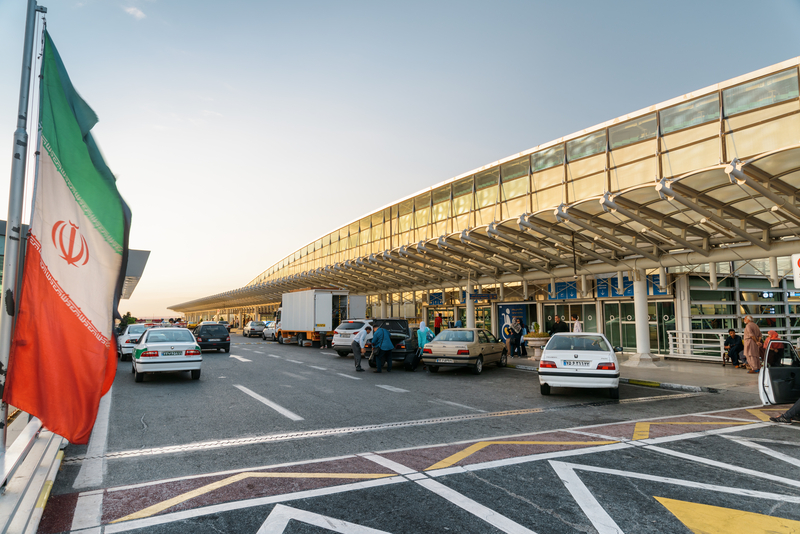
Foreign airlines quietly but decisively trimmed Iran flying over the weekend as protests expanded and operational risk on the ground became harder to quantify in real time. The biggest impact landed at Tehran Imam Khomeini International Airport (IKA), but carriers also pulled down service to regional gateways including Shiraz Shahid Dastgheib International Airport (SYZ), Mashhad Shahid Hashemi Nejad International Airport (MHD), and Bandar Abbas International Airport (BND).
For airline ops teams, this wasn’t about one single “red flag” inside Iranian airspace. The more immediate concern was a fast-moving security environment on the ground—paired with an uneven communications picture that complicates everything from passenger handling to crew welfare and station coordination. Even when ATC networks remain functional, disruption ashore can quickly become an operational tripwire.
A weekend of cancellations, with IKA at the center
The first wave of pullbacks hit Friday, when multiple carriers began canceling rotations between Gulf hubs and Iran. That matters because the Gulf–Iran market is structured like a shuttle: high frequency, short sectors, and heavy dependence on tight turnaround discipline.
-
Dubai (DXB)–Tehran (IKA) is typically flown at widebody scale by some operators; Emirates, for example, routinely schedules Boeing 777 service on DXB–IKA. The 777’s short-haul missions are less about range and more about volume—high seat counts, strong belly capacity, and the ability to recover disrupted flows quickly with fewer frequencies when needed.
-
By contrast, Doha (DOH)–Tehran (IKA) is often a narrowbody assignment; Qatar Airways commonly operates the market with Airbus A320-family aircraft, a sensible fit for short stage lengths where frequency and connectivity banks drive revenue more than gauge.
-
Istanbul (IST)–Tehran (IKA) and other Turkey–Iran city pairs frequently see A321 deployment, giving carriers a higher-density narrowbody with strong payload capability—useful when baggage loads spike during disruption rebooking.

The cancellations were not limited to Tehran (IKA). When airlines start pulling down Iran flying, the regional pattern is familiar: Tehran capacity gets adjusted first, then secondary points—especially leisure- and VFR-heavy markets like SYZ and MHD—see disproportionate volatility as carriers protect aircraft utilization and crew positioning.
Iranian carriers kept flying—but the “outside-in” network wobbled
Domestic and Iran-based international flying continued, underscoring the difference between airspace closure and commercial risk management. In many cases, foreign carriers aren’t reacting to a declared ATC shutdown—they’re reacting to uncertainty about station operations:
-
Can crews safely and reliably transit between airport and hotel?
-
Are ground handlers fully staffed and able to communicate?
-
Will passengers reach the terminal if there are localized restrictions?
-
Can irregular operations be managed when routine comms channels are unreliable?
When those answers get fuzzy, airlines lean conservative. A single cancelled frequency can protect a whole day’s network integrity—especially for carriers with tightly banked hubs at DXB and DOH.
Overflight exposure is a separate calculation—and it changes fast
Even when airlines are comfortable operating to an airport like IKA, overflying Iran is a different risk model. Dispatch and security teams evaluate:
-
Kinetic risk: any uptick in military activity, air defense posture, or drone operations raises the cost of being wrong.
-
Information risk: if the picture is incomplete—because data sources are degraded or the situation is moving faster than official guidance—operators often choose reroutes that keep contingency options open.
-
Alternates and “nearest suitable” logic: overwater segments and long, sparse regions compress diversion options. On some routings, staying closer to robust diversion airports is worth added track miles.
Airlines have living memory here. The shootdown of Ukraine International Airlines flight PS752 departing Tehran (IKA) remains a foundational case study for why civil aviation avoids ambiguity during heightened alert states. That history doesn’t dictate today’s decision-making—but it absolutely shapes the caution bias.
What passengers and planners should expect next
Most carriers treat these suspensions as tactical, not strategic. That means the schedule can look “normal” a week out, then change inside 24–48 hours as security and station assessments evolve. For commercial teams and corporate travel planners, the practical implications are:
-
Higher short-notice cancellation probability on DXB–IKA, DOH–IKA, and IST–IKA banks, with secondary points like SYZ, MHD, and BND more vulnerable to temporary cuts.
-
Load factor distortion: as frequencies drop, remaining flights can look “full,” not because demand surged but because supply collapsed.
-
Recovery complexity: rebooking space is often available via hubs, but seat protection is harder when multiple carriers reduce capacity simultaneously.
-
Irregular ops pressure: crew duty-time limits on short-haul turns become the hidden constraint when ground delays expand and alternates pile up.
If services restart quickly, expect airlines to prioritize the cleanest operational wins first: mainline flights into IKA with strong hub connections, then secondary airports once station reliability is reassessed.
Bottom Line
Airlines didn’t need an official closure of Iranian airspace to start pulling down service. The weekend’s cancellations into Tehran (IKA) and other Iranian airports such as Shiraz (SYZ), Mashhad (MHD), and Bandar Abbas (BND) reflect a classic risk response: when ground conditions and communications become unpredictable, carriers protect their networks first—especially on short-haul, high-frequency markets where a single disrupted turn can cascade across a hub bank at Dubai (DXB), Doha (DOH), or Istanbul (IST). Whether flying resumes smoothly will depend less on airborne capability and more on the stability of station operations and the quality of the real-time security picture.