Aleppo (ALP) Shuts Down Again – And Every Diversion Now Runs Through Damascus (DAM)
Syria’s aviation network is small, fragile, and—when it’s working—surprisingly consequential for the communities it serves. That’s why the sudden closure of Aleppo International Airport (ALP) this week has had an outsized operational impact: when ALP stops, the system doesn’t “degrade gracefully.” It snaps to a single practical fallback—Damascus International Airport (DAM)—and airlines, passengers, and ground handlers have to improvise from there.
The Syrian General Authority of Civil Aviation ordered ALP closed to all air traffic amid renewed fighting in and around Aleppo, forcing scheduled flights to divert to DAM. The initial notice described a 24-hour suspension, but subsequent updates extended the shutdown as conditions remained fluid.
What an “Airport Closed” Order Really Triggers
For airline ops teams, an airport closure is more than a canceled arrival board. It’s a cascade:
-
Dispatch and alternates: If ALP is unavailable, every flight needs a viable alternate with fuel, handling, and (crucially) permission to accept the aircraft and passengers. In practice, DAM becomes the default because it already has the infrastructure and state handling arrangements in place.
-
Crew legality: A short sector becomes a duty-time puzzle once you add holding, diversion, extended taxi, and passenger handling delays. Even if the aircraft can reposition later, the crew often can’t.
-
Passenger processing: International arrivals are especially messy. A diversion means the “wrong airport” for immigration processing, onward tickets, baggage delivery, and ground transport plans—often with limited airline staffing to manage rebooking at scale.
ALP is also operationally “binary” by design: it has a single runway (09/27). When it’s closed, there’s no parallel runway to keep a trickle of traffic moving.
Why Damascus (DAM) Becomes the Pressure Valve
Damascus (DAM) is the country’s primary international gateway, with two long runways and the broadest set of services, so it’s the obvious absorption point when ALP is out of service. But diversions don’t just add flights—they add complexity:
Parking and stand management. A handful of unplanned narrowbodies is manageable. A sustained stream of diversions quickly turns into a gate/remote-stand chess match, particularly if airlines want quick turns or need to protect onward connections.
Handling capacity. Diversion waves stress the weak links: stairs, buses, tow bars, and available ramp staff. Even when runway capacity exists, the ramp can become the constraint.
Passenger reaccommodation. Getting passengers from DAM to Aleppo is not a typical “short hop” solution. Airlines must decide whether to:
-
bus passengers overland (where feasible and safe),
-
hold them overnight in Damascus-area hotels,
-
or rebook them via later flights once ALP reopens.
In the real world, those options depend on security conditions, transport availability, and whether the airline has local contracting power to scale quickly.
The Aircraft Angle: Why Narrowbodies Dominate This Disruption
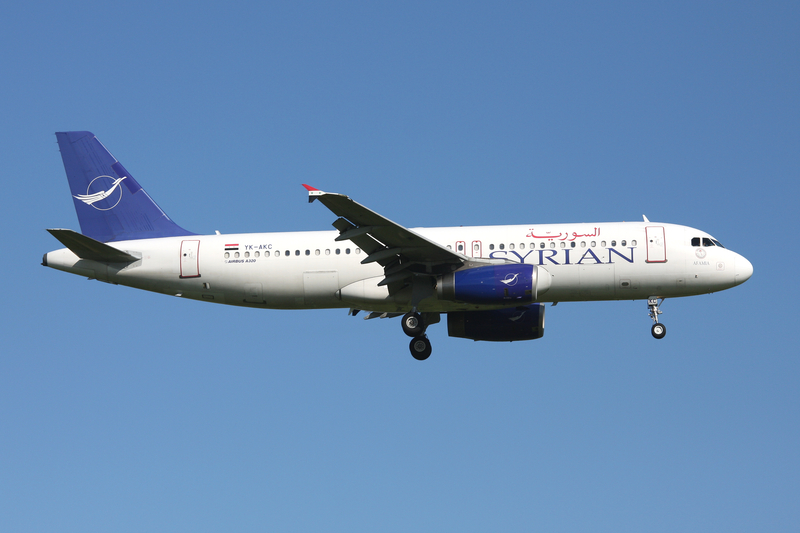
Most services into ALP tend to be narrowbody operations, and the airport’s physical profile reinforces that. With a 3,110-meter runway and standard instrument approaches, ALP can accommodate mainstream workhorses—think Airbus A320-family and Boeing 737-class aircraft—without performance drama under normal conditions. That matters in a diversion scenario:
-
Narrowbodies are easier to “park and hold.” They fit more stands, need fewer specialized resources, and can be turned with simpler ground equipment.
-
They’re also easier to redeploy. If an airline needs to reposition capacity after a closure, narrowbodies are the most flexible assets in the fleet—especially for carriers that don’t have spare widebody crews sitting around.
However, even narrowbodies become operationally sticky if passengers can’t disembark efficiently, if baggage systems can’t handle off-schedule loads, or if crews time out before the aircraft can continue.
What to Watch Next
As the closure window shifts, three things will determine how quickly schedules stabilize:
-
Reopening time vs. reality: Authorities can publish a target reopening, but airlines won’t normalize until consistent arrivals and departures actually flow again.
-
Backlog management: The first day back is often the hardest—crews and aircraft are out of position, and passengers are displaced across multiple stations.
-
DAM saturation: If diversions continue, DAM becomes the bottleneck, and airlines may preemptively cancel flights rather than risk aircraft and crew getting stuck.
Bottom Line
Aleppo International Airport (ALP) shutting down doesn’t just cancel flights—it concentrates the entire recovery effort into Damascus (DAM), where airlines must juggle alternates, crew legality, ramp capacity, and passenger rebooking under rapidly changing conditions. Even when ALP reopens, expect a multi-day operational hangover as aircraft and crews are repositioned and displaced travelers are worked back into the system.