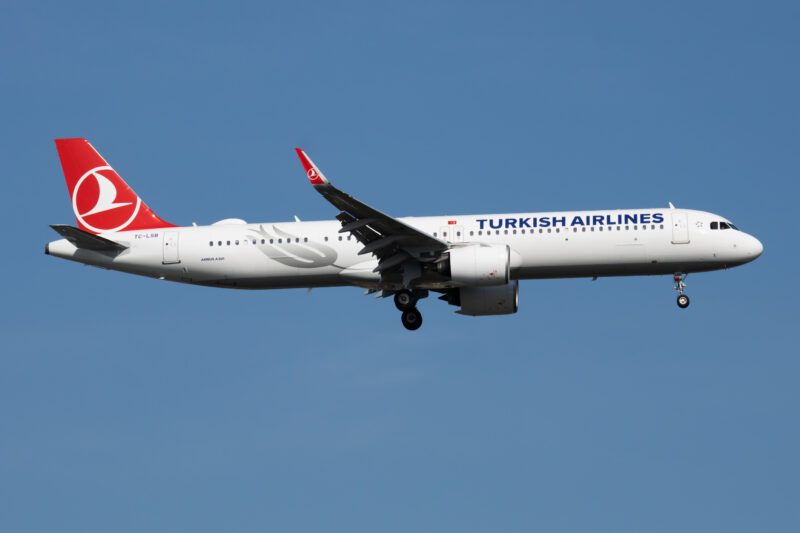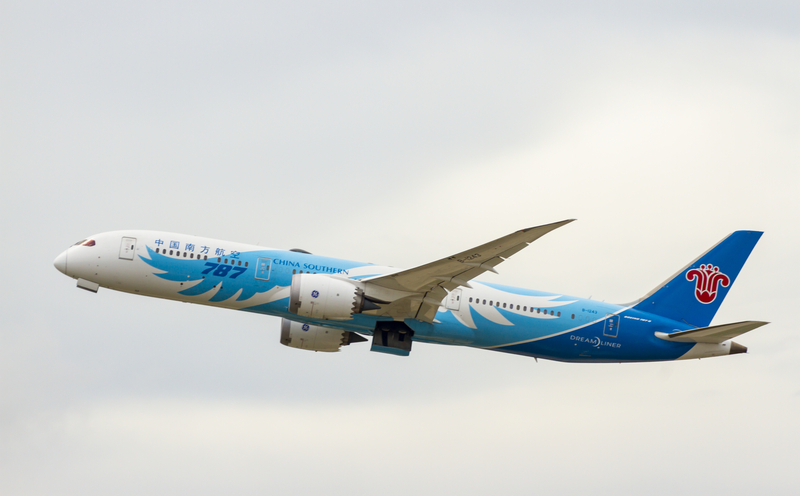
China Southern Sets Its Sights on Helsinki
Beijing Daxing International Airport (PKX) is about to add a new dot on the map—and it’s a meaningful one. China Southern Airlines is preparing to launch nonstop service between Beijing Daxing (PKX) and Helsinki-Vantaa (HEL), giving Daxing its first direct link into Northern Europe and further underlining a broader trend: Chinese carriers are still expanding across Europe while many European airlines remain boxed in by longer routings that avoid Russian airspace.

For network planners, HEL is not just “another European capital.” It’s a structurally important gateway that spent the 2010s building a brand around fast Europe–Asia connectivity—an advantage that has been heavily eroded since 2022. A new PKX–HEL nonstop is a clear signal that Chinese airlines see opportunity in the vacuum.
PKX–HEL Is More Than a New City Pair
On paper, Beijing–Helsinki is a straightforward long-haul, hub-to-hub market. In practice, it’s a strategic move that checks several boxes at once.
Read our stories in your inbox
Two aviation newsletters. Zero fluff.
First, it strengthens PKX as a long-haul platform. Daxing (PKX) was built for scale—multiple long runways, high throughput terminal design, and room for schedule banks. The missing piece has always been breadth: more long-haul markets that give PKX its own gravitational pull rather than functioning as “Beijing’s other airport.” Northern Europe is exactly the kind of region that helps, because it tends to carry high-yield corporate traffic in both directions and supports long-haul connections without relying purely on leisure seasonality.
Second, it gives China Southern a Nordic foothold tied to Beijing (PKX), not just its Guangzhou (CAN) heartland. That matters because connecting flows out of Beijing behave differently than southern China flows—especially for government, tech, education, and inbound tourism segments that lean toward the capital region.
Why Helsinki (HEL) Still Punches Above Its Weight
Helsinki (HEL) is a special case in Europe. Before the pandemic, Finnair’s business model was built on short polar routings and tightly timed transfer waves—particularly into mainland China and Northeast Asia. When Russia’s airspace became effectively off-limits to most Western carriers, HEL’s “geography advantage” diminished overnight. Longer routings mean higher fuel burn, less productive aircraft utilization, and tougher economics—especially on thinner Asian routes.
That’s why the PKX–HEL announcement lands differently than a typical new route press release. It is, in effect, a vote that the market can support more China–Finland capacity even as Helsinki recalibrates its role in the Europe–Asia ecosystem.
And for connectivity, HEL still has assets: a single-terminal experience, high on-time discipline, and a well-developed short-haul European feed. Even in a more constrained environment, it remains one of the smoother transfer hubs on the continent.
Aircraft and Economics: What China Southern Is Likely Optimizing
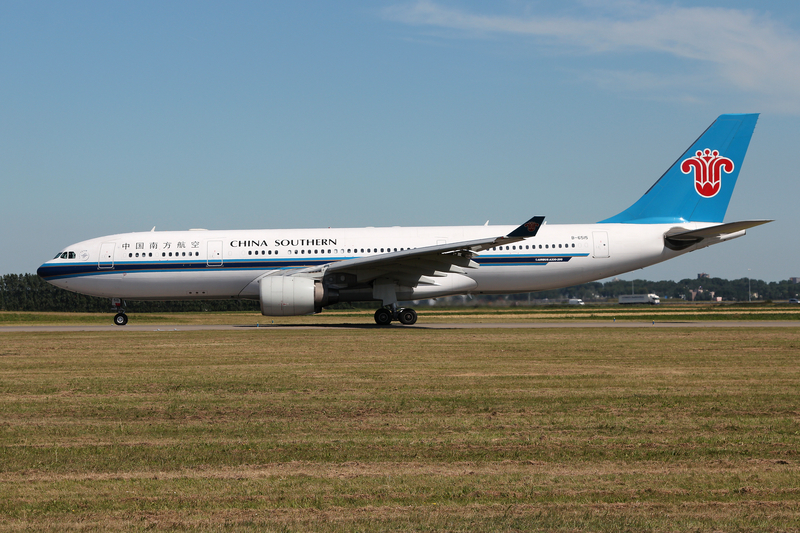
China Southern hasn’t publicly attached aircraft type or frequency to the PKX–HEL launch yet, but this is the kind of mission profile that typically sits in the sweet spot for modern mid-to-large widebodies.

A Boeing 787 family aircraft (most likely a 787-9) would be a natural fit: long range with strong trip economics, flexible cargo capability, and the ability to right-size capacity if the route starts conservatively. An Airbus A350-900 is also a logical candidate if China Southern wants more premium and belly cargo performance with a slightly larger seat footprint.
Either way, the airline’s likely calculus is familiar to anyone who has opened a long-haul route performance deck:
-
Stage length supports a true widebody product (premium cabins matter on a route like PKX–HEL).
-
Belly cargo can be meaningful between northern Europe and China, especially when passenger demand is still maturing.
-
Connections over PKX can widen the catchment beyond Beijing itself—think domestic China feed on one end and European short-haul feed over HEL on the other.
The most important detail will be frequency. A thin long-haul route becomes exponentially more useful—and commercially “stickier”—when it can support corporate travel patterns. Three to four weekly flights can work for launch. Daily is when a route starts behaving like infrastructure.
The Competitive Context: Europe–China Is Tilting Hard
The bigger story behind PKX–HEL is that Europe–China capacity has been rebalanced in a way we don’t normally see in mature intercontinental markets.
With Russian airspace constraints still shaping flight planning, airlines that can operate more direct routings have enjoyed a cost and utilization advantage. Chinese carriers, in particular, have rebuilt and expanded their Europe networks faster than many European competitors. That shift shows up not just in new routes, but in who controls the seat supply and schedule relevance across the market.
For HEL specifically, the timing is pointed. Schedule data already shows multiple China links into Helsinki—most notably Shanghai Pudong (PVG). Juneyao Airlines has been steadily building its PVG–HEL presence, and the wider Nordics are increasingly contested territory in a post-2022 routing reality. Add a Beijing (PKX) nonstop and the “Helsinki as a China gateway” narrative gets a fresh chapter—this time with more of the lift controlled by Chinese operators.
What This Means for Helsinki’s China Portfolio
If you’re looking at HEL’s long-haul map, the question isn’t “will this help?”—it’s “how does this reshape the mix?”
A Beijing Daxing (PKX) nonstop diversifies HEL’s mainland China access beyond PVG. That’s useful for point-to-point demand, but it’s even more valuable for flows that connect via Beijing into secondary Chinese cities that don’t justify nonstop service to Finland on their own. It also potentially stimulates inbound demand into Finland from northern China through better one-stop itineraries.
Meanwhile, for Finnair and its partners, additional Chinese carrier service into HEL can cut both ways: it may help restore HEL’s relevance on the Asia axis, but it can also intensify competitive pressure on yields—especially if capacity ramps faster than demand recovery.
Bottom Line
China Southern’s planned nonstop between Beijing Daxing (PKX) and Helsinki (HEL) is a strategic network play disguised as a single route announcement. It strengthens Daxing’s long-haul identity, reopens a Beijing–Nordics bridge that matters for connectivity, and highlights the ongoing competitive tilt in Europe–China flying driven by post-2022 airspace realities. For Helsinki, it’s another step in rebuilding its Asia gateway story—just with a different set of airlines holding the keys.
Keep reading FlyMag
Get the Daily Brief in the morning or the Route Watch weekly recap on Fridays. Or both.