Bakersfield’s Nonstop to Dallas Goes Dark: What American’s Seasonal Pause Really Tells Us
Meadows Field Airport (BFL) is about to lose one of its most strategically valuable links: nonstop service to American Airlines’ fortress hub at Dallas/Fort Worth International Airport (DFW). American is pausing the route from February 11 through April 7, 2026, forcing travelers who rely on that single-hop access to DFW’s massive domestic and international network to connect elsewhere for nearly eight weeks.

For a smaller station like Bakersfield (BFL), this kind of “routine” network tweak doesn’t feel routine at all. When a mega-hub like DFW absorbs a frequency cut, the schedule reshuffles and most passengers barely notice. When a small airport loses its nonstop to a hub, the entire market feels the shock instantly—especially business travelers and anyone trying to protect a tight connection window into DFW’s bank structure.
A Hub Spoke That Lives and Dies by Network Math
The BFL–DFW nonstop is more than a point-to-point flight. In practice, it’s a feed line into DFW, where American can distribute passengers across dozens of onward departures—everything from the East Coast to Mexico, the Caribbean, and deep Latin America, plus long-haul departures that depend on steady regional inflow.
That also explains why the route is vulnerable. Spokes like Bakersfield (BFL) are evaluated less like standalone city pairs and more like components of a hub machine:
-
Local demand between Bakersfield (BFL) and Dallas/Fort Worth (DFW) matters, but it’s rarely the whole story.
-
Connectivity performance matters more: how many passengers flow beyond DFW, what they pay, and whether those flows align with bank timing.
-
Opportunity cost is constant: the aircraft and crew assigned to BFL–DFW might produce better margin elsewhere during the slowest weeks of the year.
When demand softens, network planners can protect the hub’s overall profitability by trimming thin spokes temporarily, then restoring them when load, yield, and connectivity recover.

Why Early-Year Flying Is So Unforgiving
The timing is not accidental. The post-holiday period is historically one of the harshest stretches for domestic demand—after the New Year rush, discretionary travel drops and many corporate budgets reset. Even if the cabin looks “pretty full” to passengers, that doesn’t guarantee the flight is economically healthy.
For airlines, the key is not whether the airplane is busy—it’s whether it’s busy at the right fare mix. A flight heavy on low-yield leisure tickets can look strong on seat occupancy but still underperform once you price in crew costs, station costs, and the knock-on opportunity cost of not deploying that aircraft to a higher-yield market.
This is why smaller airports like Bakersfield (BFL) can feel whiplash from seasonal schedule optimization: they have fewer daily departures, so a single pause is immediately visible.
The Aircraft Question: Why Gauge and Utilization Matter So Much
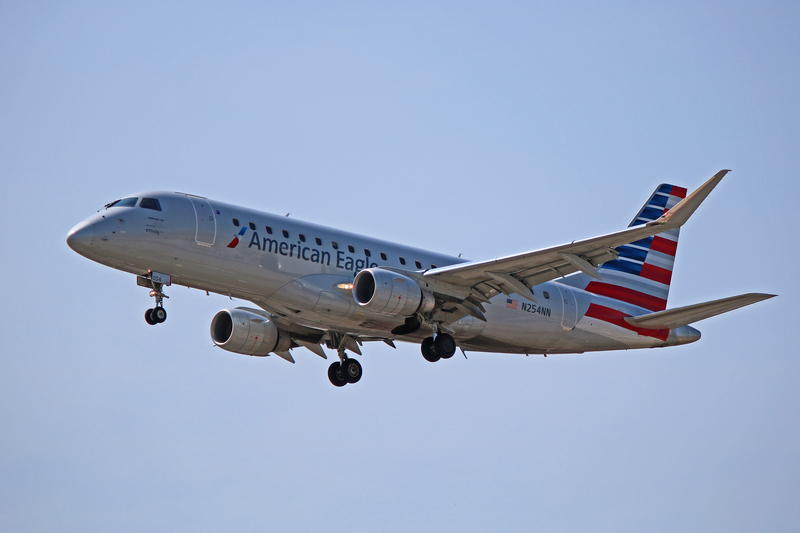
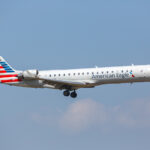
Markets like Bakersfield (BFL) are often served with regional equipment—the kind of aircraft designed to right-size capacity while still offering mainline-style connectivity into a hub like Dallas/Fort Worth (DFW). For American’s network, that frequently means aircraft in the 65–76 seat range, where trip cost is lower and capacity is easier to fill in shoulder season.
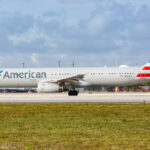
A common workhorse in this segment is the Embraer 175: a two-class regional jet that performs well on medium stage lengths and offers a product that business travelers generally tolerate better than older 50-seat regional jets. It’s fast enough to keep bank integrity at a hub, and it can be scheduled to thread tight turns—assuming the airline has the crews and spare aircraft to protect the operation.
But there’s the catch: regional fleets are often the most constrained during irregular operations, pilot staffing cycles, and maintenance rotations. When planners need to “find airplanes” in a hurry, suspending a lower-margin spoke for a few weeks can free an aircraft to cover higher-value flying, protect a hub bank, or reduce system risk.
In other words, a temporary route pause isn’t always a statement about the city. Sometimes it’s a statement about fleet flexibility.
What BFL Travelers Can Do While the Nonstop Is Offline
During the suspension window, travelers from Bakersfield (BFL) heading to Dallas/Fort Worth (DFW) should expect more reliance on connecting itineraries—most commonly via Phoenix Sky Harbor International Airport (PHX), where American can still build a reasonable connection into DFW.
Operationally, that adds complexity:
-
Longer total travel time and more exposure to misconnect risk
-
More fare volatility, because connecting inventory can price differently than a nonstop
-
Higher disruption sensitivity, especially during winter and early spring weather events that ripple across hubs
If you’re managing corporate travel or recurring business commutes, this is also the period to watch contract and policy behavior. When a hub link disappears—even temporarily—some travelers will defect to alternate airports or airlines, and winning them back isn’t automatic when the nonstop returns.
What This Signals for Small-Market Hub Links in 2026
The bigger takeaway isn’t that Bakersfield (BFL) “lost” Dallas/Fort Worth (DFW). It’s that thin spokes are increasingly treated like adjustable valves in a network that must respond quickly to seasonality, fleet constraints, and margin protection.
For airports, chambers of commerce, and local stakeholders, this is the uncomfortable truth: sustaining hub connectivity often depends on consistent local utilization across the year, not just peak travel periods. If the local market supports the route strongly enough in shoulder season—particularly with higher-yield traffic—airlines are far less likely to pull the lever.
Bottom Line
American’s temporary pause of the Bakersfield (BFL) to Dallas/Fort Worth (DFW) nonstop from February 11 to April 7, 2026 is a textbook example of seasonal network optimization hitting a small market where the impact is instantly visible. The route is strategically important because it plugs Bakersfield into DFW’s hub banks—but it also lives under strict profitability and utilization rules that make early-year flying brutally competitive for aircraft time. For travelers, the short-term reality is connections (often via Phoenix, PHX) and more itinerary complexity. For the industry, it’s another reminder that in 2026, hub spokes are less “permanent routes” and more “capacity assignments”—and those assignments are constantly re-traded.