Turkish Airlines’ Premium Economy Pivot: A Second Look, Timed for the A350-1000 Era
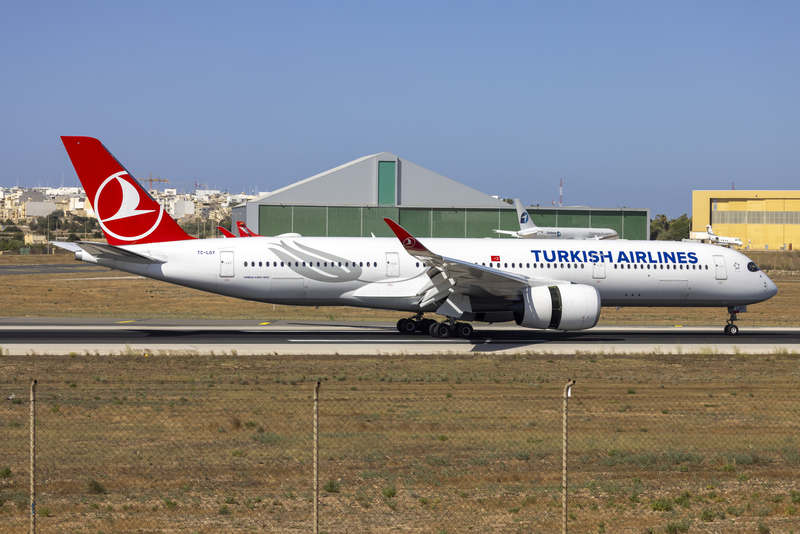
Turkish Airlines (TK) has spent the past decade holding the line with a simple long-haul proposition: Business Class up front, Economy behind it, and no “in-between” cabin to complicate pricing or onboard service. Now, a recent customer survey circulating among selected Miles & Smiles members suggests the Star Alliance carrier may be reassessing that stance—just as it prepares to induct a new wave of long-range Airbus A350s that will underpin some of the most commercially sensitive flying in its network, including ultra-long missions tying Istanbul (IST) to Australia.
Importantly, a survey isn’t a product launch. Airlines test ideas constantly. But the questions being asked—and the timing—are what make this one feel like more than casual curiosity.
The Survey That Got Noticed
In the questionnaire sent to a subset of Miles & Smiles frequent flyers, Turkish reportedly drilled into the mechanics of a modern premium economy cabin: what features matter most, what would trigger a purchase decision, and how passengers value the jump from Economy to something measurably better on mid- and long-haul sectors.
That matters because premium economy is not just “economy with more legroom.” Done well, it’s a distinct cabin with its own service flow, seat geometry, catering cadence, baggage policy, and—most crucially—fare architecture. The moment an airline asks customers about willingness to pay across different stage lengths, it’s usually doing the math on revenue segmentation, not just seat comfort.
Why Premium Economy Is Harder for TK to Ignore in 2026
Turkish Airlines’ hub-and-spoke model at Istanbul (IST) is built on connections. And connections are exactly where premium economy tends to shine: it captures travelers who won’t pay Business Class fares for an entire itinerary, but will consistently pay to escape dense Economy—especially on long-haul overnight segments.
Three market forces make the timing notable:
First, premium travel demand has broadened. “Premium” no longer means only lie-flat Business Class. Many corporates are tightening travel policy, but still allowing a buy-up that improves rest and productivity without the sticker shock of business.
Second, premium economy has become a competitive baseline for many global carriers, particularly on long-haul routes where the product gap between Business and Economy is enormous. If Turkish wants to keep winning high-value connecting traffic over IST—especially to North America and Australia—it helps to have a middle cabin that catches those upsell dollars instead of letting them leak to competitors via alternate hubs.
Third, fleet renewal creates a natural reset point. Premium economy is easiest to introduce (or re-introduce) when a new subfleet arrives. You build the cabin once at the factory, train service standards, and deploy it consistently—rather than trying to retrofit dozens of airframes with mismatched interiors.
The Ghost of “Comfort Class” Still Looms Over Istanbul (IST)
Turkish Airlines isn’t new to premium economy. It already tried it.
From 2010 until 2016, Turkish equipped parts of its Boeing 777 fleet with “Comfort Class,” a true premium economy product in a 2-3-2 layout. It had the familiar ingredients aviation insiders expect: wider seats, substantial pitch, extra recline, and leg rests. Even the soft product leaned upscale, with more premium dining presentation than a typical Economy service.
So why did it disappear?
The underlying issue wasn’t that premium economy can’t work for Turkish. It’s that the way it was implemented created structural problems:
On many itineraries, Comfort Class existed only on the long-haul Boeing 777 segment. If you connected through Istanbul (IST) onto a short-haul leg within Europe, the UK, or the region, you often dropped back into standard Economy—breaking the end-to-end product promise that premium customers expect.
Just as importantly, the cabin sizing was aggressive. Turkish’s Comfort Class was, by many accounts, oversized relative to the Business Class cabin on those aircraft. When premium economy is too large, it becomes difficult to fill at the right yield, and it can cannibalize the very cabin that drives long-haul profitability.
For 2026 and beyond, the lesson is straightforward: consistency across the fleet matters, and premium economy has to be right-sized—big enough to sell, but not so big that it dilutes yields or displaces higher-margin Business inventory.
Why the Airbus A350-1000 Is the Perfect Platform for a “New” Premium Economy
If Turkish does bring premium economy back, the next-generation Airbus A350-1000 is a logical place to do it.
The A350-1000’s economics reward airlines that can diversify revenue per square meter of cabin space. A well-designed premium economy cabin typically uses a 2-4-2 layout, a meaningful upgrade in shoulder space over 3-3-3 Economy, and it creates a clean pricing ladder:
Economy → Premium Economy → Business.
That ladder matters at Istanbul (IST), because Turkish’s network thrives on long, multi-segment itineraries where an incremental upsell—especially on the longest sector—can materially lift overall revenue.
The other advantage: premium economy gives Turkish another tool to manage demand seasonality. On routes with pronounced peaks (summer Europe, winter sun demand, VFR surges), premium economy can absorb overflow demand from Business Class without forcing deep discounting, while also pulling higher yield than standard Economy.
A Homegrown Seat Option: Royalux and the “Made for Two Cabins” Concept
There’s also a particularly Turkish angle here: the hardware.
Turkish is closely linked to TCI Aircraft Interiors, which markets its Royalux seat as adaptable—business class for narrowbodies or premium economy for widebodies. On paper, the spec reads like a contemporary premium economy product: privacy “wings,” multi-way headrest adjustment, a large IFE screen, AC power and multiple USB options, and a recline profile intended for long-haul comfort.
For Turkish, a seat like that has two strategic benefits:
It supports brand storytelling—an in-house, design-forward cabin consistent with TK’s premium ambitions at IST.
And it reduces certification and supply-chain complexity if Turkish wants to build a consistent product across multiple A350 variants over time, rather than juggling several seat suppliers and cabin standards.
Australia Is Where Premium Economy Could Matter Most
Turkish’s Australia flying is already a headline-grabber. Today, it reaches Sydney (SYD) from Istanbul (IST) via Kuala Lumpur (KUL), and Melbourne (MEL) via Singapore (SIN). The airline has also telegraphed that non-stop Australia flying is on its roadmap once A350-1000 deliveries begin, with Istanbul (IST)–Sydney (SYD) and Istanbul (IST)–Melbourne (MEL) often cited as the logical endpoints.
This is exactly the kind of mission where premium economy can be a profit lever:
Ultra-long stage lengths intensify the comfort gap between Economy and Business.
Corporate travelers who won’t expense Business often will expense premium economy on a 16–17+ hour sector.
Premium leisure demand—especially couples and families—buys up at scale when the comfort improvement is tangible and the pricing is rational.
And there’s a second-order effect: premium economy can reduce pressure on Business Class award inventory and operational upgrades, because it gives airlines a robust intermediate cabin to “catch” demand and smooth overbooking dynamics.
If Turkish builds its Australia-configured A350-1000s to be premium-heavy—as has been discussed for these routes—premium economy becomes even more interesting as a way to keep yields high without relying solely on Business Class.
Bottom Line
Turkish Airlines (TK) hasn’t announced premium economy—yet. But a targeted Miles & Smiles survey, paired with the imminent arrival of long-range Airbus A350-1000 aircraft and the commercial complexity of ultra-long flying from Istanbul (IST) to Australia, makes the idea look increasingly plausible.
Turkish has been here before with Boeing 777 “Comfort Class,” and the reasons it failed are instructive: inconsistent availability across connecting itineraries and a cabin size that didn’t match demand and yield realities. If TK re-enters premium economy in the A350-1000 era, expect a tighter, more disciplined approach—one built around consistency, right-sized cabins, and a clear pricing ladder that strengthens Turkish’s position in the premium middle ground where a lot of long-haul profit now lives.