Australia On The Radar: STARLUX Signals Long-Haul Push With New A350-1000 Flagship
Taiwan’s boutique carrier STARLUX Airlines (JX) is quietly positioning itself for a very different kind of airline story in 2026: one that goes beyond “premium upstart” and into the territory of true long-haul network builder.

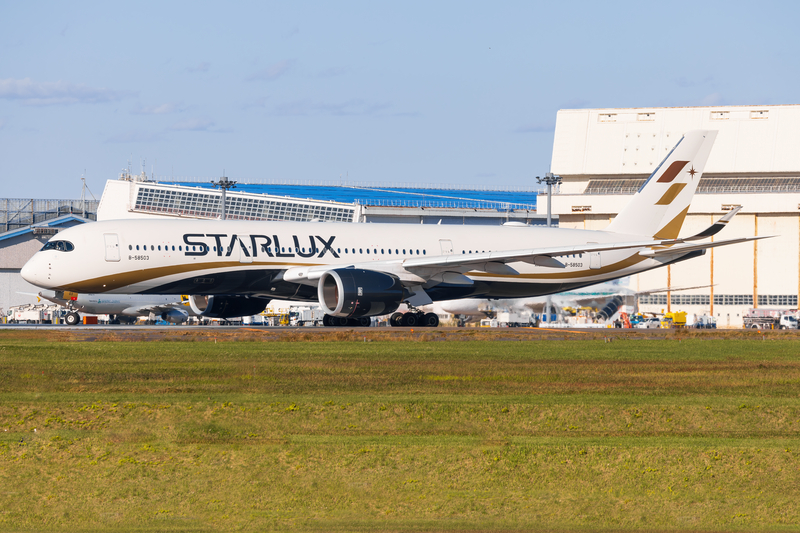
The catalyst is fleet. Specifically, the arrival of STARLUX’s first Airbus A350-1000—an aircraft designed for the exact kind of missions Australia has historically demanded: long stage lengths, meaningful belly cargo, high premium-seat density, and operational flexibility when winds, alternates, and payload start to matter.
And while nothing is filed yet for Australian airports, the airline’s leadership is now openly talking about Australia and New Zealand service by late 2026 or early 2027—timed to coincide with the ramp-up of more A350-1000 deliveries and a broader expansion play from Taipei’s Taiwan Taoyuan International Airport (TPE).
The A350-1000 Is A Network Statement, Not Just A New Tail
STARLUX took delivery of its first A350-1000 in Toulouse (TLS) before the aircraft positioned to Taipei (TPE)—a milestone not because it’s “new,” but because it materially changes what the airline can do.
For airline planners, the A350-1000 sits in a sweet spot: widebody economics without the trip-cost penalty of the largest twins, plus the range to open markets that are borderline—or seasonally constrained—on smaller widebodies. Airbus lists the A350-1000’s range up to 9,000 nautical miles, powered by Rolls-Royce Trent XWB-97 engines, with the kind of fuel-burn and noise performance that makes long-haul growth easier to justify in slot-constrained, noise-sensitive airports.
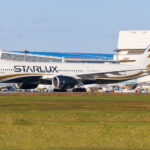
In STARLUX’s configuration, the A350-1000 is set up as a four-cabin aircraft with 350 seats, including First Class, which is notable: the airline is leaning into premium differentiation rather than treating the aircraft as a pure capacity tool. That choice matters for Australia, where route performance is often anchored by premium demand (corporate, leisure upgrades, and high-yield VFR during peaks) plus cargo.
Europe First, But Australia Is Clearly In The Draft
STARLUX has been explicit that its first non-stop Europe flying is targeted for the second half of 2026, and it has already teased the kinds of cities it’s thinking about—putting airport codes up in lights during a Taipei 101 New Year display, including London (LHR), Milan (MXP), Prague (PRG), Helsinki (HEL), and Zurich (ZRH).
That matters for Australia because it outlines STARLUX’s intended network shape: build long-haul spokes from TPE, then use connectivity to make smaller point-to-point markets work. Australia fits that blueprint exceptionally well. A TPE hub can connect Australia not only to Taiwan, but also to Northeast Asia and (increasingly) the airline’s growing North American footprint—an angle that becomes far more compelling as STARLUX adds more long-range lift.
Where Australia Fits: The Logic Behind Likely Gateways
When airlines talk about “Australia,” the market almost always starts with the same shortlist—because the infrastructure, demand, and connection banks tend to concentrate there:
-
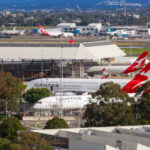
Sydney (SYD): highest premium demand and strongest O&D pull, but also the most operationally complex due to curfews and slot dynamics.
-
Melbourne (MEL): a deep corporate market with resilient demand and fewer operational constraints than SYD.
-
Brisbane (BNE): strong leisure and VFR flows, plus meaningful Taiwanese community ties that already support existing service.
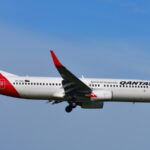
These aren’t empty maps, either. China Airlines (CI) already links Taipei (TPE) with Sydney (SYD), Melbourne (MEL), and Brisbane (BNE), while EVA Air (BR) also operates direct Brisbane–Taipei (BNE–TPE). STARLUX would be entering a competitive lane—but also one where product strategy can make a measurable difference, particularly if it can stimulate premium demand and capture higher-yield connecting flows.
Fleet Flexibility: Australia Doesn’t Have To Wait For Only The A350-1000
While the A350-1000 is the flagship, it’s not the only tool STARLUX has available. The airline’s long-haul fleet also includes Airbus A350-900s and A330-900neos—both capable Australia aircraft depending on the mission profile and the commercial plan.
This is where STARLUX could get clever:
-
Use the A330-900neo for developing frequencies where consistent daily service isn’t initially justified, while still offering a modern premium cabin.
-
Step up to the A350-900 when payload, cargo, or peak-season performance becomes a limiting factor.
-
Deploy the A350-1000 when the market proves it can support higher premium density and when connection banks at TPE become valuable enough to justify the additional capacity.
In other words: Australia could begin as a “toe in the water” operation and still look premium—without waiting for a full pipeline of A350-1000 deliveries.
The Alliance Question: Why oneworld Would Change The Game
STARLUX has repeatedly signaled interest in joining oneworld, and if that ever crystallizes, it would materially improve the airline’s Australia economics on day one.
Why? Because oneworld’s Australian anchor is Qantas (QF). Even without formal membership, deeper partnership structures—codeshares, frequent flyer reciprocity, coordinated schedules—can provide feed that’s hard to replicate organically, especially in the first year of a new long-haul station.
From a competitive standpoint, the Taiwanese market is already split by alliances: China Airlines (CI) aligns with SkyTeam and EVA Air (BR) with Star Alliance. STARLUX flirting with oneworld is a clear attempt to avoid being “the third carrier with the same story” and instead become the carrier with the different connectivity proposition.
What To Watch Next
If you’re trying to gauge how real “Australia by late 2026/early 2027” is, watch for three tells:
-
A350-1000 delivery cadence: the speed at which additional frames arrive will dictate how quickly STARLUX can open a new long-haul station without robbing North America or Europe.
-
Schedule structure at TPE: Australia works best when banks are built for onward connectivity—especially to North America—rather than isolated turns.
-
Commercial posture: if STARLUX starts leaning harder into corporate agreements and interline/codeshare depth, that’s often the prelude to launching a longer-haul market like SYD, MEL, or BNE.
Bottom Line
STARLUX’s Australia ambition isn’t just a hopeful headline—it’s a direct consequence of fleet capability and network intent. With the A350-1000 now in the fold and Europe targeted from the second half of 2026, the airline is assembling the pieces needed to make Australia (SYD), (MEL), and/or (BNE) viable by late 2026 or early 2027. The competitive set is already established, but STARLUX is betting that premium product, smart connectivity via Taipei (TPE), and potential oneworld alignment can carve out a meaningful—and profitable—lane.