Madrid to Orly, via Heathrow, to Luton: The Double Diversion That Turned IB569 Into a Three-Country Odyssey
What should have been a routine Iberia (IB) hop from Adolfo Suárez Madrid–Barajas (MAD) to Paris Orly (ORY) turned into a textbook example of how winter weather can cascade through Europe’s tightly coupled airspace system.

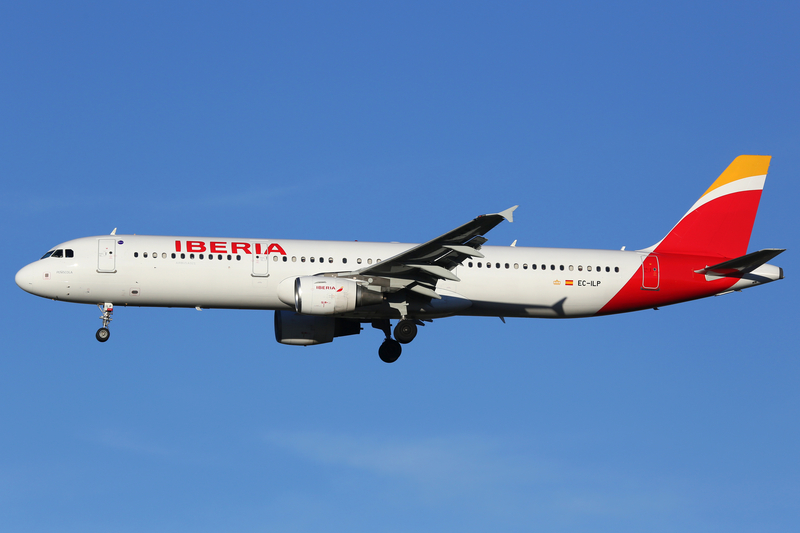
Iberia flight IB569 departed MAD early on January 7, 2026, operated by an Airbus A321—a high-capacity, narrowbody workhorse designed for exactly this kind of intra-European trunk flying. Instead of parking at ORY, the aircraft ultimately shut down at London Luton (LTN) after an initial diversion attempt toward London Heathrow (LHR) ran into congestion and fuel-margin reality.
For airline professionals, IB569 wasn’t just “bad luck.” It was the predictable result of capacity throttling at the destination, alternates filling rapidly, and arrival metering over London—all while the flight crew worked within hard regulatory fuel thresholds.
The A321 on a Short Sector—Built for Efficiency, Not Extended Holding
The Airbus A321 sits at the top end of the A320 family, typically configured around 200 seats in short-haul layouts and optimized for high-frequency European networks. Its economics shine on sectors like MAD–ORY: quick turns, efficient cruise at medium altitudes, and strong per-departure revenue potential compared with smaller narrowbodies.
But even the most efficient narrowbody quickly becomes a fuel-planning exercise when the arrival rate collapses. Holding patterns aren’t free: at typical holding speeds and altitudes, a narrowbody can burn fuel fast enough that 30–60 minutes of airborne delay materially changes the diversion decision tree—especially when the destination’s recovery timeline is unclear and alternates are themselves being pressured by diversions.

How the Day Unraveled: ORY Snow, Limited Slots, and a Shrinking List of Alternates
IB569 lifted off from MAD at 06:57 GMT with roughly 200 passengers on board for what would normally be a straightforward two-hour sector into ORY. As snowfall degraded operations around Paris, the flight entered a hold southwest of the city while crews and dispatch assessed options.
This is where winter disruption turns systemic:
-
When a major metro airport like Paris Orly (ORY) reduces arrival rates, aircraft stack up in holds.
-
Diversions begin, and nearby “usual suspects” for alternates—often Lyon (LYS), Marseille (MRS), Toulouse (TLS), Bordeaux (BOD), or Basel (BSL)—start absorbing unscheduled arrivals.
-
If a second Paris airport like Paris Charles de Gaulle (CDG) is also restricted, the relief valve is effectively closed.
With ORY constrained and CDG also limiting movements, the available alternate list shrinks quickly, and the probability of getting “stuck behind the wave” rises for any aircraft that waits too long to commit.
Why Heathrow Was the Logical First Diversion—and Why It Still Didn’t Work
The crew’s first diversion choice—London Heathrow (LHR)—makes operational sense on paper. LHR offers:
-
deep ground-handling capability,
-
robust de-icing and winter ops infrastructure,
-
plentiful maintenance and airline support,
-
and, crucially for customer recovery, a dense menu of same-day onward options.
But Heathrow is also one of Europe’s most flow-controlled airports. When demand exceeds arrival capacity, aircraft are sequenced through the well-known holding “stacks,” including the Biggin Hill (BIG) hold to the southeast. IB569 was instructed to hold in that area for around 45 minutes while awaiting a landing sequence into LHR.
At that point, the flight becomes a fuel-and-options problem, not a customer-service problem.
The Second Diversion: Why Luton Was the Safety-and-Fuel Answer
With extended holding eroding the fuel buffer, the crew elected to divert again—this time to London Luton (LTN)—a practical choice for an A321 given runway performance, handling capability for narrowbodies, and the ability to get the aircraft on the ground quickly.
IB569 landed at 10:36 GMT, leaving passengers roughly 250 miles from Paris (ORY). That number matters because it turns a simple diversion into a cross-border logistics event: coaches, rail, hotel inventory, crew duty limits, and passenger documentation all become constraints.
For operations teams, the key point is that this wasn’t an “extra cautious” decision. It’s what you do when projected landing fuel margins approach predefined limits and the arrival timeline at the first alternate is no longer dependable.
What This Incident Says About Winter Resilience in European Airspace
IB569 highlights a recurring winter pattern across Europe:
-
Destination rate reduction triggers holding.
-
Diversion wave fills alternates.
-
Secondary hubs (like London) become congested as they absorb both scheduled demand and diverted traffic.
-
Airborne minutes turn into hard constraints: fuel, duty time, stand availability, and border processing.
It’s also a reminder that “short-haul” does not mean “simple.” In winter ops, a two-hour scheduled sector can become a multi-country disruption with the same complexity you’d associate with a long-haul diversion—just compressed into a tighter timeline.
Passenger Recovery: The Cross-Border Complication Nobody Books For
A diversion into the UK can be uniquely challenging for passengers who planned to stay within the Schengen area. Even when everyone is cooperative, recovery can bottleneck on:
-
border-processing capacity for an unexpected international arrival,
-
documentation requirements that vary by nationality,
-
limited local hotel availability during region-wide disruptions,
-
and constrained onward transport options if rail and road networks are also affected by snow and ice.
Looking ahead, these situations may become even more operationally sensitive as the UK’s Electronic Travel Authorisation (ETA) regime moves toward broader enforcement later in February 2026—another variable airlines will need to consider when the UK unexpectedly becomes part of a passenger’s itinerary.
Bottom Line
Iberia flight IB569 was a near-perfect demonstration of cascading constraints: snow-driven capacity cuts at Paris Orly (ORY), restricted recovery options around Paris (including CDG limitations), and congestion into London Heathrow (LHR) that pushed the aircraft into extended holding over the Biggin Hill arrival stack. The eventual arrival at London Luton (LTN) wasn’t an overreaction—it was the inevitable outcome once fuel margins, holding uncertainty, and alternate viability converged.
For airline operators, the lesson is familiar but worth repeating: in winter, diversion decisions are rarely about geography. They’re about time—how quickly the network degrades, how fast alternates fill, and how long you can afford to wait before the safe option becomes the only option.