JetBlue’s Fort Lauderdale Power Play: Turning Spirit’s Turbulence Into Network Share
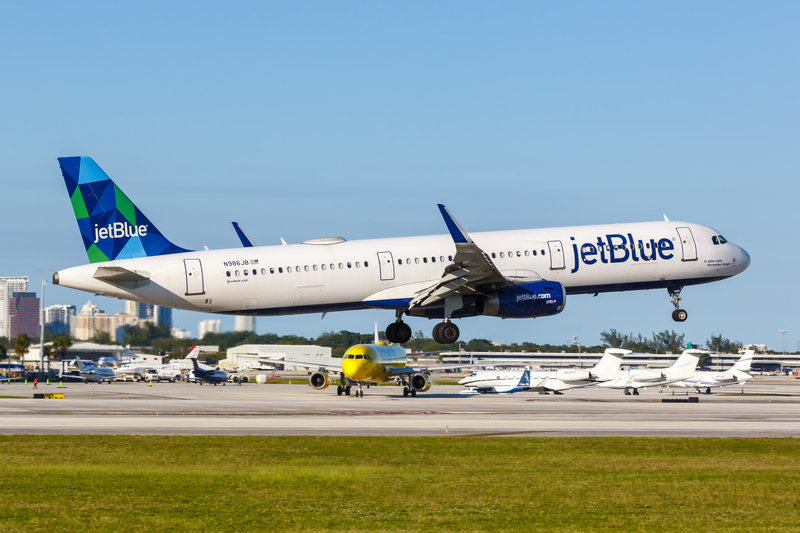
JetBlue is making it unmistakably clear that Fort Lauderdale-Hollywood International Airport (FLL) isn’t just a focus city anymore—it’s a battleground it intends to win.
In early January, the New York-based carrier announced two new year-round nonstop routes from FLL, plus additional frequency on a key New York business-and-leisure artery to LaGuardia Airport (LGA). On the surface, this looks like simple network tinkering: add a couple of spokes, densify a proven route, call it growth. In reality, it’s a textbook capacity grab timed to a rare opening—Spirit Airlines’ ongoing retrenchment as it restructures under Chapter 11.
For airline planners, South Florida is one of those markets where a small shift in supply can immediately reshape yields, connection flows, and even airport “ownership.” JetBlue is betting that the moment to lock in share at FLL is now—before Spirit stabilizes, before another carrier fills the gap, and while gates, crews, and aircraft hours can be redeployed with maximum efficiency.
JetBlue’s Latest Adds at Fort Lauderdale (FLL): Short-Haul Utility Meets Hub-Feed Logic
JetBlue’s January announcement puts two very different missions on the board—one intra-Florida shuttle-style route designed for frequency and convenience, and one longer stage length aimed at tapping a mega-hub and high-volume O&D:
Fort Lauderdale (FLL) – Dallas/Fort Worth (DFW)
Daily year-round service begins March 12, 2026, with a second daily frequency operating during the spring break peak (select days March 12–23, with the last eastbound on March 24). For JetBlue, DFW is strategically valuable because it’s a massive catchment area and a fortress hub for American Airlines. Even a single daily roundtrip can be profitable if you place it at the right times for connectivity and aircraft utilization—especially when you can backfill seats with Florida leisure demand.

Operationally, the published schedule is built like a classic utilization play:
-
DFW–FLL early morning departure to position the aircraft into JetBlue’s South Florida network for same-day turns
-
FLL–DFW evening departure that captures late-day demand and keeps the aircraft productive across time zones
Fort Lauderdale (FLL) – Orlando (MCO)
Twice-daily service begins May 21, 2026, with morning and evening options. At roughly 177 miles between FLL and MCO, this is not about stage-length economics—it’s about time certainty, congestion relief on Florida roads, and network connectivity. For travelers, the alternative is often a 4–5 hour drive that becomes unpredictable during holiday peaks, cruise turn days, and summer weekends.
This route also does something subtle but important: it links two JetBlue focus cities—FLL and MCO—so the carrier can sell both local traffic and connections. Even if a customer never thinks of JetBlue as a connecting airline, the schedule can quietly create “self-connect” style utility within the JetBlue system.
Fort Lauderdale (FLL) – New York LaGuardia (LGA)
JetBlue is also adding two additional daily flights on FLL–LGA, moving the route from four to six daily round trips. In slot-controlled LGA, adding frequency is never accidental. It signals confidence that the route can support more schedule options, and it also strengthens JetBlue’s ability to defend share in the New York–Florida corridor—one of the most competitive domestic markets in the country.
Why Fort Lauderdale (FLL) Works as a “Scissor Hub”
Airline people throw around “focus city” and “mini-hub” casually. FLL is more specific than that: it behaves like a scissor hub because it can join two high-volume traffic flows that naturally want to connect.
One “blade” is the Northeast—especially New York (LGA/JFK) and Boston (BOS)—feeding leisure and VFR demand into South Florida. The other “blade” is the Caribbean and parts of Latin America, where FLL has long been a preferred gateway because it supports high-frequency narrowbody flying and appeals to price-sensitive travelers.
For JetBlue, that geometry matters because:
-
FLL is connection-friendly without feeling like a traditional hub. You can bank flights loosely, avoid overly complex wave structures, and still create meaningful itinerary options.
-
The market is large enough to absorb added capacity quickly. Even modest schedule growth can translate into material passenger volumes because South Florida demand is consistently deep.
-
It’s a base strategy lever, not just a destination. JetBlue has been building operational depth at FLL—crews, maintenance considerations, and product deployment—so incremental flying doesn’t require reinventing the station.
Even terminal geography plays a role. JetBlue’s primary operations at Fort Lauderdale (FLL) are centered in Terminal 3, while Spirit has been heavily associated with Terminal 4. In practical terms, that separation can influence gate availability, turn performance, passenger flows, and how easily each carrier scales up or down without stepping on the other operationally.
Spirit’s Restructuring Creates a Rare Opening—and JetBlue Is Moving Before It Closes
Spirit’s pullback isn’t a typical seasonal trim. It’s restructuring-driven, which changes the rhythm and the risk profile for everyone competing against it.
When an airline is reducing flying because it wants to optimize a schedule, competitors can’t assume the cuts will stick. When an airline is reducing flying because it has to right-size fleet commitments and cash burn, the capacity often disappears more abruptly—and stays gone longer than planned.
That’s the key context around Fort Lauderdale (FLL). Spirit has been reworking its network and fleet footprint while navigating bankruptcy proceedings, including rejecting aircraft leases and exiting select markets. For JetBlue, this matters because Spirit historically “owned” FLL in ULCC terms: it could set the floor on pricing, flood the market with frequency, and maintain relevance through sheer scale.
If Spirit is temporarily constrained—whether by fleet availability, lease negotiations, staffing, or the operational friction that comes with restructuring—then JetBlue’s best move is to occupy the space now:
-
Lock in customer habits (remember: loyalty is built on schedule utility, not press releases)
-
Build corporate and cruise-sector confidence that JetBlue can offer reliable frequencies out of FLL
-
Establish a new baseline of “normal” capacity that becomes harder for Spirit to reclaim later without depressing its own yields
In other words, JetBlue doesn’t need Spirit to disappear. It only needs Spirit to be limited long enough for JetBlue to reset the market equilibrium.
The Aircraft Question: Matching Gauge to Mission
JetBlue’s Fort Lauderdale (FLL) flying is fundamentally narrowbody economics, and the aircraft choice is part of the competitive weaponry—even when passengers don’t notice it.
On the types JetBlue typically uses for routes like these:
-
Airbus A220-300: configured at 140 seats in JetBlue service, with cabin comfort as a selling point (notably wider economy seats for the segment). The A220’s unit costs can shine on thinner business/leisure routes where you want frequency without over-gauging.
-
Airbus A320: JetBlue’s classic workhorse, commonly configured around 162 seats in its updated cabin layouts. It’s a strong fit for dense routes where you need seat capacity without stepping up to a larger gauge demonstrates strong on-time turn potential at a busy focus city like FLL.
-
Airbus A321neo: often used by JetBlue in higher-density configurations (including 200-seat layouts on some variants). This is where JetBlue can bring serious seat volume if a market proves it can support it—especially useful when competing against an incumbent that tries to win on frequency and price.
For FLL–MCO, the route is short enough that turn time discipline and dispatch reliability matter more than cruise efficiency. The aircraft that wins is the one that can do consistent, fast turns and still deliver a product advantage. For FLL–DFW, the mission shifts: stage length economics and payload-range margins become more relevant, and the schedule is designed to keep the aircraft productive across the day.
Puerto Rico as the Next Pressure Point: San Juan (SJU) and the Florida Feed
Fort Lauderdale (FLL) isn’t the only market where Spirit and JetBlue collide; Luis Muñoz Marín International Airport (SJU) is another major overlap zone. If FLL is the continental anchor, SJU is the Caribbean keystone: huge VFR traffic, strong leisure demand, and a constant churn of seasonal peaks.
JetBlue has been expanding SJU connectivity in ways that complement its Florida strength—particularly because Florida (FLL/MCO) is one of the most reliable sources of feed into Puerto Rico. When you build both ends of that bridge, you can shape traffic flows rather than merely participate in them.
For airline strategists, this is the broader pattern:
-
Consolidate Florida scale at FLL and MCO
-
Strengthen the New York (LGA/JFK) corridor into Florida
-
Use Florida as both origin demand and connective tissue to high-volume Caribbean markets like SJU
It’s not a traditional hub-and-spoke model—but it produces hub-like advantages: better aircraft utilization options, better re-accommodation flexibility when IRROPS hit, and a wider net of sellable itineraries.
Bottom Line
JetBlue’s latest Fort Lauderdale-Hollywood International Airport (FLL) additions—new year-round service to Dallas/Fort Worth (DFW), twice-daily flights to Orlando (MCO), and increased frequency to New York LaGuardia (LGA)—aren’t just incremental growth. They’re a strategic play to seize schedule real estate while Spirit’s restructuring constrains its ability to defend share at its own core airport.
For the industry, the story isn’t merely “JetBlue adds routes.” It’s how quickly a market leader can be challenged when fleet and cash discipline force a retrenchment—and how aggressively a well-positioned competitor can turn that disruption into durable network strength.