JetBlue’s Spring Network Reset: Boston-Dallas Ends, LaGuardia-Tampa Drops, and JFK-Tulum Goes Dark
JetBlue is trimming three routes in one clean sweep as it reshapes flying for the spring shoulder season and beyond. The common thread isn’t “less flying” so much as “different flying” — moving scarce aircraft time and constrained-airport capacity toward routes the carrier believes can produce stronger, more repeatable performance.
All three cuts are scheduled to take effect after the last day of service on March 11, 2026, with JetBlue pointing to redeploying aircraft and crews into “new and high-performing markets.” In practical terms, JetBlue is doubling down on Fort Lauderdale (FLL) as a network engine, while making tougher calls on underperforming point-to-point flying from slot- and gate-constrained airports like New York LaGuardia (LGA) and heavily contested routes like Boston (BOS)–Dallas/Fort Worth (DFW).
What’s Ending — and When
JetBlue’s planned final day of operation is Tuesday, March 11, 2026, for:
Read our stories in your inbox
Two aviation newsletters. Zero fluff.
-
Boston Logan (BOS) – Dallas/Fort Worth (DFW)
-
New York LaGuardia (LGA) – Tampa (TPA)
-
New York JFK (JFK) – Tulum (TQO) (seasonal)

For customers, JetBlue says BOS–DFW travelers can be reaccommodated via FLL (or take a refund), while LGA–TPA customers may be rebooked via JFK or connecting itineraries through FLL (or refunded). Tulum customers should expect the usual menu of reaccommodation options, but the bigger point is strategic: JetBlue is exiting TQO entirely.
Boston (BOS)–Dallas/Fort Worth (DFW): A Strong Airplane, a Tough Market
The BOS–DFW decision is a reminder that great stage-length economics don’t guarantee great network economics.
Operationally, this route has been well suited to JetBlue’s Airbus A220-300 (type BCS3) — an aircraft designed for exactly this kind of long domestic sector. JetBlue’s A220s are configured with 140 seats, and the type’s mix of range, lower trip costs, and passenger-friendly cabin geometry (wider seats than many single-aisles, big bins, and a quieter ride thanks in part to geared turbofan propulsion) makes it a smart tool for transcon-ish domestic missions.

But DFW is also one of the most structurally competitive airports in the U.S., with deep incumbent scale, a massive pool of corporate contracts, and heavy frequency. For a carrier without a meaningful hub feed operation there, the route can quickly become a yield grind — especially outside peak travel weeks when local demand is thinner and connections matter more.
Here’s the key nuance: JetBlue isn’t walking away from DFW altogether — it’s repositioning DFW flying to Florida. One day after the planned BOS–DFW exit, JetBlue is scheduled to begin Fort Lauderdale (FLL)–Dallas/Fort Worth (DFW) as a year-round route starting March 12, 2026. That timing looks a lot like an aircraft and crew redeployment rather than a simple retreat: DFW remains on the map, just shifted to a market where JetBlue has built more local demand, more network relevance, and more opportunity to fill seats with Florida-oriented leisure and VFR flows.
LaGuardia (LGA)–Tampa (TPA): Slot Arithmetic and Network Priority
If BOS–DFW is about competitive structure, LGA–TPA is about scarcity.
LaGuardia (LGA) is a slot-controlled airport where every departure is an opportunity cost. Even a route that performs “fine” can get cut if another route performs “better,” or if the network needs more schedule utility — more day returns, stronger connectivity, and more resilience in irregular operations.
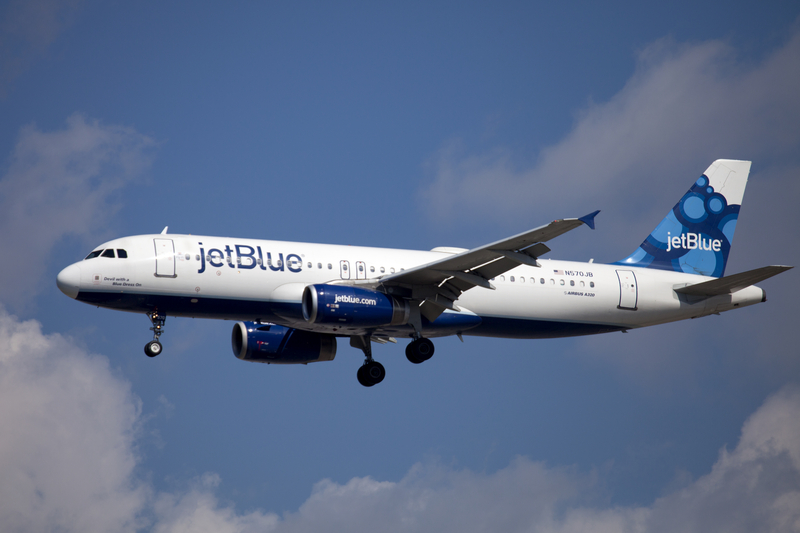
From an aircraft standpoint, JetBlue commonly operates LGA–TPA with the Airbus A320 family. In JetBlue’s “Restyled” configuration, the A320 is typically a 162-seat platform — a lot of capacity to place into a Florida market where pricing is often aggressive and competitors can match schedules quickly.
So why give it up? Because JetBlue is clearly telling you what it wants those slots to do instead: build LGA–FLL. The airline has already signaled additional daily flying between Fort Lauderdale (FLL) and LaGuardia (LGA), and the timing of these route adjustments suggests JetBlue is reallocating constrained resources toward routes that reinforce FLL as a focus city and produce stronger network “stickiness” (more connecting options and more repeat business).
For customers, JetBlue’s reaccommodation plan also telegraphs the network logic. If you’re displaced on LGA–TPA, the proposed alternatives route you through JetBlue’s strongest New York and South Florida touchpoints — JFK and FLL — rather than forcing a patchwork of interline or off-network solutions.
JFK (JFK)–Tulum (TQO): A New Airport Meets Real-World Demand
The most notable cut is JetBlue exiting Tulum (TQO) — because it’s not just a route, it’s a market call.
Tulum’s airport, Felipe Carrillo Puerto International (TQO), was positioned as a pressure valve for Cancún (CUN) and a direct gateway to the Riviera Maya. From an infrastructure perspective, TQO can handle serious hardware: a long runway, modern facilities, and the ability to support robust domestic and international operations. JetBlue has operated JFK–TQO with the Airbus A320, a sensible gauge for a leisure route where frequency matters less than unit cost and schedule placement.
But demand has proven uneven across carriers since TQO’s launch, and the broader industry trend has been to temper early optimism. Multiple U.S. airlines that initially announced or launched Tulum service have since reduced capacity, trimmed frequencies, or removed planned routes as passenger volumes and yields didn’t match the first-wave projections.
For JetBlue specifically, the exit is also about network substitution. The airline continues to sell Mexico and Caribbean leisure extremely well, and Cancún (CUN) remains the obvious “catch-all” alternative for customers still bound for the region — with far more schedule depth, more recovery options during disruptions, and a mature ecosystem of ground transport and hotels. For travelers, that means JetBlue isn’t abandoning the Riviera Maya customer; it’s choosing the airport that gives it better operational flexibility and a wider pool of demand.
Bottom Line
JetBlue’s March 11, 2026 route cuts are less about contraction and more about precision. BOS–DFW shows how even a well-matched aircraft like the A220-300 can’t always overcome structural competition and limited feed. LGA–TPA reflects the cold math of slot-controlled airports, where “good” isn’t good enough if another route strengthens the network more. And JFK–TQO underscores a broader industry message: new airports can open overnight, but durable demand — the kind that supports year-round flying at healthy yields — takes longer to prove.
For aviation professionals watching JetBlue’s chessboard, the signal is clear: the airline is concentrating its bets on Fort Lauderdale (FLL) and on routes that reinforce focus-city connectivity, aircraft utilization, and recoverability — the unglamorous fundamentals that quietly decide whether a route lives or dies.
Keep reading FlyMag
Get the Daily Brief in the morning or the Route Watch weekly recap on Fridays. Or both.