Shrapnel Strike: Interim Report Details Damage Before Azerbaijan Airlines E190 Crash
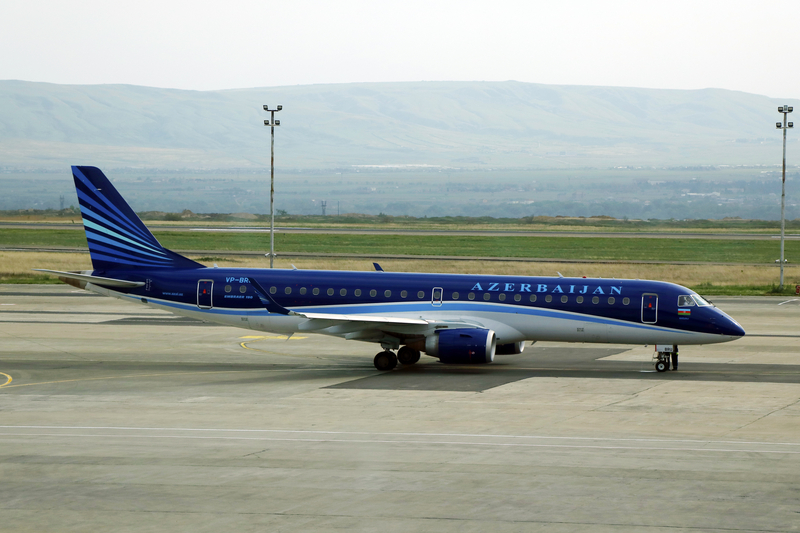
An Embraer E190 operating Azerbaijan Airlines Flight 8243 from Baku (GYD) to Grozny (GRV) suffered catastrophic systems damage after being hit by external metal fragments, according to an interim report released by Kazakhstan’s Ministry of Transport. The aircraft ultimately crashed near Aktau (SCO) on December 25, 2024, killing 38 of the 67 people on board.

What the interim report says happened
Investigators say the E190 could not complete its planned arrival into Grozny (GRV), and events escalated rapidly after the jet sustained damage consistent with fragment impacts. The interim findings point to:
-
External metal fragments striking the aircraft, with damage signatures consistent with iron-based alloys (steel).
-
A ruptured hydraulic pipe (referenced in the report as hydraulic system No. 2), where examiners describe tearing consistent with contact from foreign fragments.
-
A subsequent loss of controllability, leaving the crew to attempt an emergency diversion and landing near Aktau (SCO).
Importantly, the report does not publicly assign blame for the fragments’ origin. It focuses on physical evidence and aircraft-system consequences rather than attribution.
Why fragment damage is so dangerous on an E190
The Embraer E190 is a short/medium-haul twinjet designed with redundancy, but fragment impacts can defeat redundancy if they:
-
Sever hydraulic lines and rapidly deplete fluid.
-
Damage wiring bundles, sensors, or flight-control components in the same area.
-
Create multiple failures that compound under high workload (diversion planning, approach setup, and abnormal checklists).

When fragments reach critical systems, crews can be left managing a narrowing set of options—especially if control authority degrades during high-demand phases like descent and landing.
Where the investigation stands now
The interim report indicates the investigation has progressed beyond initial fieldwork and into deeper systems and data analysis, including:
-
Flight Data Recorder (FDR) and Cockpit Voice Recorder (CVR) analysis to reconstruct the sequence of failures and crew response.
-
Attempts to recover additional maintenance/system data, though some onboard components were reportedly too heat-damaged to yield usable information.
-
Continued workstreams examining systems failure mechanics and risk management for operations near conflict-affected airspace.

Kazakhstan’s investigators note the findings are interim, meaning additional technical conclusions—and any final determinations—remain ahead.
The conflict-zone risk question isn’t going away
While the interim report avoids naming a culprit, the broader context is unavoidable: modern air defenses, drone activity, and misidentification risk have repeatedly proven lethal to civil aviation. Even when states insist airspace is “managed,” the gap between military activity and civil overflight risk can widen quickly—sometimes faster than airlines can adapt routings, restrictions, and dispatch guidance.
Bottom Line
Kazakhstan’s interim findings indicate Azerbaijan Airlines Flight 8243’s Embraer E190 sustained critical damage from external metal fragments before crashing near Aktau (SCO), with evidence pointing to fragment-induced tearing of a hydraulic line and cascading controllability issues. The report stops short of assigning responsibility, but it reinforces an old lesson with brutal clarity: when conflict-zone hazards reach civil airspace, “unlikely” events can become immediate, irreversible emergencies.