Porto on the Radar: American Airlines May Be Weighing a PHL-OPO Transatlantic Add
American Airlines has spent the last few summers methodically rebuilding — and then expanding — its transatlantic map. Europe remains the most strategically valuable long-haul arena for U.S. network carriers: high-yield corporate contracts, strong leisure demand, and a route structure that plays directly to the strengths of big domestic hubs.

Now, industry chatter suggests American could be eyeing an intriguing addition: nonstop service between Philadelphia International Airport (PHL) and Porto’s Francisco Sá Carneiro Airport (OPO). Nothing is official yet, but the logic is easy to see — and the timing is telling.
Why Porto is suddenly in the conversation
Portugal has been one of the standout demand stories on the U.S.–Europe corridor. Lisbon Humberto Delgado Airport (LIS) has captured most of that growth, but it’s also where airlines run into the most friction: congestion, limited runway capacity, and slot scarcity at peak hours. When an airport can’t easily absorb additional frequencies, carriers start looking for alternative “Portugal plays” that still ride the same macro demand wave.
That’s where Porto (OPO) comes in.
Porto isn’t “secondary” in the way many Americans might assume. It’s a major northern gateway for Portugal, a year-round city break destination, and a natural launching point for the Douro Valley and northern Spain. From an airline planning perspective, it also has a useful mix of traffic types:

-
Leisure demand that isn’t strictly tied to July and August
-
VFR traffic (visiting friends and relatives), which can stabilize shoulder seasons
-
Business travel tied to manufacturing, port activity, and an increasingly international tech scene
And importantly: Porto demand doesn’t need to be huge to work if it’s paired with the right hub strategy.

Why Philadelphia is the most believable U.S. origin
If American wants to add a Portugal route that doesn’t rely on a single local market, PHL is the obvious lever to pull. Philadelphia is American’s primary transatlantic connecting hub in the Northeast corridor — less glamorous than New York, but often more operationally practical for building sustainable long-haul routes.
A hypothetical PHL–OPO flight would have a strong built-in advantage: connectivity. American can funnel traffic into PHL from dozens of cities across the Mid-Atlantic, Midwest, and Southeast, then push it across the Atlantic in one hop. That matters because Porto isn’t just a destination; it’s also a convenient entry point for travelers headed onward by rail or short-haul flight into Spain and across northern Portugal.
PHL also already supports Portugal flying via LIS, which is a helpful signal: American has distribution, sales traction, and operational muscle memory in the country. Adding OPO could be a clean way to grow Portugal without being boxed in by LIS constraints.
What the route would look like in the real world
PHL–OPO is long enough to require a true long-haul aircraft and crew setup, but it’s not extreme by modern standards — think “classic transatlantic” stage length rather than ultra-long-haul.

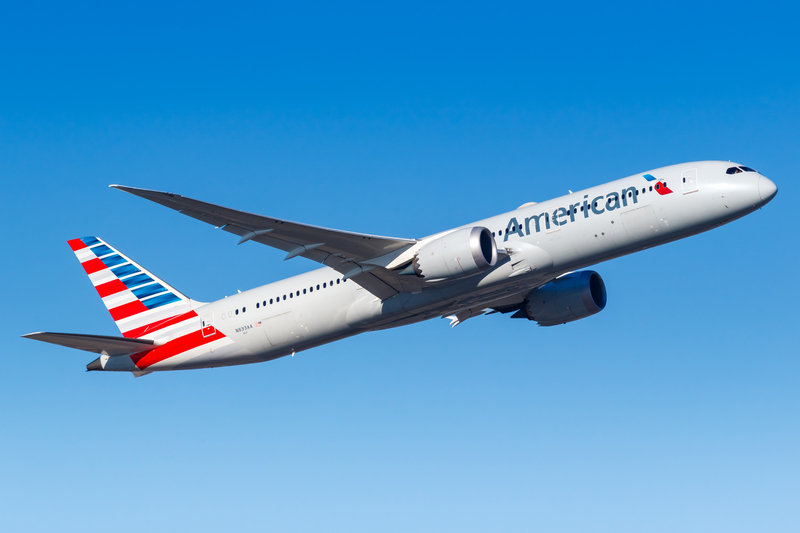
If American launches it, the most likely aircraft family is the Boeing 787 Dreamliner (either the 787-8 or 787-9), which is the workhorse for exactly this kind of mission:
-
Range and payload flexibility to handle winter winds without ugly payload penalties
-
Strong economics on medium-density long-haul markets
-
A passenger experience that’s well-suited to ~7-hour transatlantic segments (lower cabin altitude, larger windows, improved humidity versus older widebodies)
There’s also a wildcard worth mentioning: the Airbus A321XLR. This jet is purpose-built for thinner transatlantic routes, offering long range in a single-aisle package. For airlines, the appeal is simple: open routes that can’t reliably fill a widebody every day, while still offering lie-flat premium seating if configured that way.
That said, for a first-time route launch — especially one American would likely want to market aggressively — a 787 provides more total seats, more cargo capacity, and a bigger premium cabin footprint. If the route proves itself, an A321XLR could eventually become a right-sizing tool depending on fleet availability and seasonality.
Competitive pressure is real — but it’s not a deal-breaker
Porto (OPO) is no longer a blank spot on the U.S. map. The market already has nonstop service anchored around the New York region — and that’s exactly why a PHL launch would be structurally different rather than a direct head-to-head clone.
Here’s the competitive landscape that would matter most:
-
Newark Liberty International Airport (EWR) already links to Porto (OPO) on at least one major carrier, and it’s a natural Portugal gateway thanks to massive catchment area demand.
-
Boston Logan International Airport (BOS) has long been one of the strongest Portugal markets in the U.S. due to deep community ties, and BOS–OPO service has proven there’s more to Portugal than just LIS.
-
New York John F. Kennedy International Airport (JFK) is adding additional Portugal capacity in 2026, which raises the profile of OPO even further.
So yes — American would be entering a market with existing nonstop options. But a PHL–OPO route wouldn’t be trying to “win New York.” It would be aiming to build a national catchment via PHL, particularly from smaller and mid-sized cities that don’t have easy one-stop options to northern Portugal today.
That’s the hub game: you don’t need to dominate the biggest local market if you can assemble enough demand from many smaller ones — and price it intelligently.
The tells to watch if this is more than just a rumor
If American is serious about PHL–OPO, a few indicators tend to show up before a splashy announcement:
-
Schedule filings (often appearing well before public on-sale dates)
-
Slot/stand coordination at OPO, particularly if the desired arrival/departure banks are peak-constrained
-
Fleet assignment patterns at PHL for the next summer season (which aircraft are “freed up,” and where)
-
Sales timing tied to summer 2026 leisure demand — the sweet spot where airlines like to launch new Europe routes
If those pieces line up, PHL–OPO becomes the type of route that American can not only launch, but sustain.
Bottom Line
A potential American Airlines nonstop between Philadelphia (PHL) and Porto (OPO) fits the current transatlantic playbook: chase durable Europe demand, avoid the worst slot constraints at Lisbon (LIS), and use a powerful hub to make a thinner market work.
If the route materializes, expect a widebody like the Boeing 787 to be the most likely opening move, with the longer-term possibility that next-generation narrowbodies such as the Airbus A321XLR could eventually reshape how American right-sizes service in markets like northern Portugal.